New York’s Irish Hunger Memorial – A Journey from Despair to Hope

Irish Hunger Memorial, Battery Park City

Nestled in the protective shadow of Freedom Tower, stands a half acre plot memorialising one of the most horrific eras in history. A place that is over 3000 miles away, yet so many New York Immigrants and their descendants call home – that place is Ireland.

Distance and time do not fade the mind and heart, as this poignant New York City dedication to The Great Hunger of Ireland demonstrates. A mark of respect and remembrance for 1 million Irish who died and the 2 million Irish who ultimately emigrated out of desperation.

How the Great Hunger Began
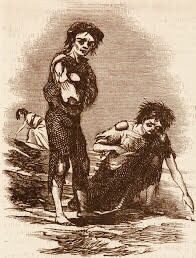
The devastation began in a suppressed Irish nation in 1845 and continued to destroy lives, lands and communities for the next seven years – families torn apart by death and of course, emigration.

The humble potato had only been in Ireland for 100 years or so, yet it had become a food staple in Ireland due to it being hardy enough to survive Irish weather, was a cheap product and went far for the hungry mouths it fed.

Potato crops became infested with an airborne fungus called phytophthora infestans, also known as potato blight. It is believed that this fungus that seemed to originate on merchant ships between North America and Britain, actually carried on the wind across the Irish Sea and began destroying the potato crops of Dublin and the surrounding counties before it became a countrywide disaster.

The legacy left by Penal Law that prevented Irish Catholics owning land or being able to vote, combined with Corn Laws that kept prices artificially high with imposed tariffs, were going to be among the catalysts for the devastation that followed.

These restrictions, combined with the continued high level of produce continuing to be exported out of Ireland by British landowners and merchants meant one thing – a food shortage of catastrophic proportion that brought a nation to its knees at the hands of one of the most despised British men in Irish history, Charles Trevelyan.

Winter after brutal winter and failed potato crops did not matter to Trevelyan. He demanded the masses be put to work in order to earn for food, food that was not there for them as he had stopped any charitable imports of corn. The man without compassion or decency persuaded the British Government to withdraw all aid to Ireland in a bid to force them to restart the economy. They all believed the crisis would be short-lived, they couldn’t have been more wrong.

Children were left without sustenance as parents opted to feed themselves with what little they had in order to work under Trevelyan’s demands. By 1847, known as Black 47, things were worse than ever. As Trevelyan’s enterprises failed, one simple truth became evident – a nation was dying.

So much was the suffering, the malnutrition, the starvation, working with no strength for little wage and no food, death for many, was welcomed. Men, women, children, skeletal, shadows of who they once were, dying of Black Fever, Typhus and Dysentery.

Bodies were piling up at such a rate, mass pits were dug in un-consecrated ground, thrown unceremoniously on top of one another, without coffins in the shallow graves.

Once again, the situation became more dire, as the landlords who had not been paid rent for sometime, wished to reclaim their lands for grazing and crop planting. The destitute and dying were evicted from there prisons of disease, many forced to emigrate by their manipulative landlords, taken in by promises of food and care on ships to North America. Over half a million people were evicted and a further 100,000 forced to emigrate.

Coffin Ships
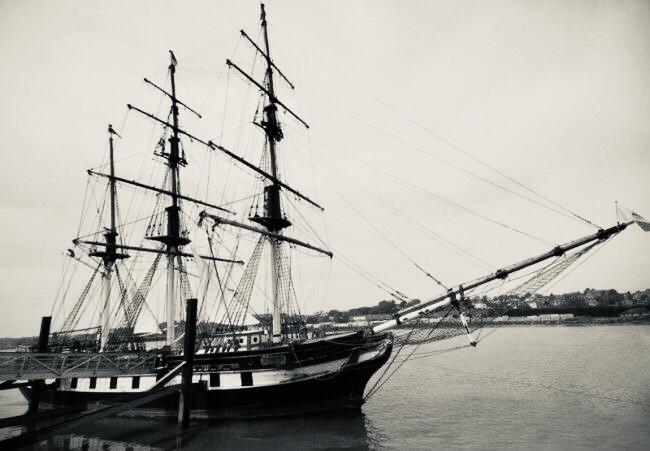
Dunbrody Famine Ship

Small, barely sea worthy vessels, crammed with skeletal families, broken and ravaged by disease, still hoping for a better life. Conditions on board were horrific. The journey would take up to six weeks, with only communal buckets for sanitation. Cholera and Typhus were rife and many would die onboard, their rotting corpses a stark warning of what may come to those watching and breathing in the stench of death, until the bodies of loved ones were tossed unceremoniously overboard.
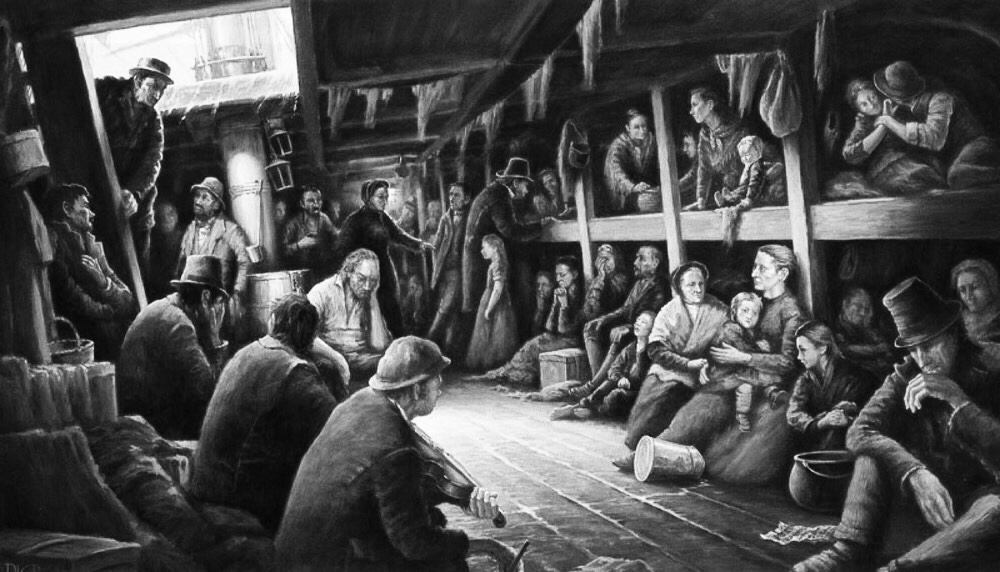
One in five would not make it, others would die in makeshift hospitals on arrival. Those who survived were covered in their own filth, destitute and usually illiterate. They were not welcomed and were received with hostility and fear from the largely Puritan communities of Canada and North America.

The Irish have four vital traits however, strength of character, survival instinct, adaptability and faith. Those who made it onto American soil made New York and further afield their new home, never to return. They began a tradition of Irish emigration that was to follow through generations, including my own family who settled in New York and Washington State.

Creation of the Irish Hunger Memorial
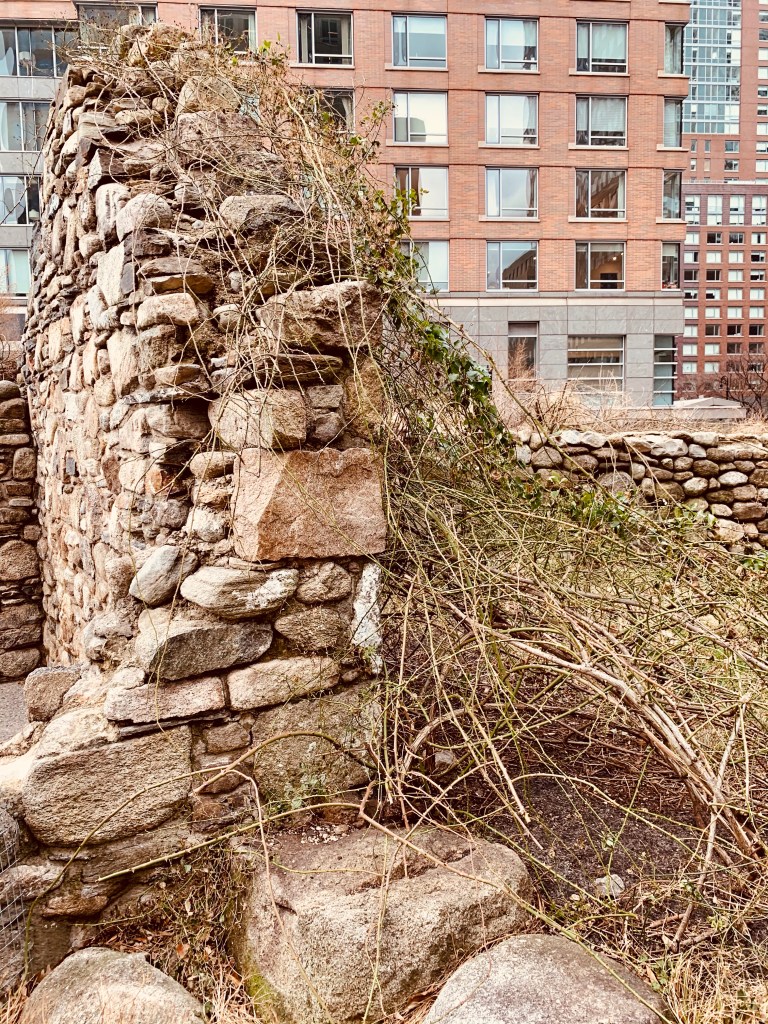
The bond between New York and Ireland is strong, long standing and far-reaching. The introduction of the Irish Hunger Memorial is a poignant reminder of the bond, the suffering of the Irish people and a beacon of light and hope for the strength of the human spirit.

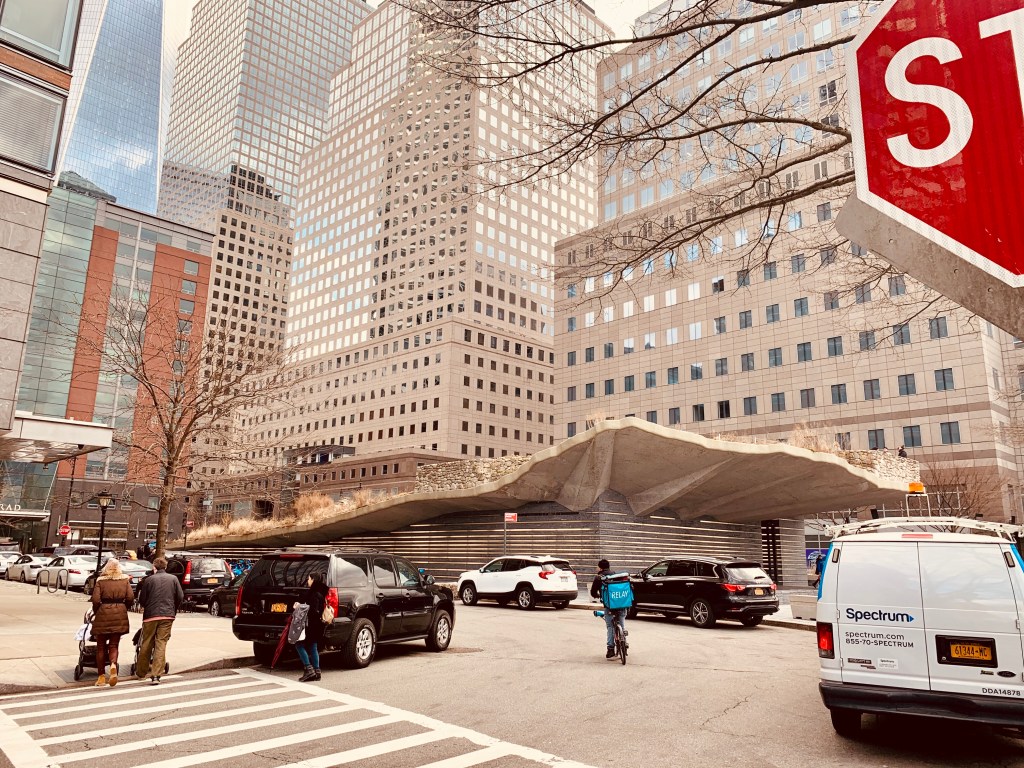
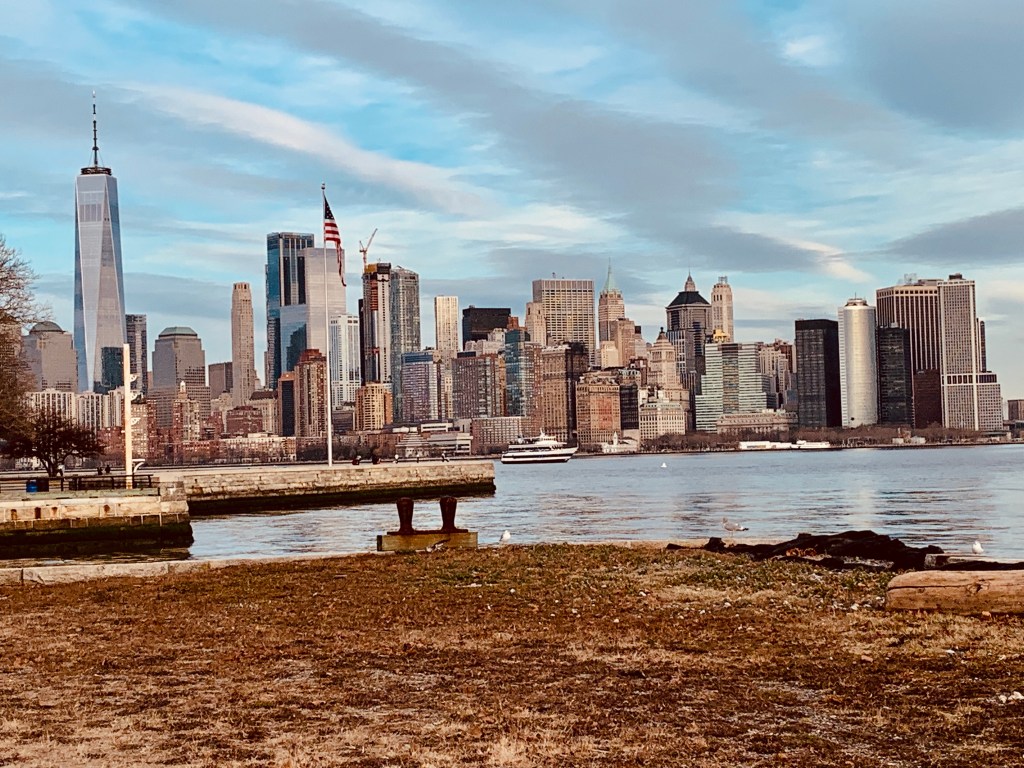
The memorial location on Vesey Street, in Battery Park City overlooks the Hudson River and out towards the Statue of Liberty and Ellis Island, where so many Irish started their new lives. This site seems to have been carefully chosen for its proximity to the gateway to the New World and serenity for reflection, looking out over the water. An historic oasis in the midst of one of the busiest cities in the world.

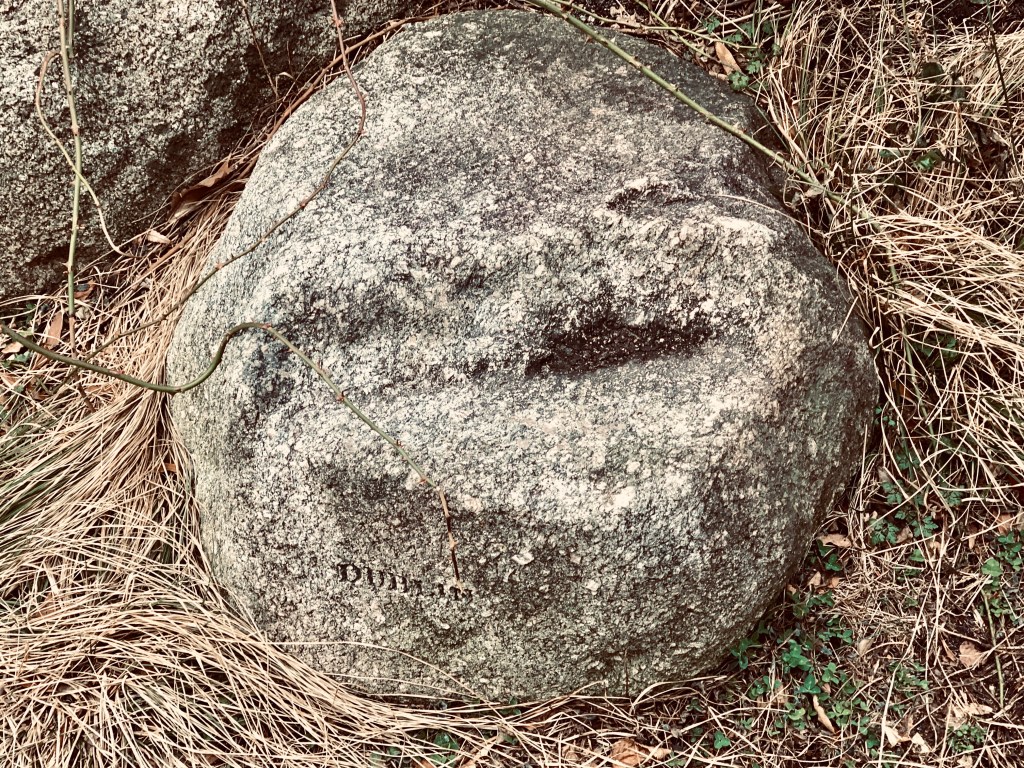
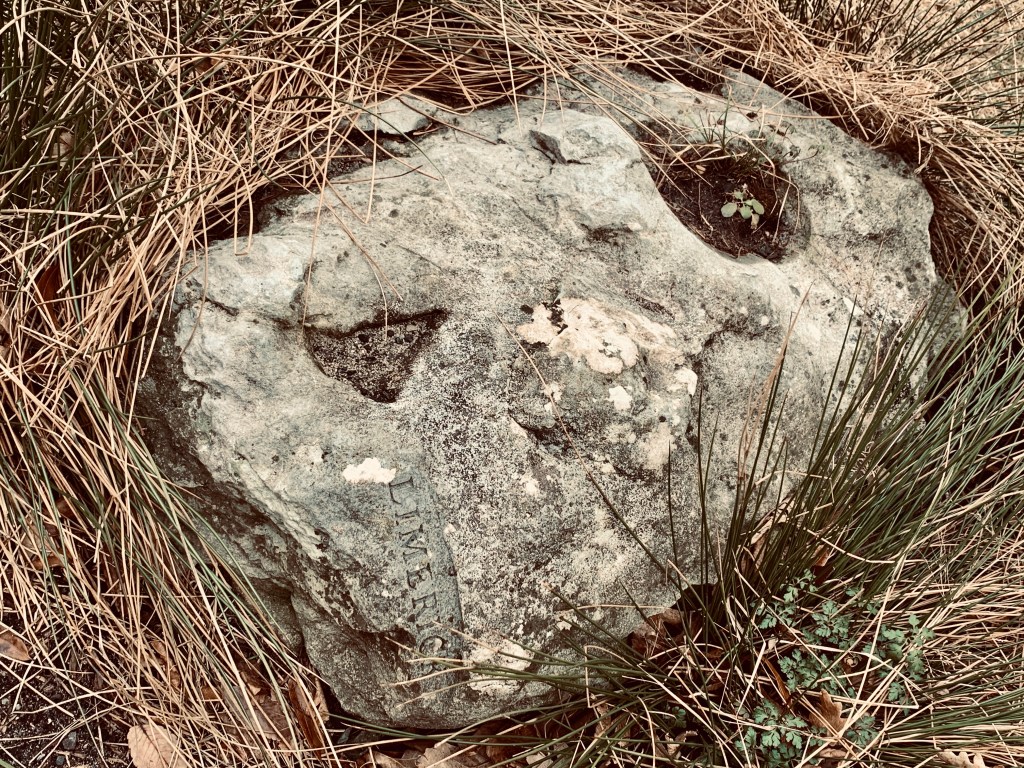
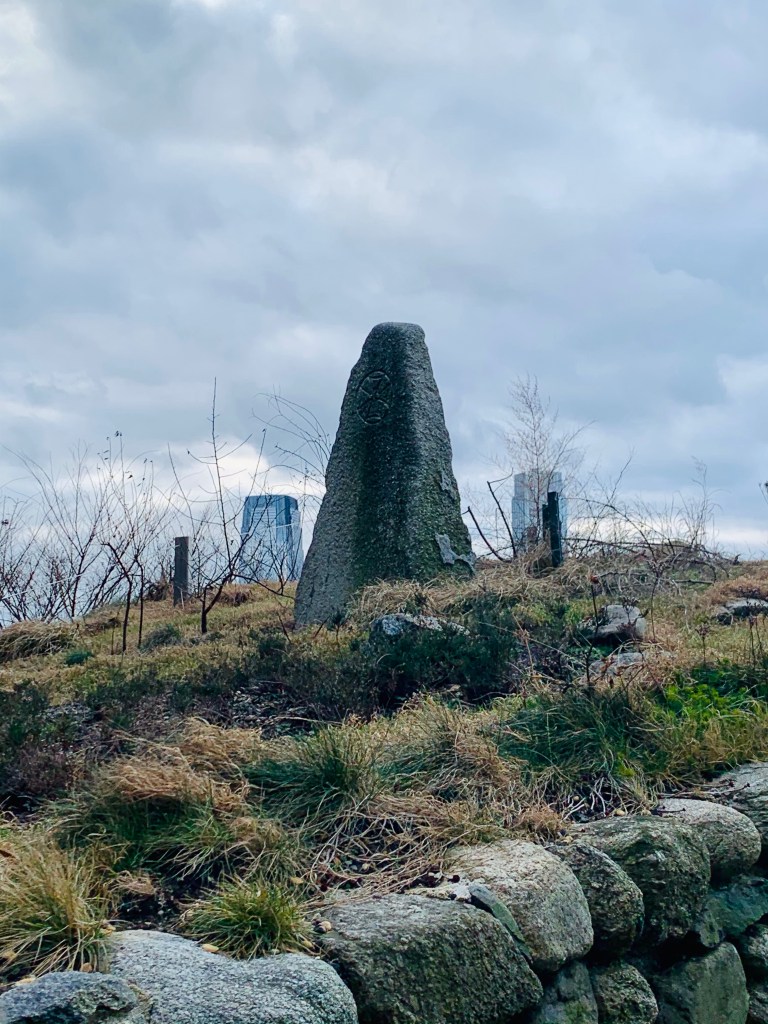
The structure itself was designed by New York native and sculptor, Brian Tolle. Construction actually began in March of 2001 and while brought to a terrifying halt by the collapse of the Twin Towers and the devastation that followed, in a testament to overcoming adversity, it was completed the following year. The centrepiece is an old Irish cottage ruin, shipped across the Atlantic from County Mayo, donated by the Slack family, distant relations of the artist. There are 32 rocks, each inscribed with the name of the county from which it was collected and the moss, plants and grass are all indigenous to the Emerald Isle.

Irish President Mary McAleese officially opened the installation in 2002, however it became heavily water damaged and underwent over five million dollars worth of renovations, re-opened to the public in 2017.

Our Visit
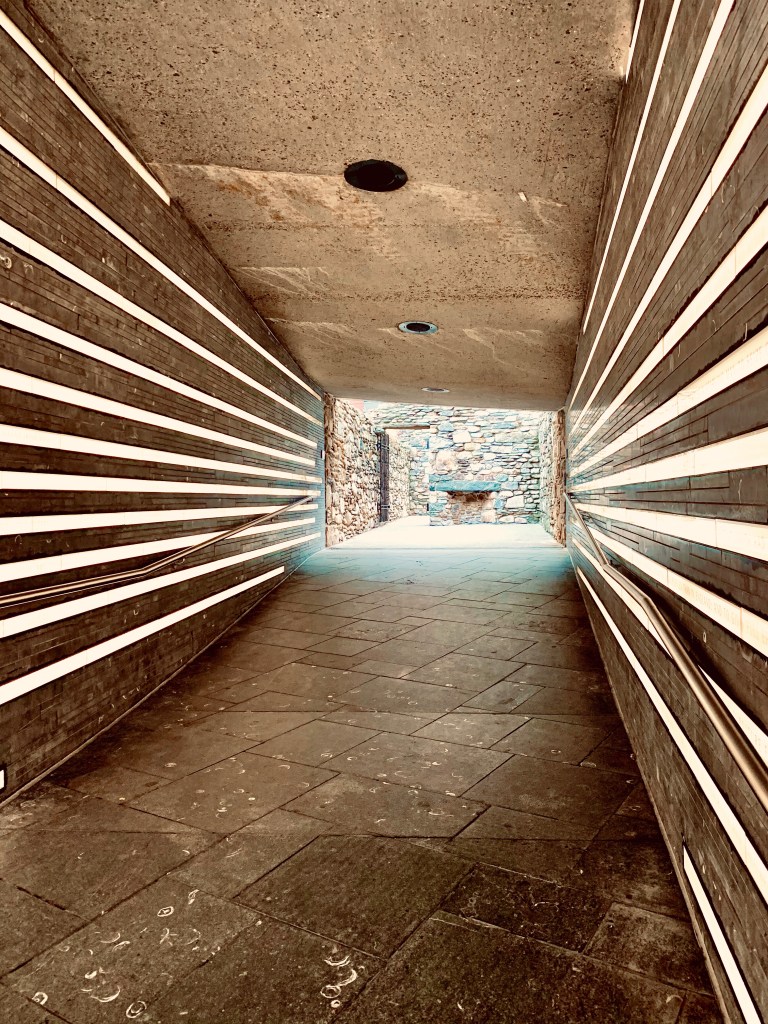
At the time of our visit, it was a cold, cloudy January day and it was quiet. You almost stumble upon it, as there is no fanfare, no grand entrance, flashing lights or gaudy signs pointing the way. It’s just there, dignified, humble and solid. It is unobtrusive, almost disregarded by the locals walking along Battery Park, dwarfed by Freedom Tower, a silent guardian of all beneath it.

My first thought was of its contemporary elegance, unexpected and intriguing. The entrance walkway is wood and light, inscribed with old Irish proverbs, poetry and information on the atrocity as well as recorded audio excerpts.
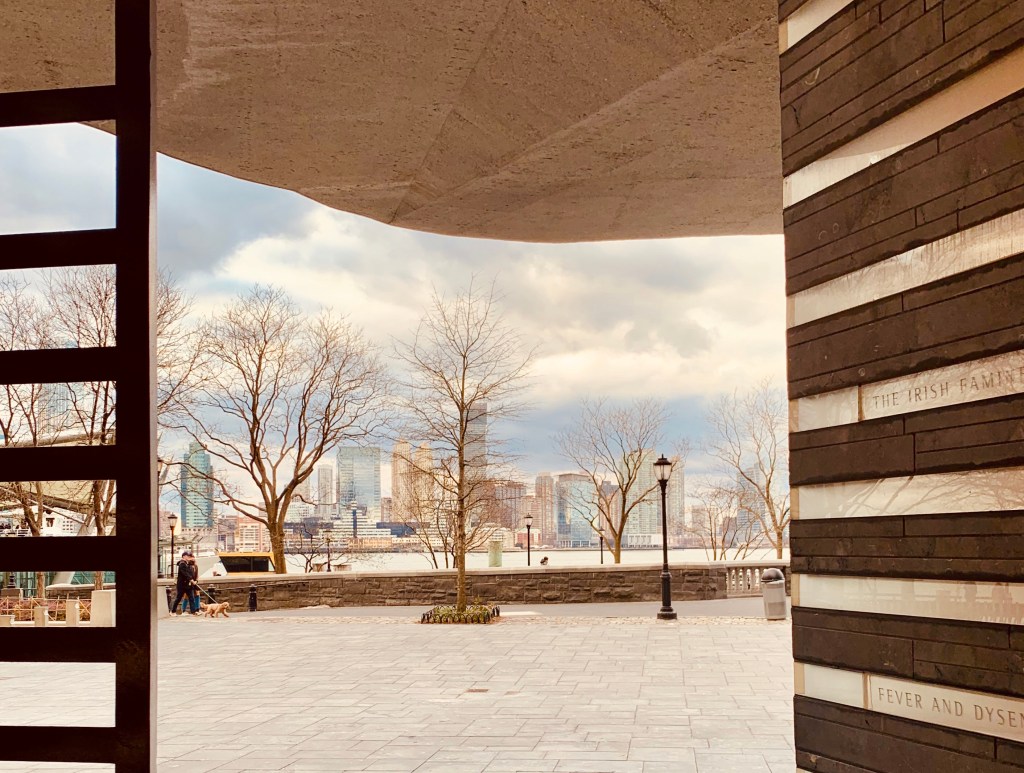
I looked back through the street opening and it created a lively picture of the Hudson River and boats, walkers and the Battery Park promenade – a stark contrast to the poverty, death and despair the memorial represents. It opens out into a stone walled ramp, through a gate and a step back into rural Ireland, a portal to a faraway land, carefully balanced on a limestone plinth.
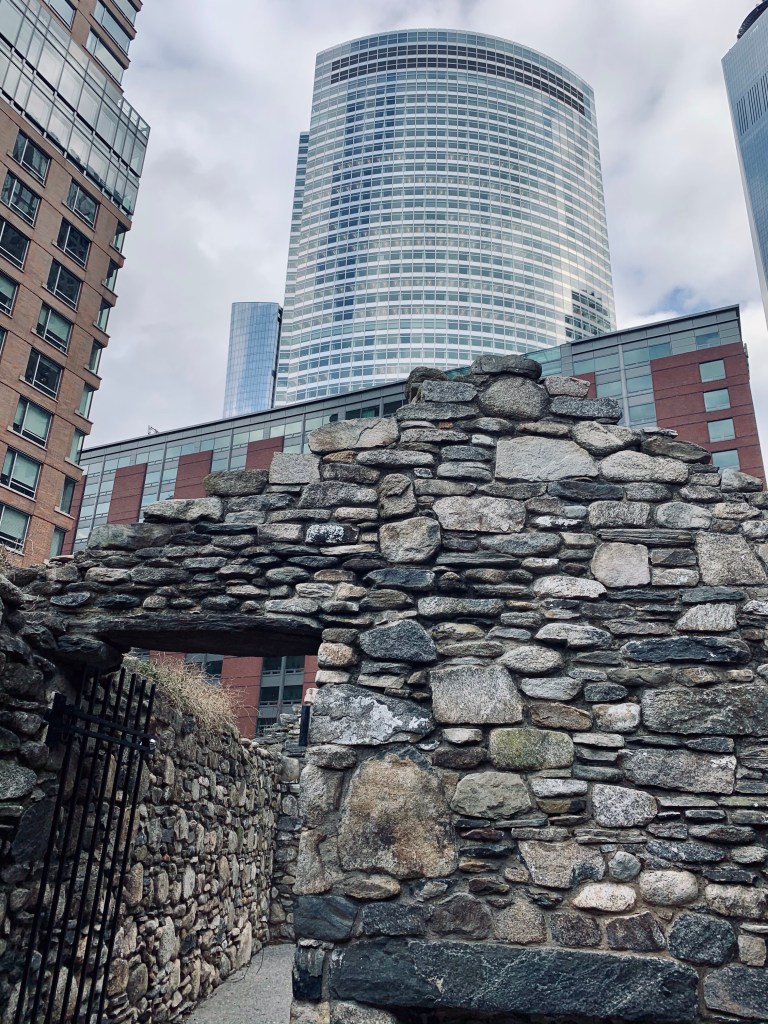
Scattered among the flora and fauna surrounding the cottage ruins are the county stones, a race on to see would I find my Limerick boulder before Dominic found his Dublin one! As usual, the Dub was victorious. Respectful tourists whispered as they explored each detail, pausing to look out to the water and over to New Jersey.
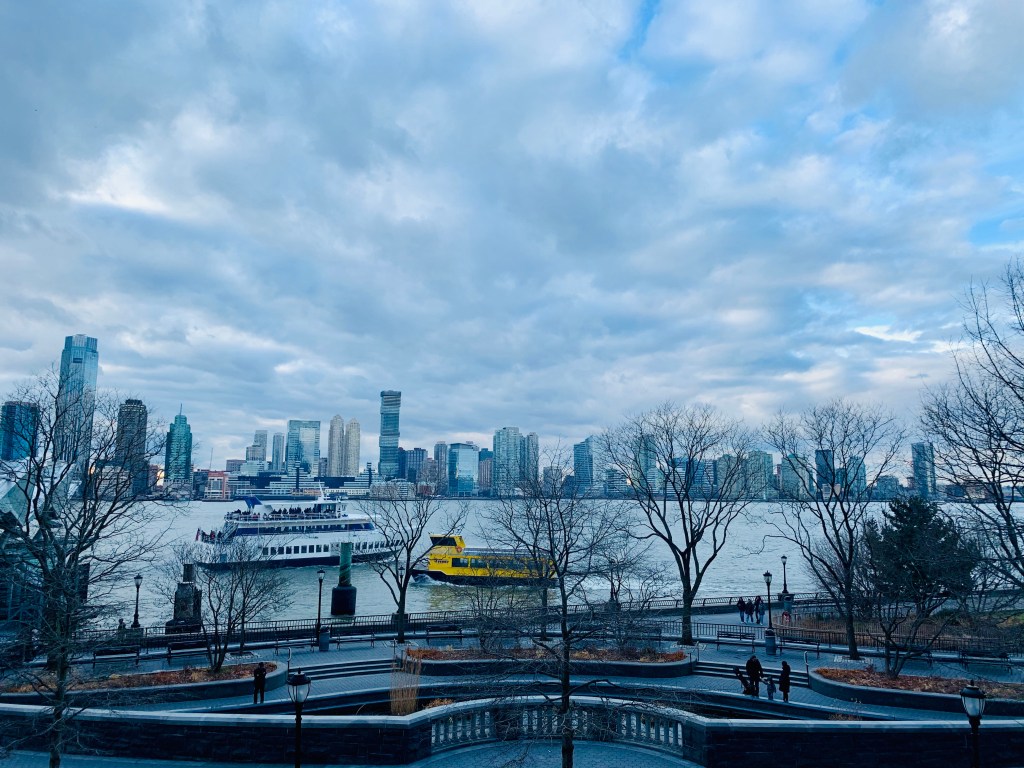
The Irish Hunger Memorial is peaceful and poetic, thought provoking and inspiring. For any tourist it should be added to the list to visit, if only to take time out from the hustle and bustle of Manhattan. For any Irish visitor or Irish descendant, its a must. Entry is free, the only cost is your time spent remembering the fallen and survivors of the blackest period of Irish history and the bond between two nations.
For more information on Emigration and Ellis Island:
https://discovernewyorktravel.wordpress.com/2020/10/31/welcome-to-the-new-world-ellis-island/

For more information on this and other Irish history, folklore and traditions go to:

https://darkemeraldtales.wordpress.com/

All New York photos by of Ann Massey
Featured

WELCOME TO THE NEW WORLD – ELLIS ISLAND

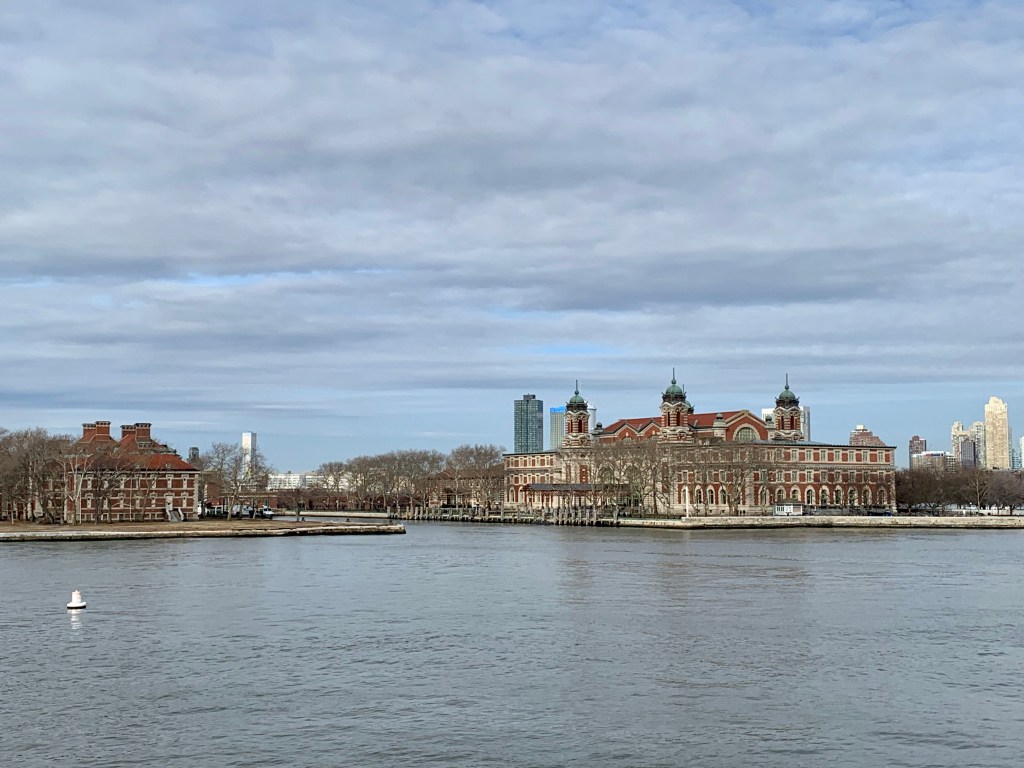
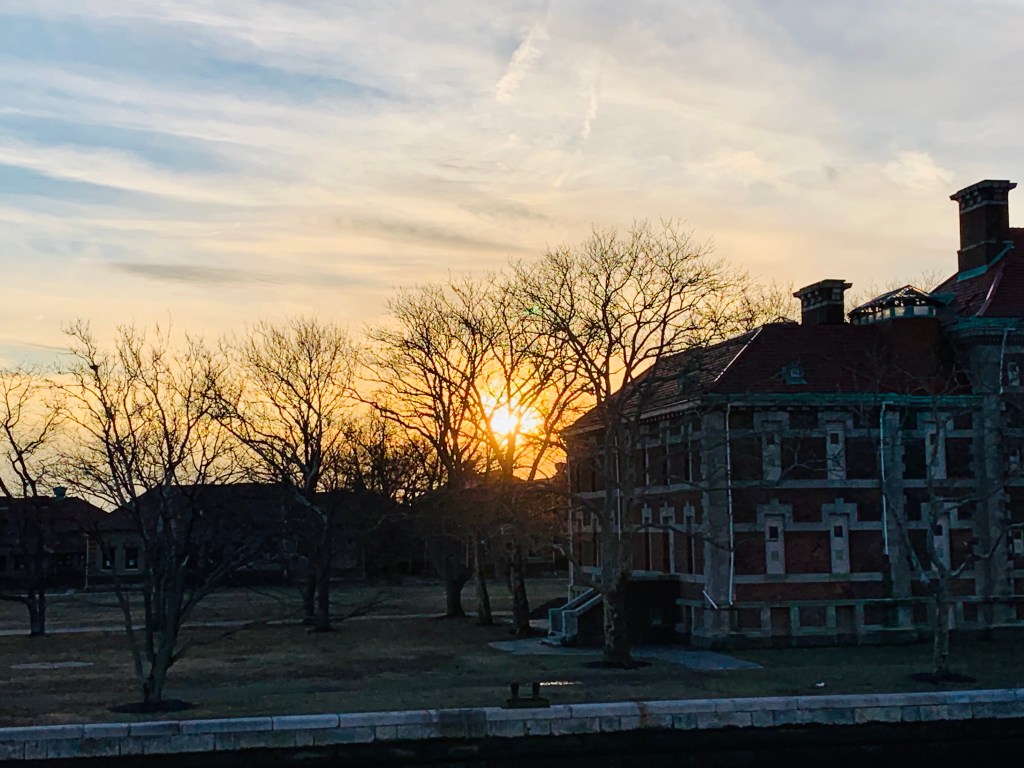
View from the shore of Ellis Island

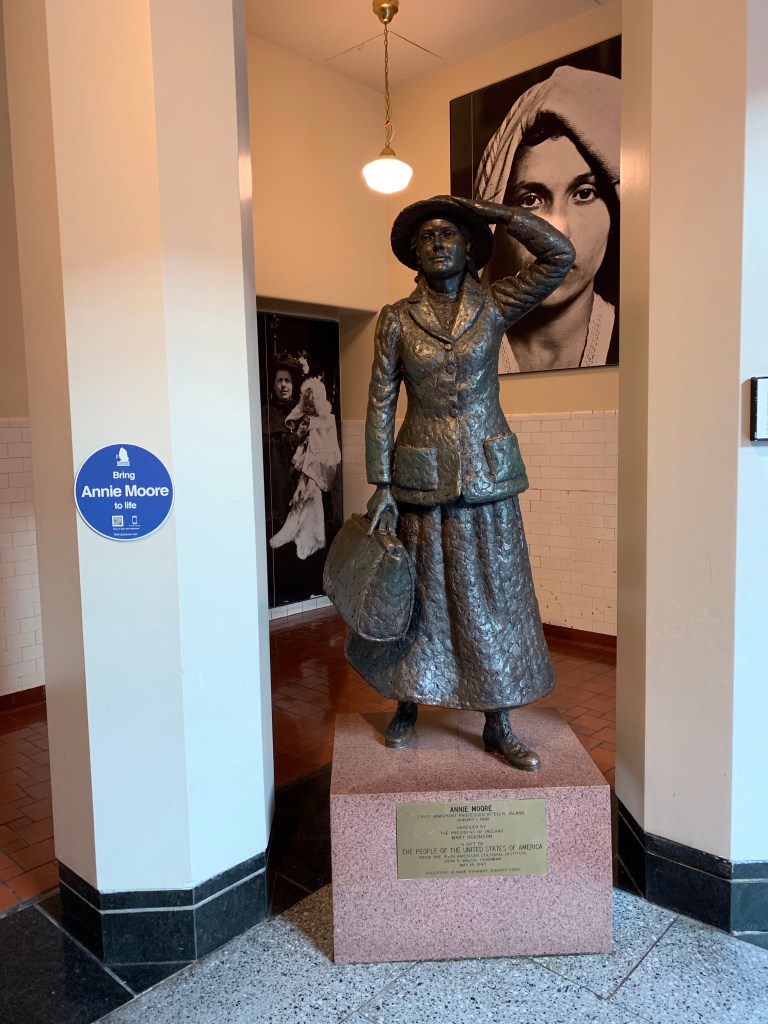
Every time I visited Cobh in County Cork, Ireland, I would go and stand by the statue of Annie Moore down by the quayside. You see, Annie Moore was an Irish teenager, who travelled to New York with her brothers across the Atlantic Ocean to join her parents in Manhattan. Annie was the first person to enter the United States via the new immigration centre on Ellis Island on 1st January 1892. New Year. New life.

So many of my own family made the same journey, many never to set foot on Irish soil again. In my town in the mid west of Ireland, we have a place called the Bridge of Tears, a place where those heading to Cork to make the voyage would say goodbye to loved ones for the last time.

I dreamed of seeing the sister statue of Annie on Ellis Island, so when I finally conquered my fear of flying across the Atlantic, it was top of my to do list. So what exactly is Ellis Island and why was it a symbol of hope for so many?

Read on to find out and discover why our visit to Ellis Island was the highlight of our trip to NYC.

Annie Moore statue

What Is Ellis Island?

This piece of land on the Hudson was the habitat of the Mohegan tribe who called their home ‘Kioshk’ meaning ‘Gull’ Island. It was then purchased by a Dutchman in 1630 who renamed it ‘Oyster’ island due to the abundance of shellfish.

It then took on a more sinister name, that of Gibbet Island. In the eighteenth century, captured pirates were hanged here as a warning to others. During the American Revolution the island was purchased by Samuel Ellis, a businessman who built a tavern here to quench the thirst of local fishermen.

I will look at the timeline for immigration in the U.S in the next section, however the now vacant tiny island was purchased by the Federal Government who had taken over immigration control. They more than doubled the area of Ellis by using landfill from among other things, rubble from the construction of the New York subway tunnels.

As the influx of immigrants increased over the decades, the island needed to grow with it. Two new islands were constructed in the early 20th century using landfill, – the first being used for the hospital administration buildings and contagious diseases, the second for the psychiatric ward and maternity wing.

In 1897 the main immigration building burned down, all records with it. It reopened in December of the same year as the building you set foot in today.

Ellis Island from the Ferry

Ellis Island went on to have multiple uses including an internment camp for Germans awaiting deportation during the First World War, a Navy way station, munitions storage, military hospital and a coast guard station. It finally closed in November 1954 and in 1965 it was declared a National Monument.

Immigration Into the U.S.A.

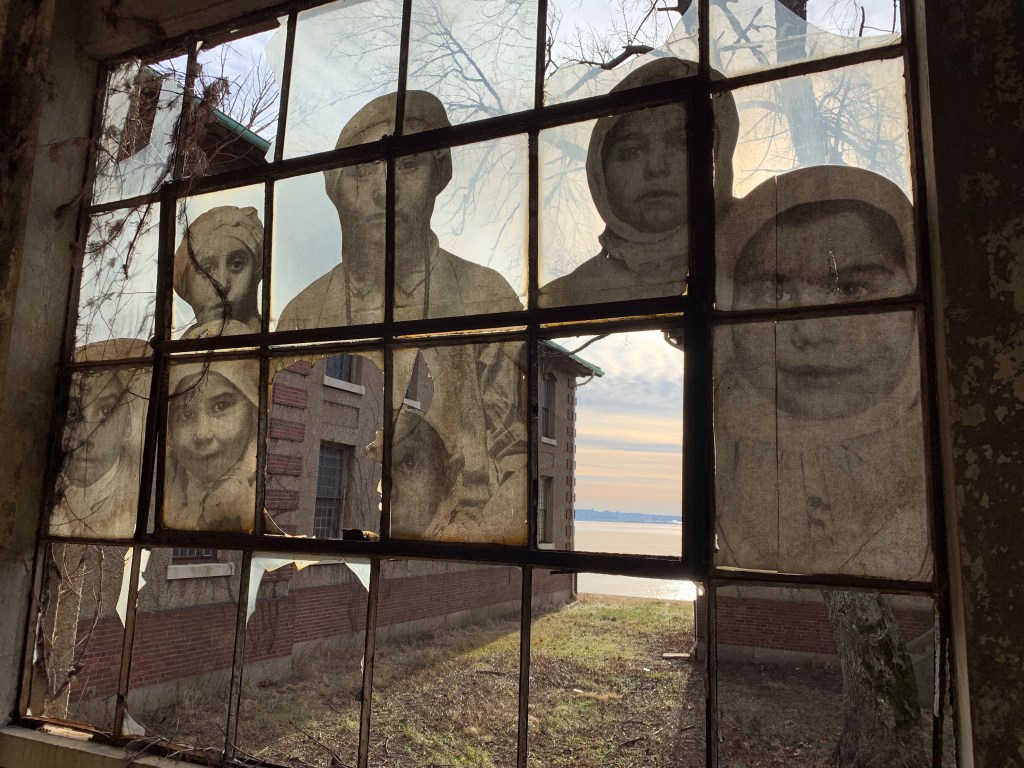
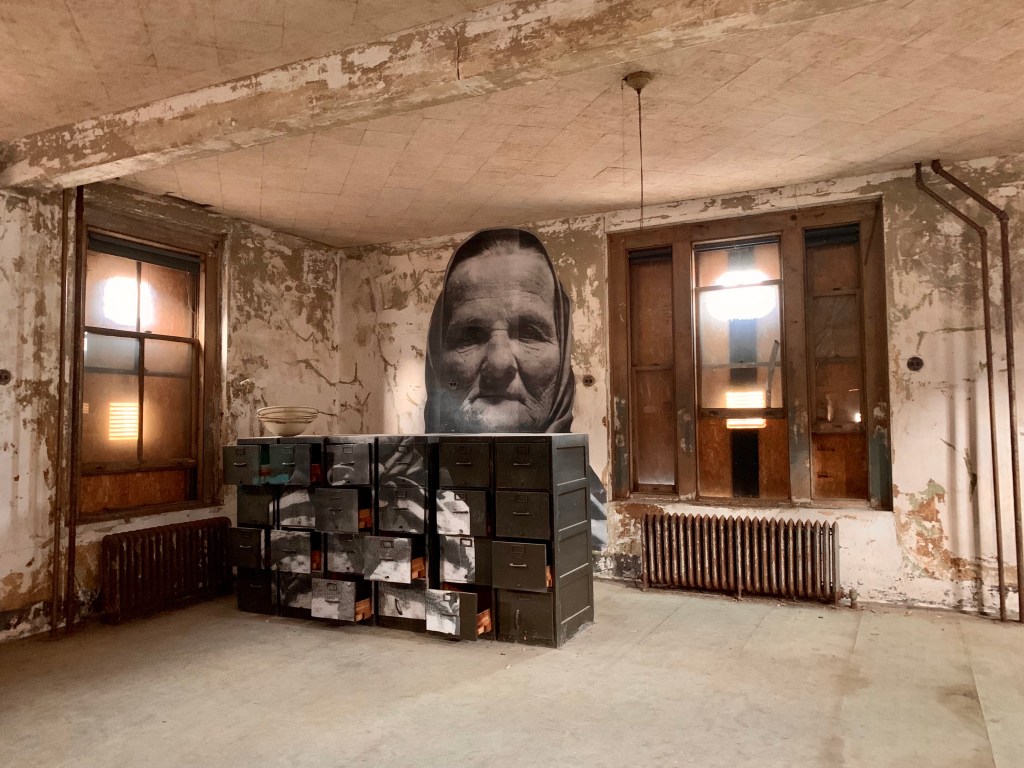
Artwork based on images of a Immigrants by French artist JR

There was little in the way of immigration control until the Naturalisation Act of 1790. This meant that any foreign national who was an adult white male and resident in the United States for at least two years was given legal residency status.

Immigration was still fairly lax until a major influx from Europe during the early nineteenth century. The first state run immigration depot was opened at Castle Gardens in The Battery, which looks out to Ellis Island and the Statue of Liberty.

In the decade following the Irish Famine, over one million Irish left to seek a new life, of course not all of them made it. The ships they were on were known as Coffin Ships, as they had poor hygiene standards and were overcrowded. Sadly some 30% of passengers on each ship would die.

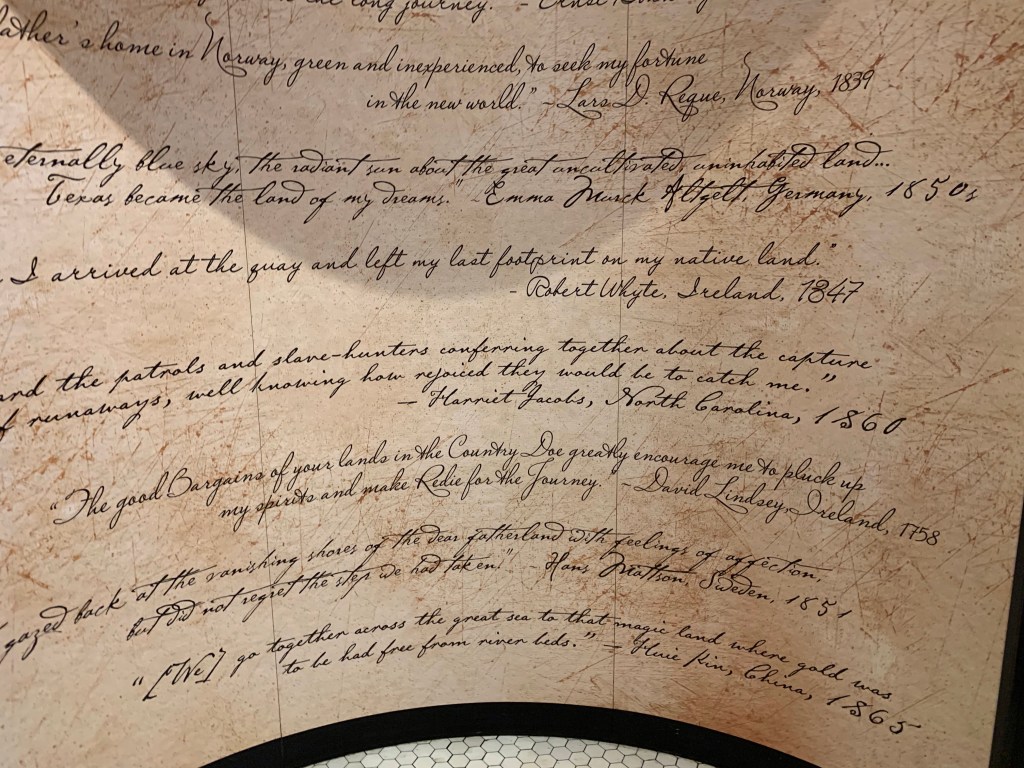
Words of Irish Hope

Prostitutes, criminals, those deemed lunatics and idiots were banned from entry during the nineteenth century and into the twentieth century, as well as those thought to be carrying disease, unaccompanied children and any nationality that had an apparently unstable, facist or communist government. The authorities were terrified of America being overrun with radicals and overwhelmed by disease and criminal activity. They were also worried about the burden of becoming responsible for children, the sick and those with a disposition that left them unable to gain lawful employment.

When Annie Moore set foot on Ellis Island, she was one of 700 that day and over the following half century, 12 million more would seek entry into the land of the free.

As new laws came into place and more restrictions were enforced at the start of the twentieth century, immigration numbers declined. During the Great Depression, for the first time ever, there were more folks emigrating than entering the U.S.

Who Are You?

So what happened when you arrived into American waters and saw Ellis Island for the first time?

After weeks at sea, hungry, exhausted, you were still subjected to hours of gruelling inspection and questioning.

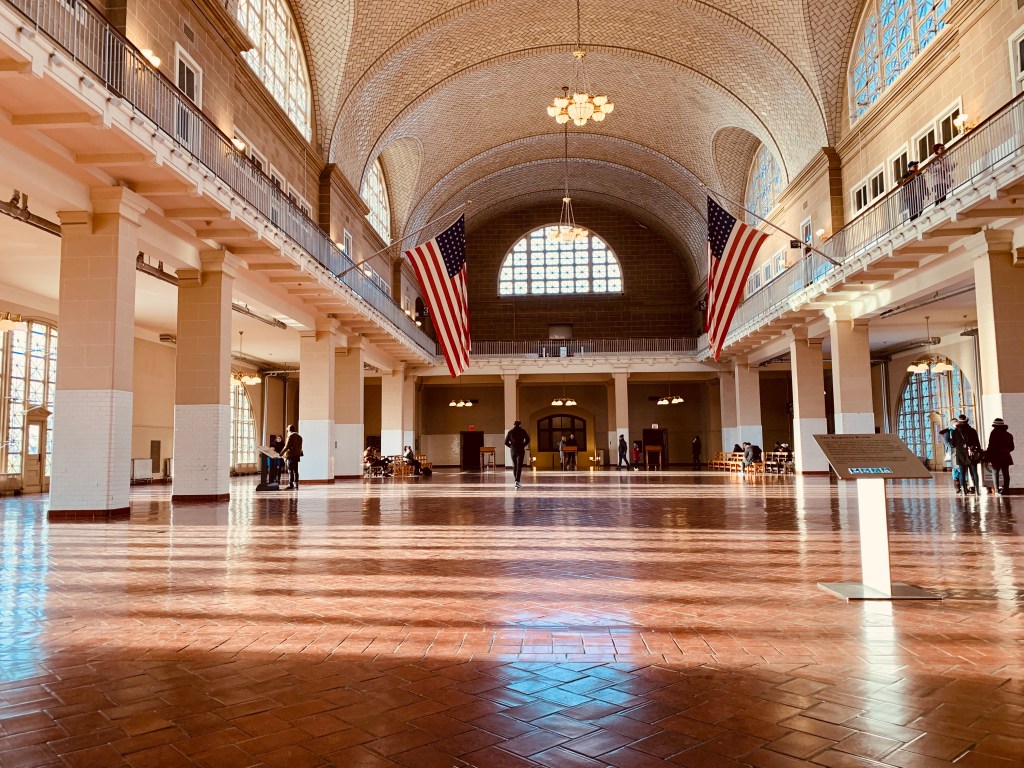
Main Hall, Immigration Centre

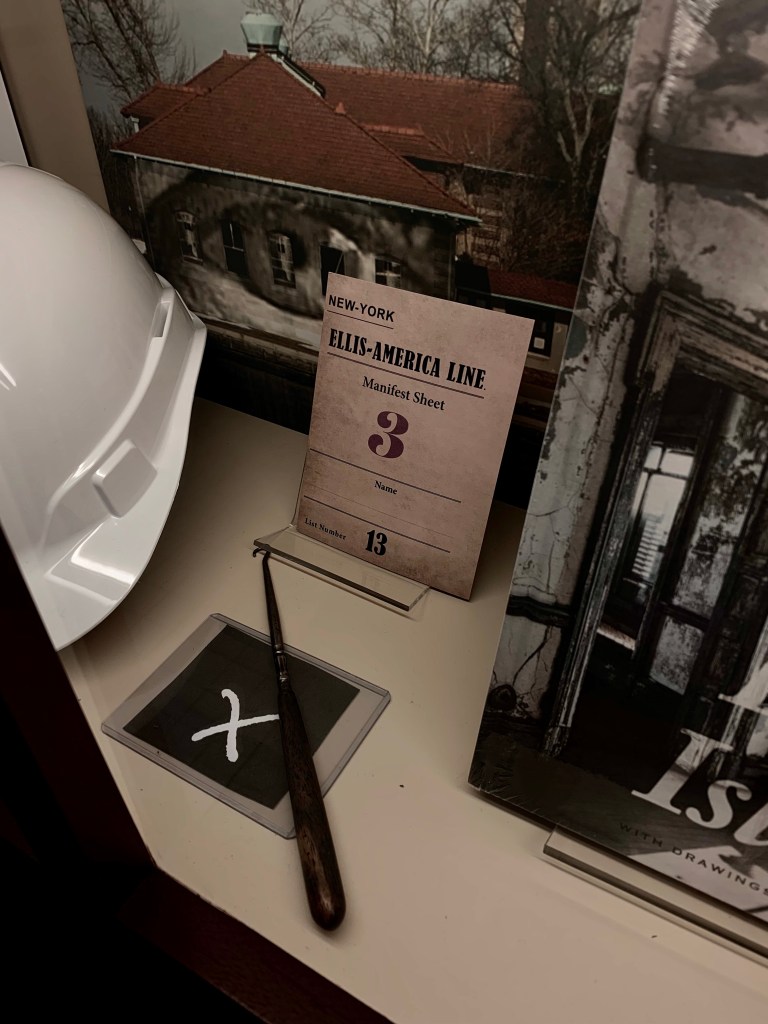
The first task was to check for outward signs of illness or disability. Doctors would walk the lengthy process queues and anyone thought to require further assessment would be marked with chalk.

If you made it past the medical inspection stage, you would be questioned to see if you were deemed financially self sufficient, had an understanding of the American way, did not harbour fascist or rebellious tendencies and were not with mental defect. These questions were often complicated, especially when you were exhausted and spoke little English.

One of the main illnesses that was checked for was an eye condition called Trachoma which could cause loss of sight and fatality. The examination involved the use of a button hook to turn the eylid inside out for closer inspection.

If you had crossed the Atlantic Ocean into New York in First Class, you were deemed to have financial stability and a clean bill of physical and mental health. Money talks.

The fortunate were given leave to enter the United States of America, the rest? Some were deported of course, but others spent much time on Ellis Island, a no man’s land with Lady Liberty teasing at a freedom and new life yet to be decided. The hospital was home to many and believe it or not was way ahead of its time. I will tell you more as we go building by building through our visit.

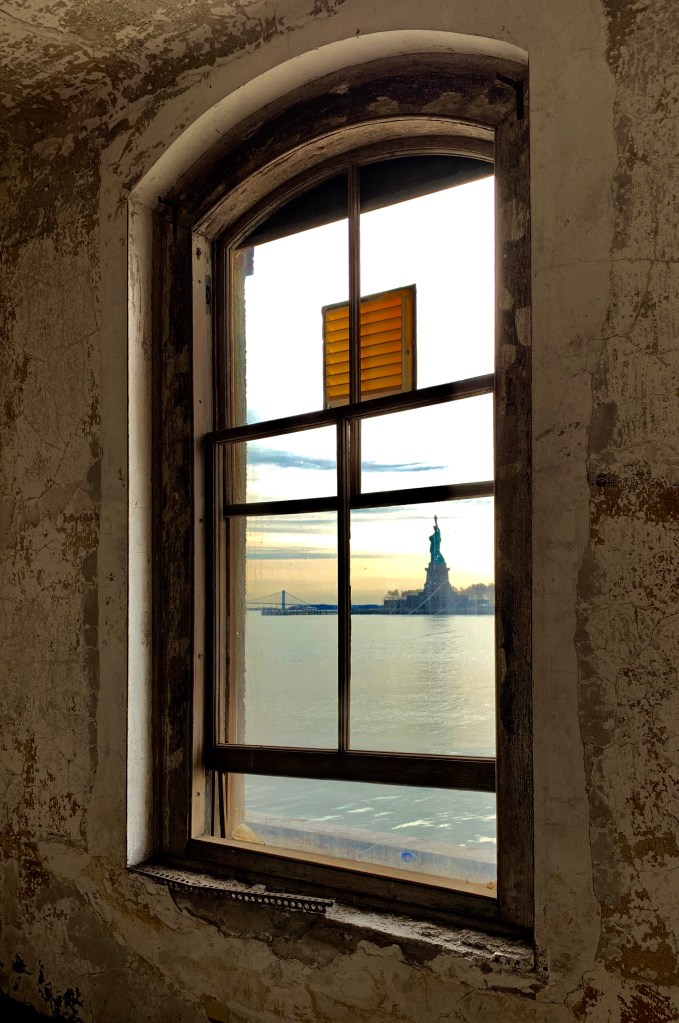
View of the Statue of Liberty from a Room on Ellis Island

Health, Hospital and Hope

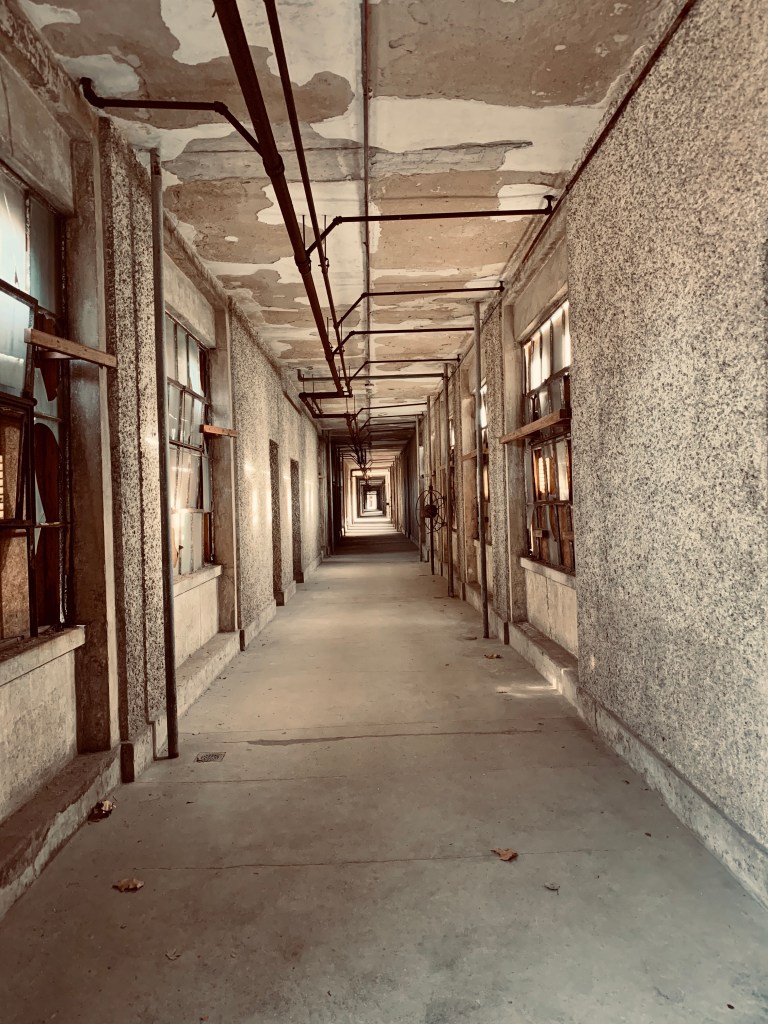
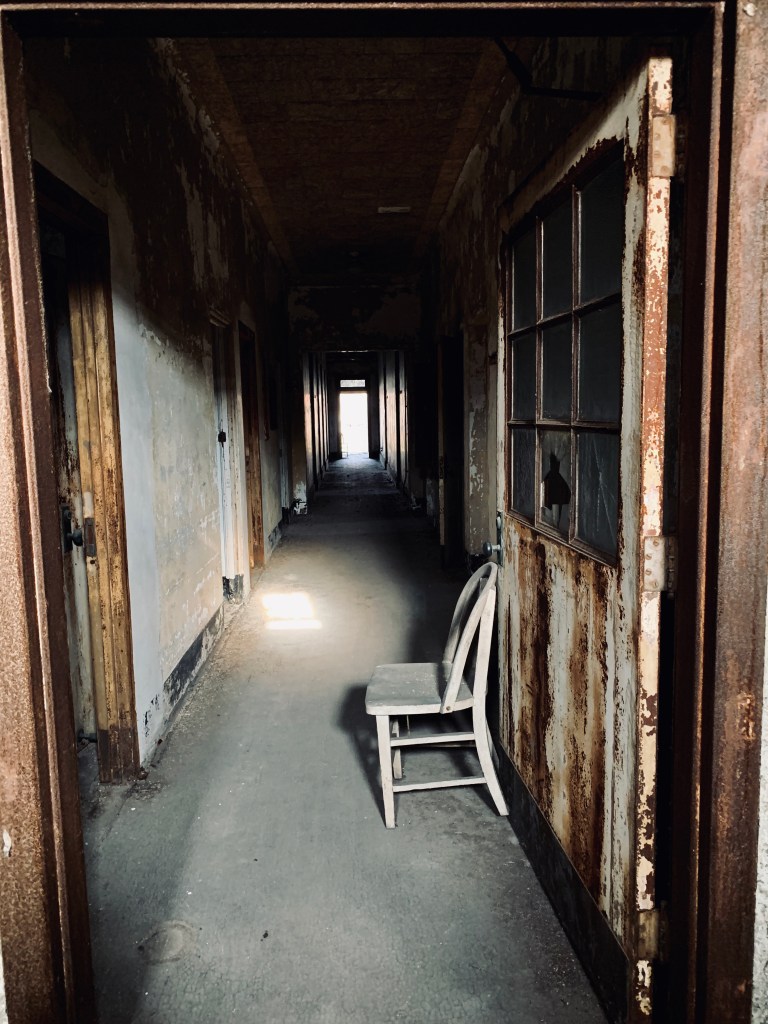
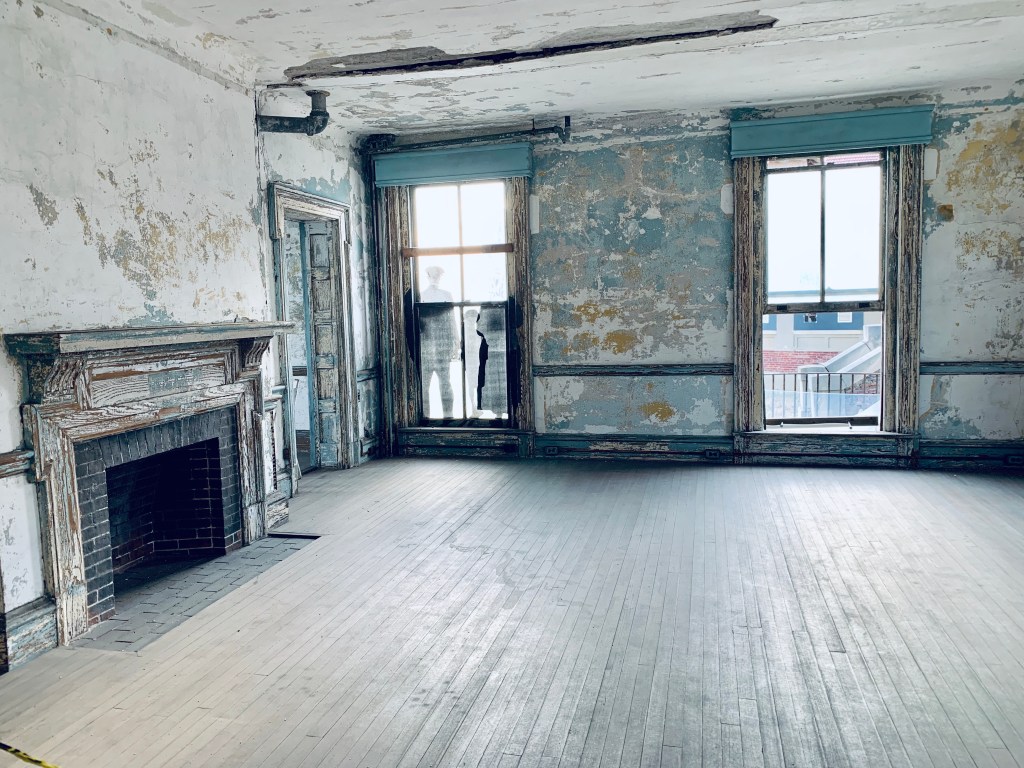
Corridor at Ellis Island Hospital

On our visit we not only visited the immigration centre, but took the ‘Hard Hat Tour’ which takes you through the abandoned hospital buildings and to parts of the island you would never normally see.

Our guides for the Hard Hat Tour were Pam and Tori. In a strange twist of fate, one was from NYC and one from New Jersey. There was an ongoing battle between the two states regarding ownership of Ellis Island. In 1995 it was decreed that the landfill element including the hospital buildings belonged to New Jersey and the Immigration building belonged to New York. It was strange to stand in one place and be in two different States!

Our tour began by walking from the immigration centre to the abandoned hospital buildings.

Pam and Tori explained that the tours were run by Save Ellis Island, a group dedicated to the restoration and maintenance of the historic buildings that hold a huge relevance in the history of the United States.

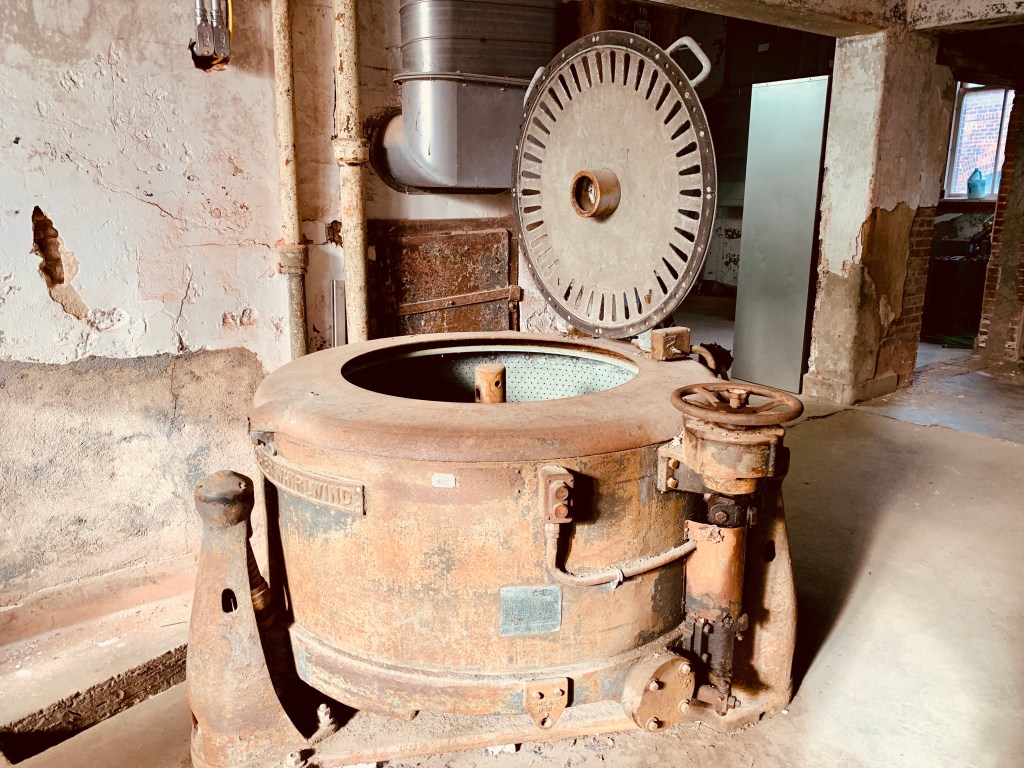
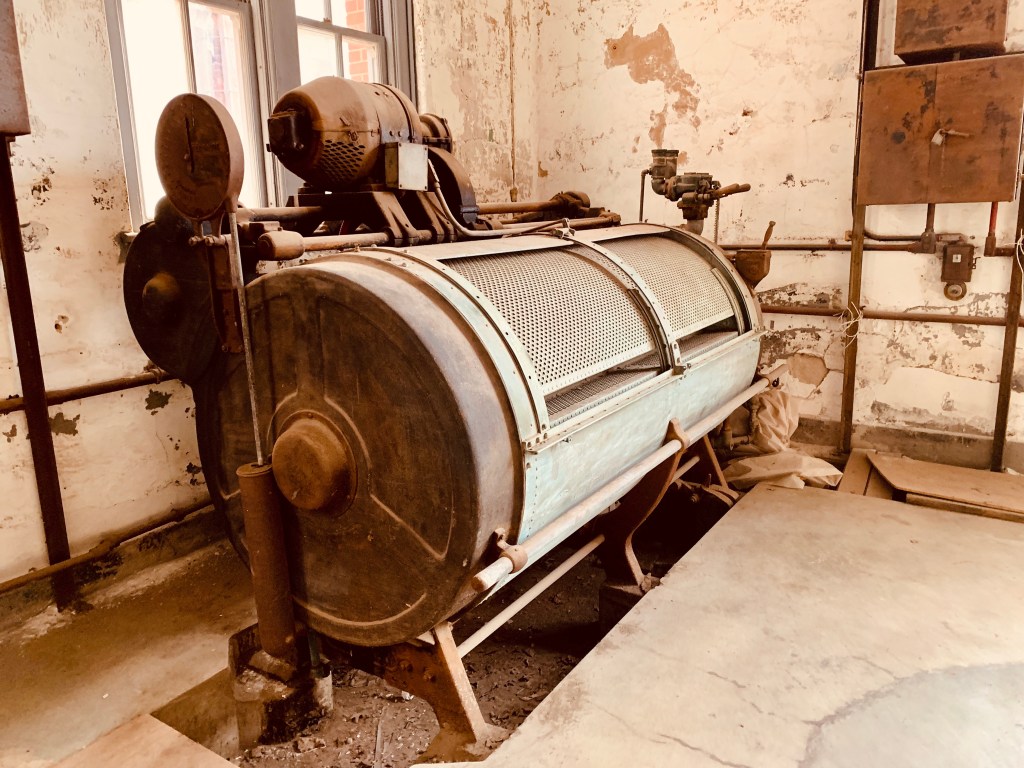
We visited the huge laundry room where workers would use the heavy machinery to make a wage.

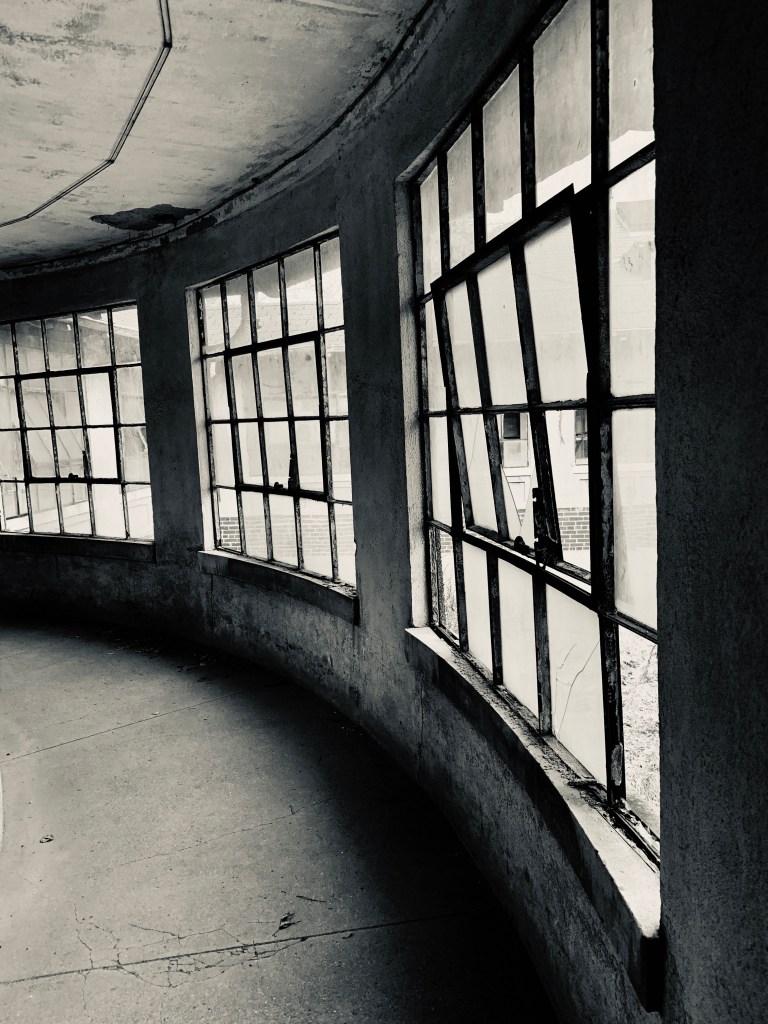
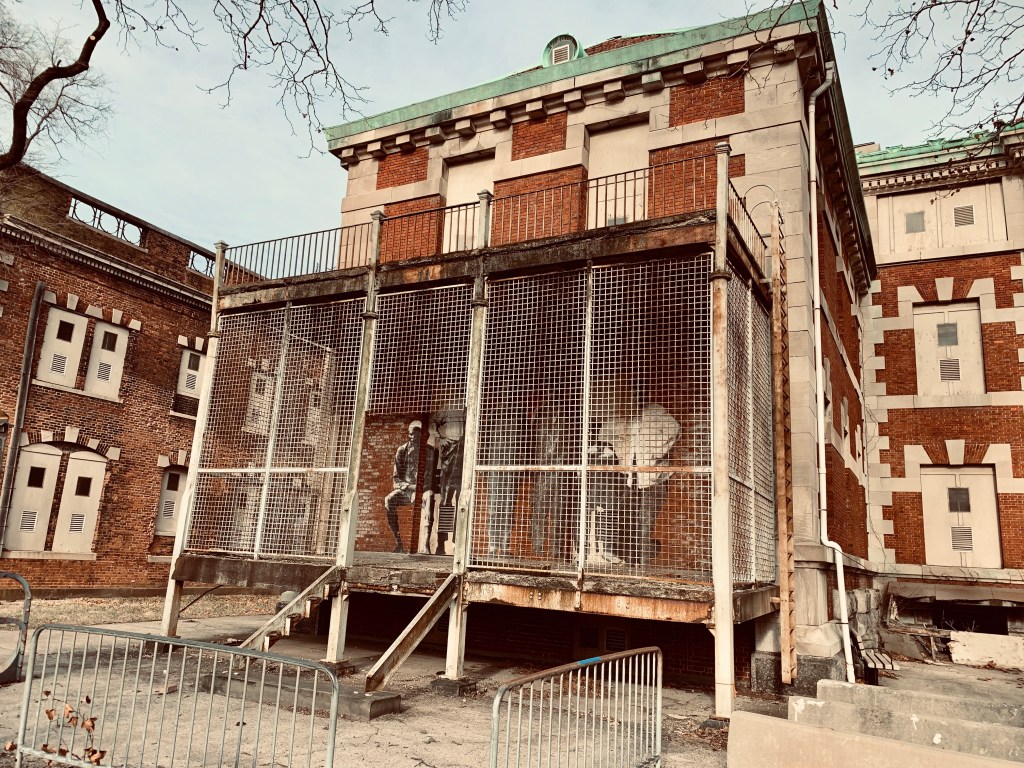
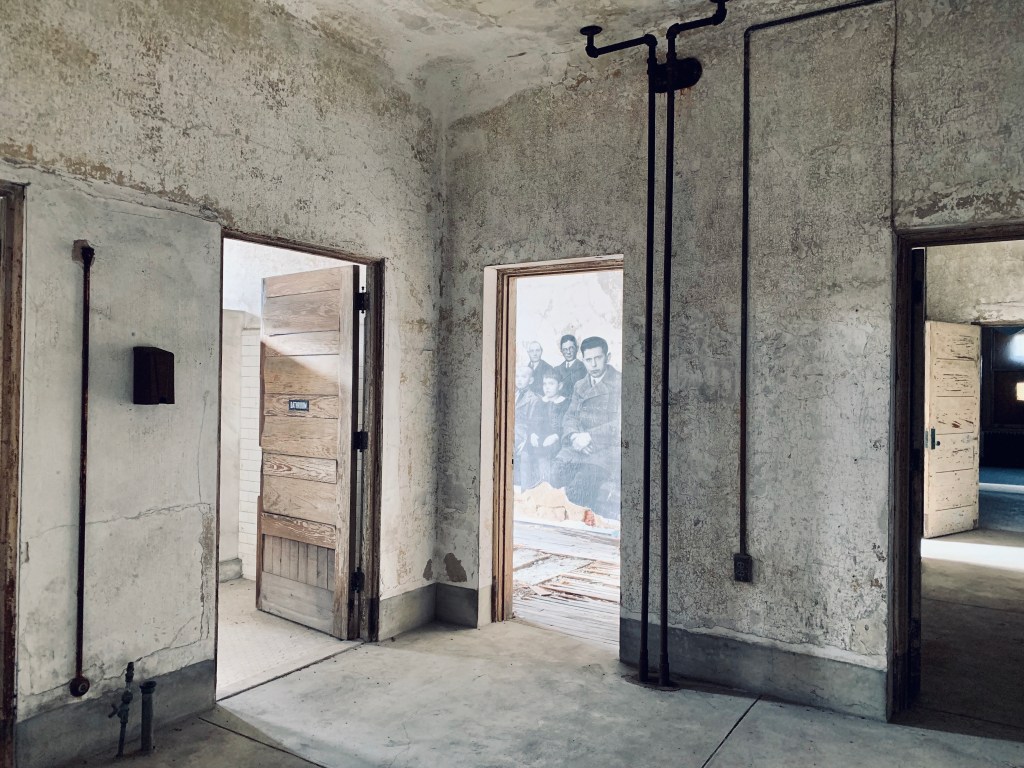
We then continued to the first of the outbuildings, which was the psychiatric unit. In a concerning twist, we were informed that the maternity unit was situated on a floor above the psychiatric ward!

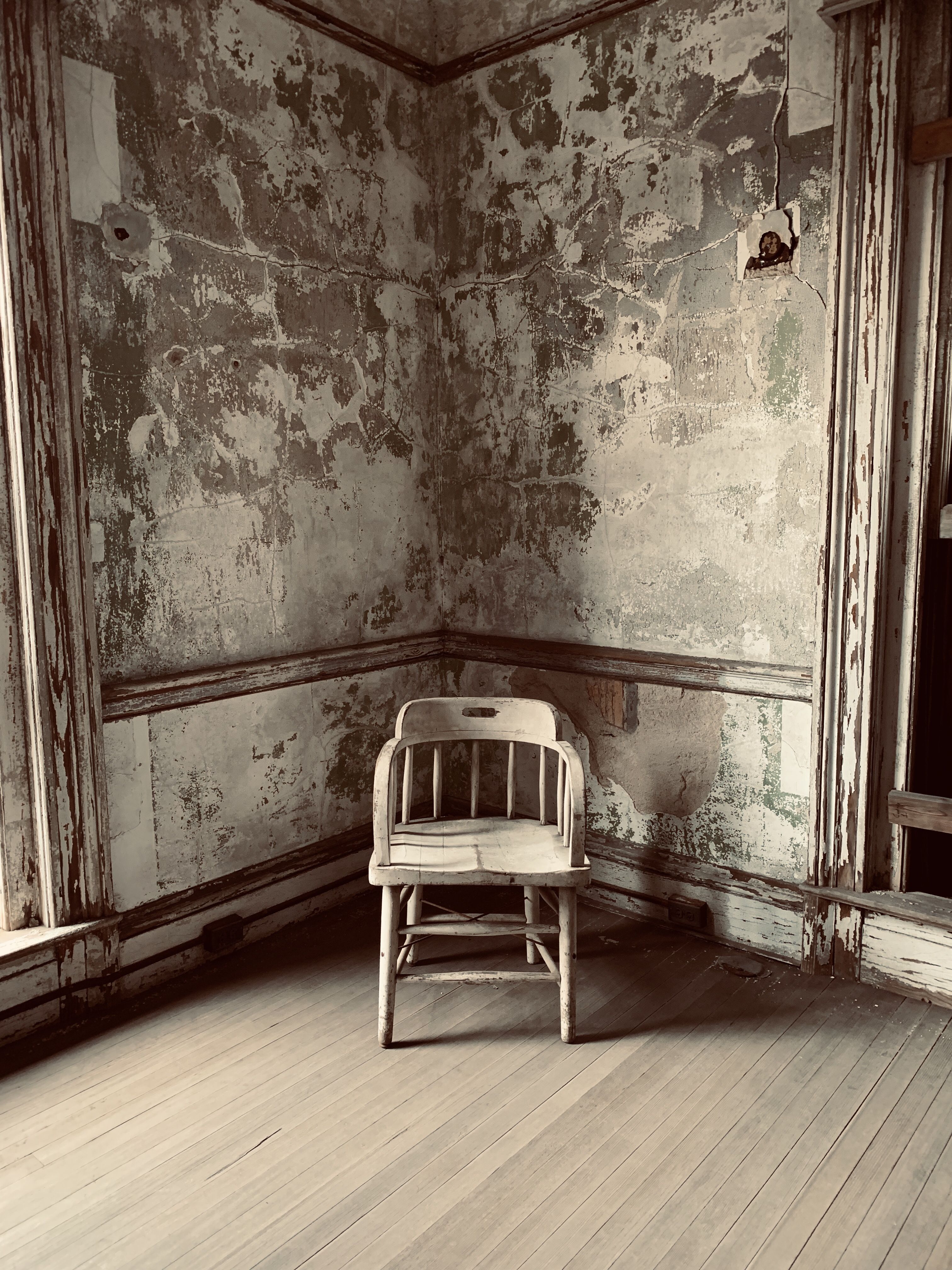
Psychiatric ward and Maternity unit

Due to an unprecedented level of care, despite the potential, there was zero infant mortality on Ellis Island. Even pregnant women who faced deportation were given first class care. It was ensured that mother and child were in top health before departure. Unfortunately single mothers were not allowed entry into the U.S as they were considered a burden on the country.

The medical facilities on Ellis Island were well ahead of the times. They followed the Florence Nightingale methodology, with doors and segregated corridors to stop the spread of disease. Big windows were also introduced to increase light and positive frames of mind as well as an increase in Vitamin D to speed recovery.

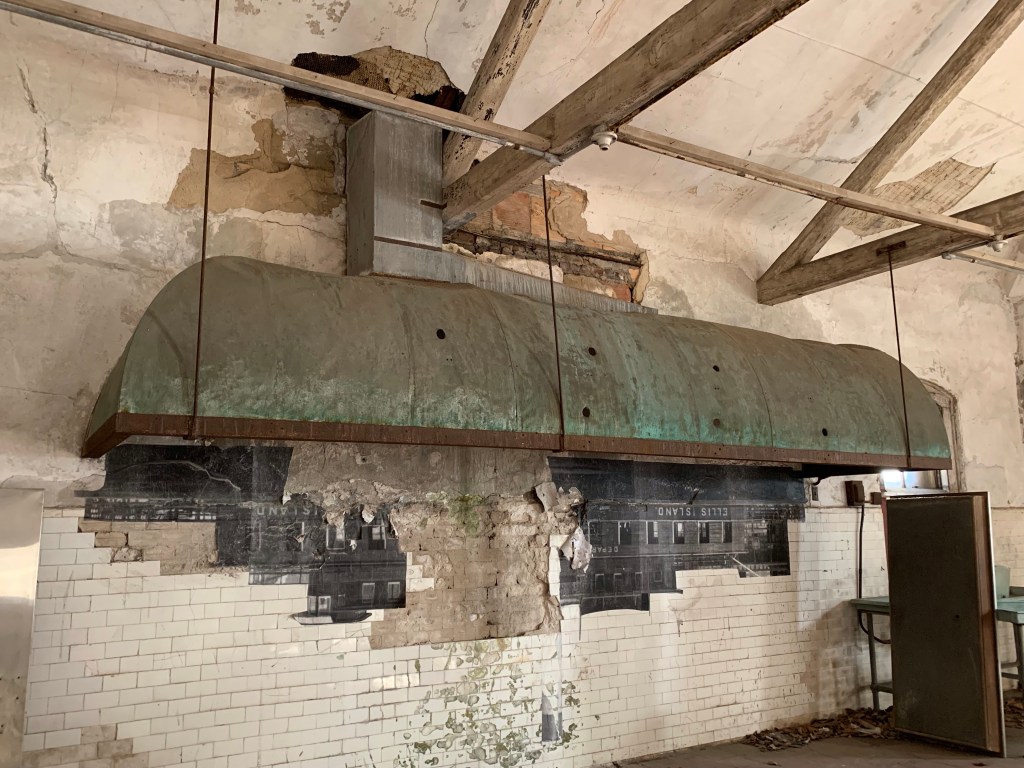
The kitchen on Ellis Island was well stocked and maintained. Inhabitants were well fed, all with a view to aid improving health so they could be processed for either deportation or for the lucky- a new life in America.

Kitchen of Ellis Island hospital

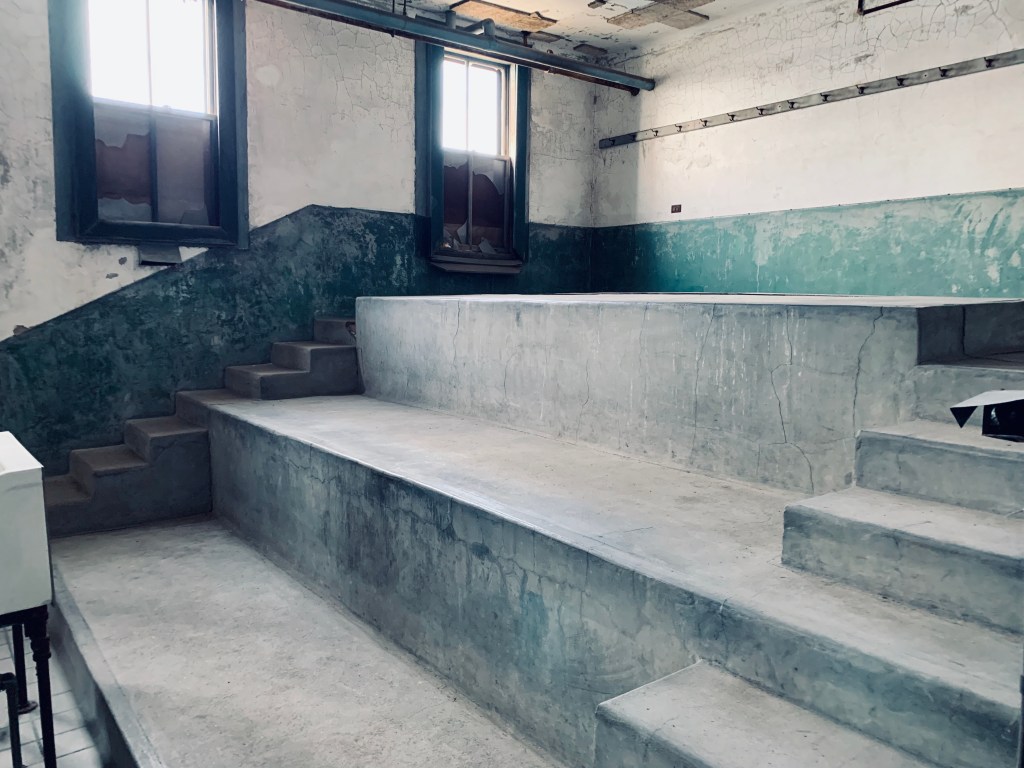
It was also a teaching hospital, so there was a classroom setting in the mortuary. Investigations into causes of death and new methods of treatment were constantly being tested, evaluated and introduced. Mattresses were hygienically cleansed and there were separate facilities for various diseases.

Teaching mortuary
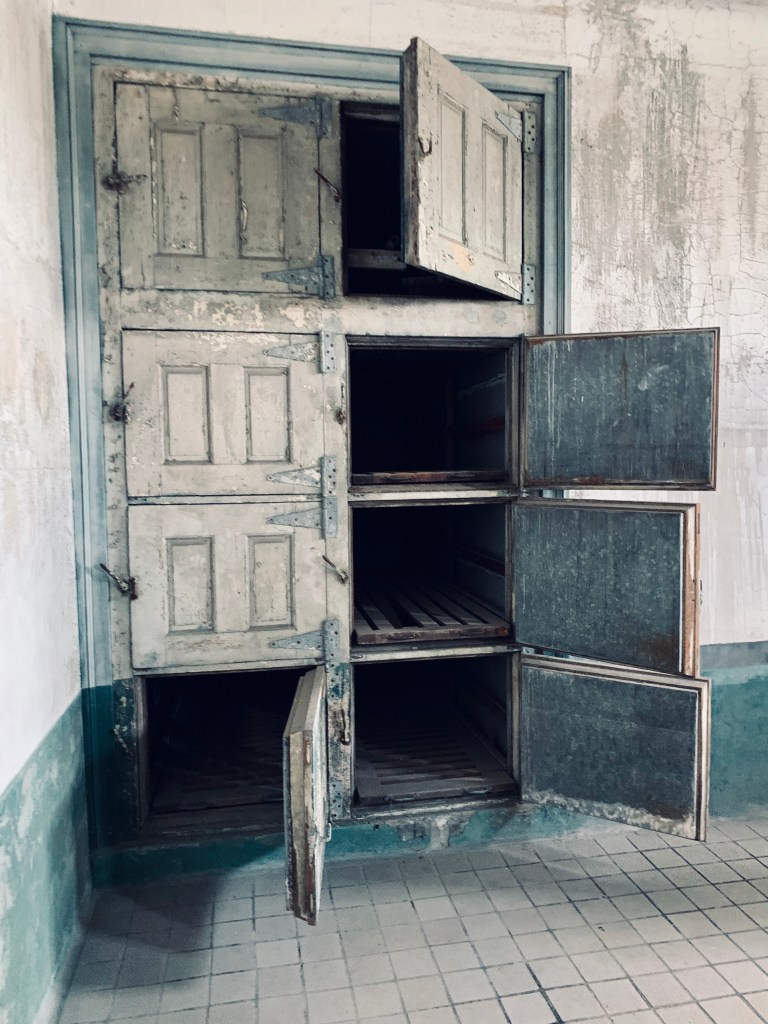
Body storage units
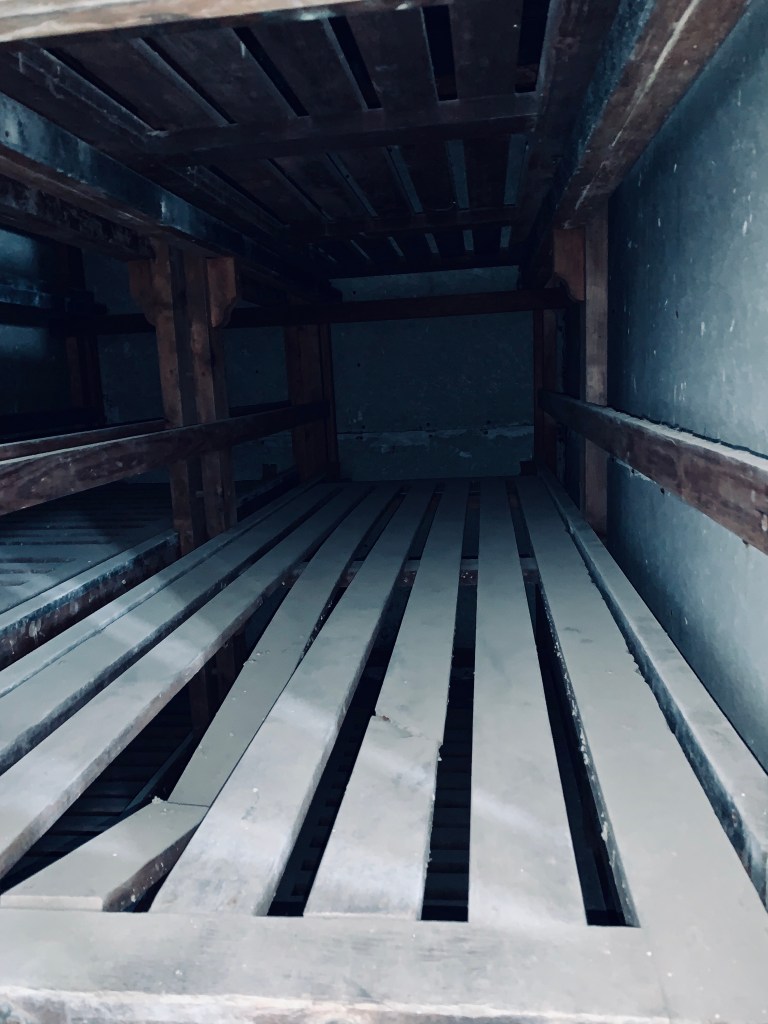
Inside body storage unit

Despite this, there were still over three and a half thousand deaths on Ellis Island.

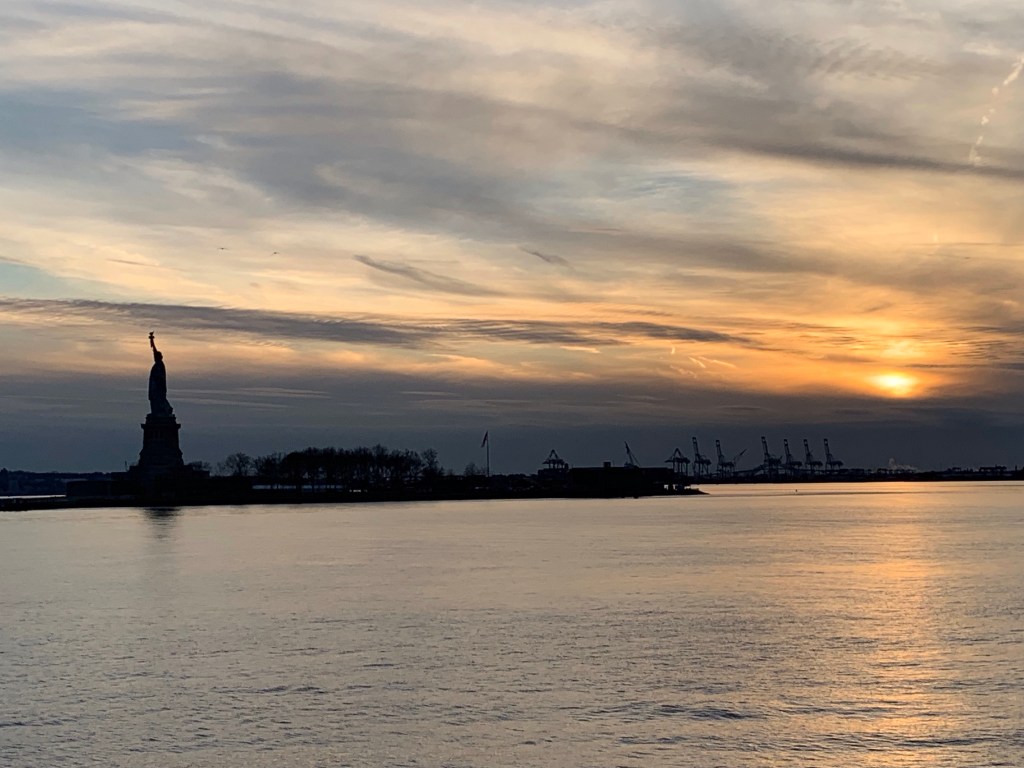
As a paranormal investigator, it is not a stretch to imagine the ghosts of some of these traumatised individuals remain. So many were not so much seeking a new life, as escaping an old one. They were so close, yet disease, madness or malnutrition were their ultimate demise, the image of the Statue of Liberty the last thing they would see.

How The Other Half Lived

We were taken to the grand house that the Chief medics resided in, so typical of the well to do houses of Manhattan of the time, views over a rising skyline of progress, yet so close to life and death and desperation. There is a letter in the house from a woman who grew up their, living as any other child, quite unaware of the battle for health and freedom intertwined with turmoil and heartache just feet away.

Journey To The New World

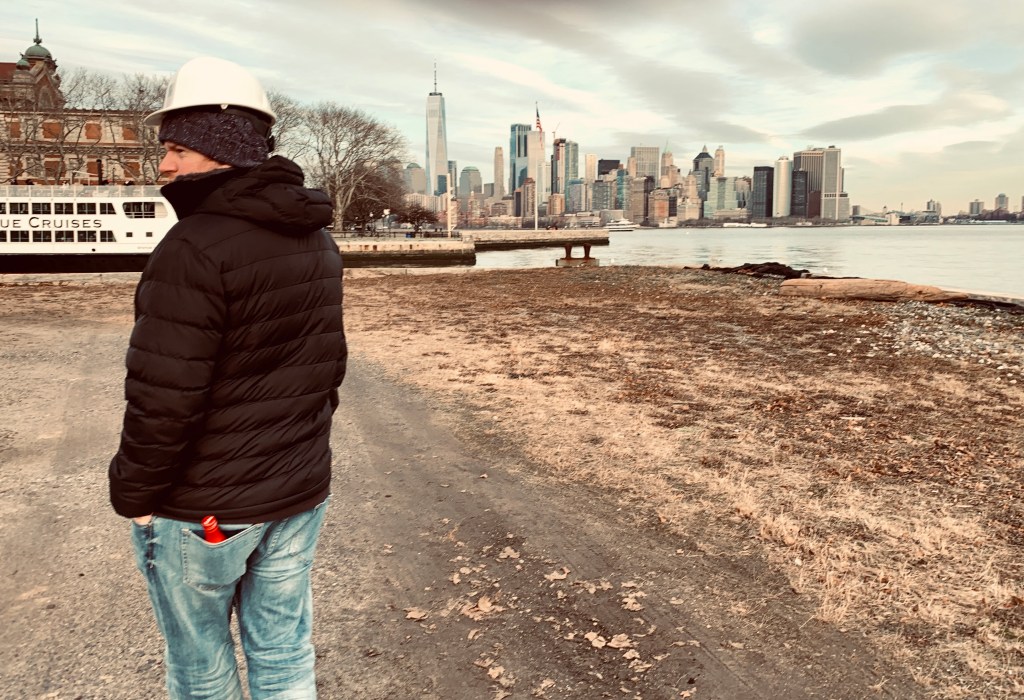
As we stood on the shoreline looking out to Manhattan, our tour was at an end. It was moving, insightful, educational and so incredible. If you visit Ellis Island, please do not miss this tour.

Dominic on the shore of Ellis Island

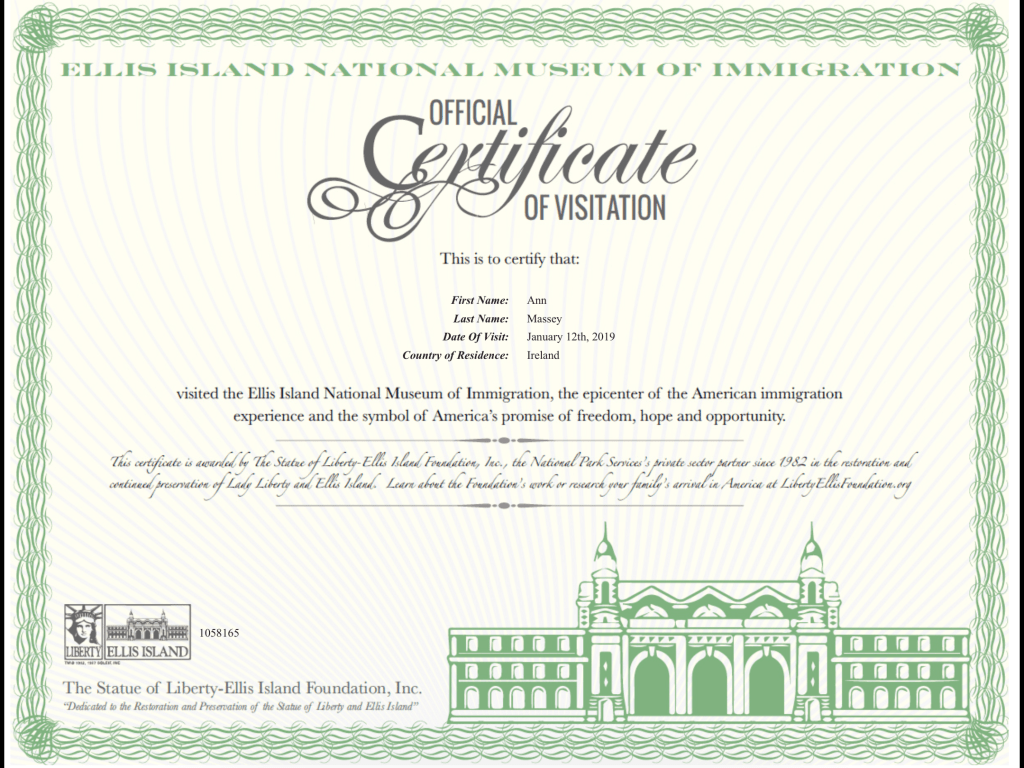
Returning to the Immigration centre, it was almost an anticlimax. We walked through the interactive experience in the centre, but sadly the look up for family records was unavailable at the time but thankfully available online. It was still wonderful to stand where my relatives had stood to gain entry and explore the various areas of the centre. You also get to create your own certificate as a keepsake which is emailed to you – a nice touch.

My own certificate
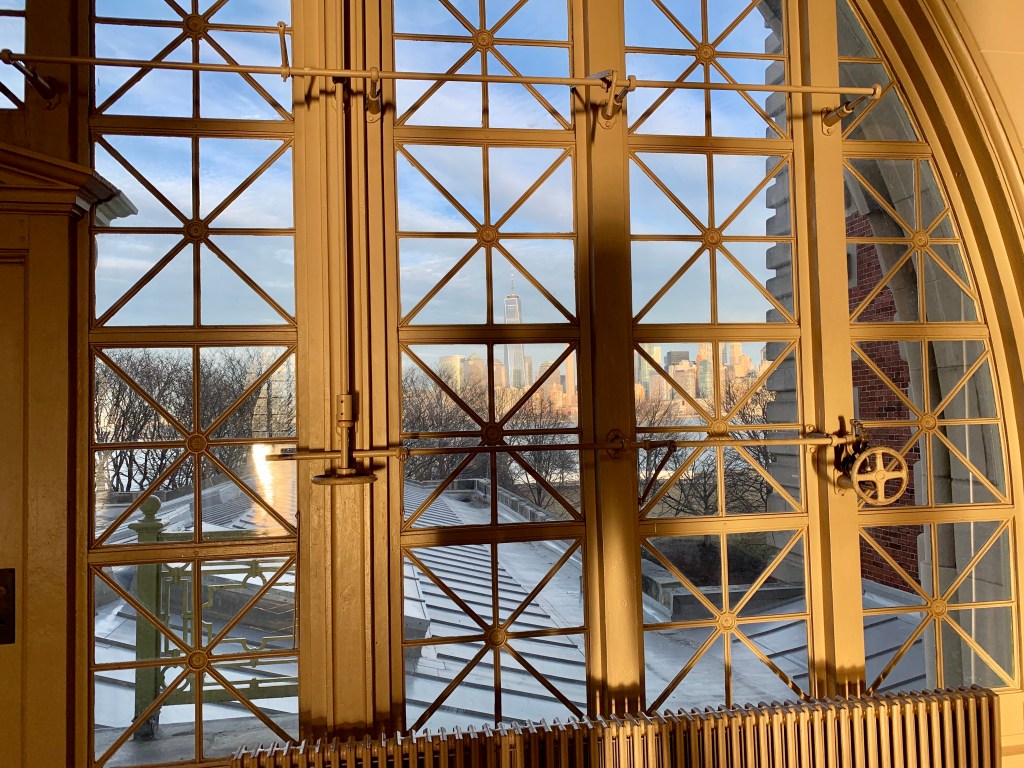
Freedom View -Window over Manhattan from the Immigration Centre

There is a fine cafeteria and a few gift shops with fun and interesting memorabilia as well as informative books.

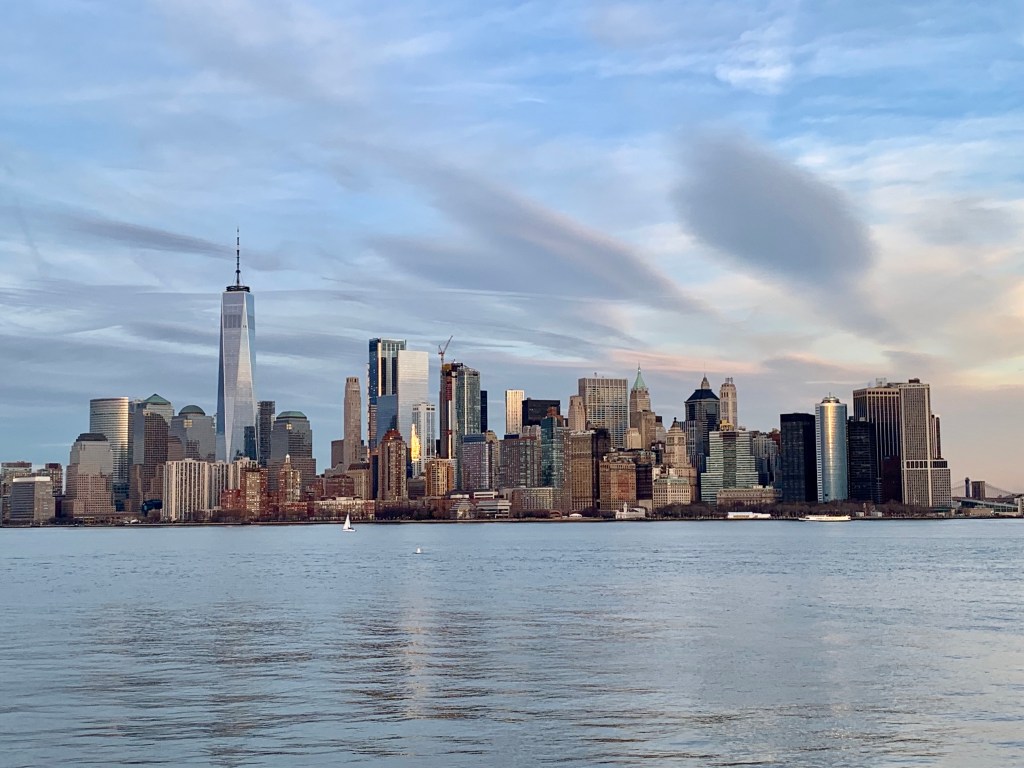
As we boarded our ferry to return and took in our view of an ever enlarging Manhattan skyline, I looked back and realised the few hours spent may not have been enough. I could do the Hard Hat Tour over and over again. And how much would I love to do a paranormal investigation here?!

A New Life in New York

Ellis Island and particularly the Hard Hat Tour is quite possibly top of the to do list in NYC. Don’t miss it.

My thanks to Save Ellis Island, our guides and information from the Ellis Island page and History Channel. All photographs property of Ann Massey.