When I stood in Manhattan and took my first breath of New York City air, I realized I had come home. I had never been before, but I felt I had always been there. New York is my favourite place in the world. For this piece, I feel a picture paints a thousand words as I bring you on a journey through the most profound place I have visited in a long time.
Photo Ann Massey
I was working in London in 2001 – a bank manager in Brixton, itself no stranger to conflict and bombs. I was on the phone to a client, around lunchtime. He was arguing about the charges on his account when all of a sudden he screamed obscenities. I said “excuse me?” He apologized and asked if we had a TV there. He then told me a plane had flown directly into one of the twin towers. The rest you know…
Photo Ann Massey
I had all kinds of mixed pre-conceptions regarding this “museum.” I don’t like that word in this context. It doesn’t represent the epic proportions of emotion, sacrifice and loss that this location represents. I think it needs a better name.
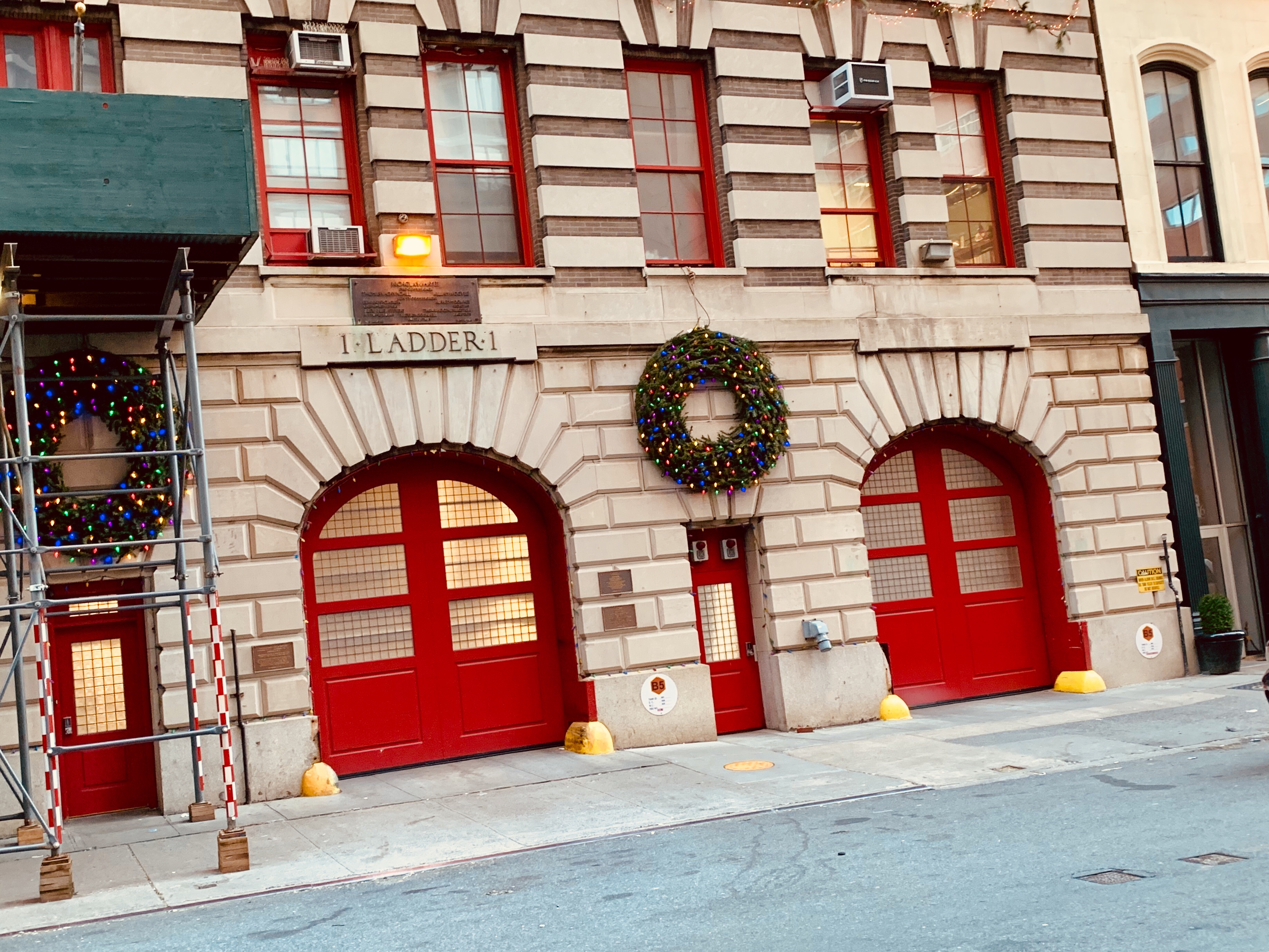
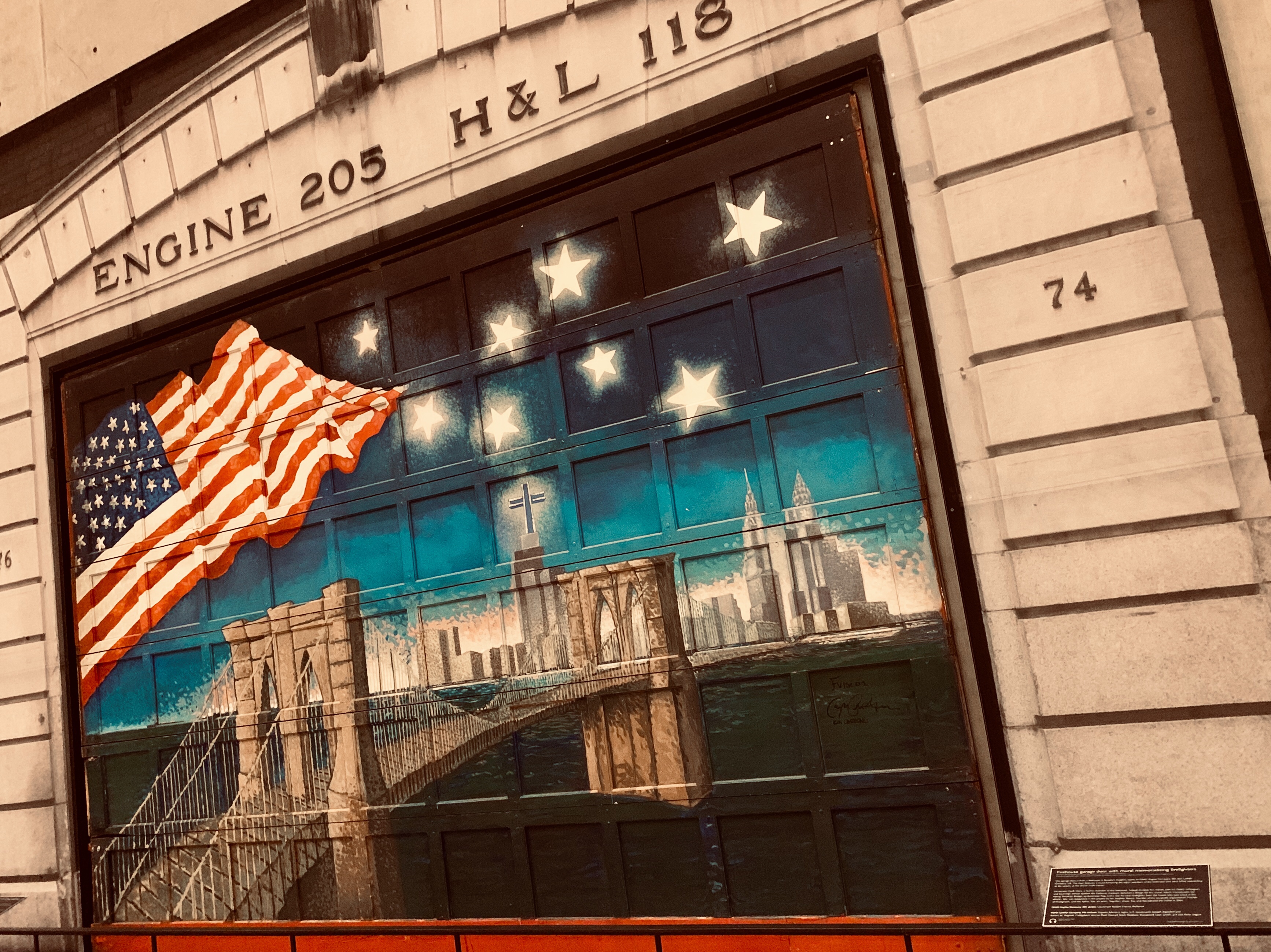
A part of me didn’t want to go, but then we passed Ladder 1. The Christmas decorations still hanging over the entrance. They were still going about their business, being heroes in the most difficult of locations to handle in an emergency. When 9/11 happened they didn’t give up, they kept going, the wheel of responsibility still turning.
Photo Ann Massey
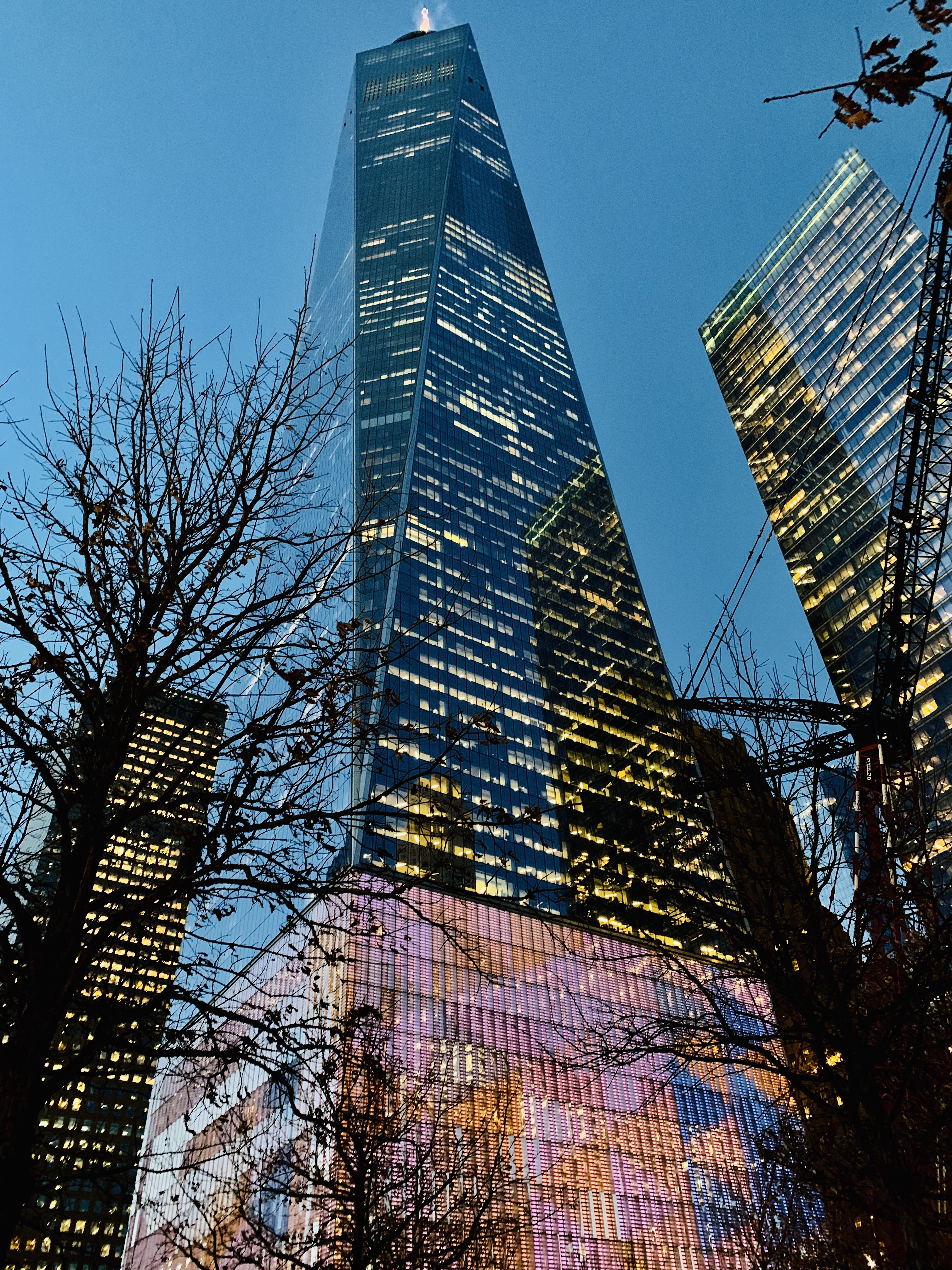
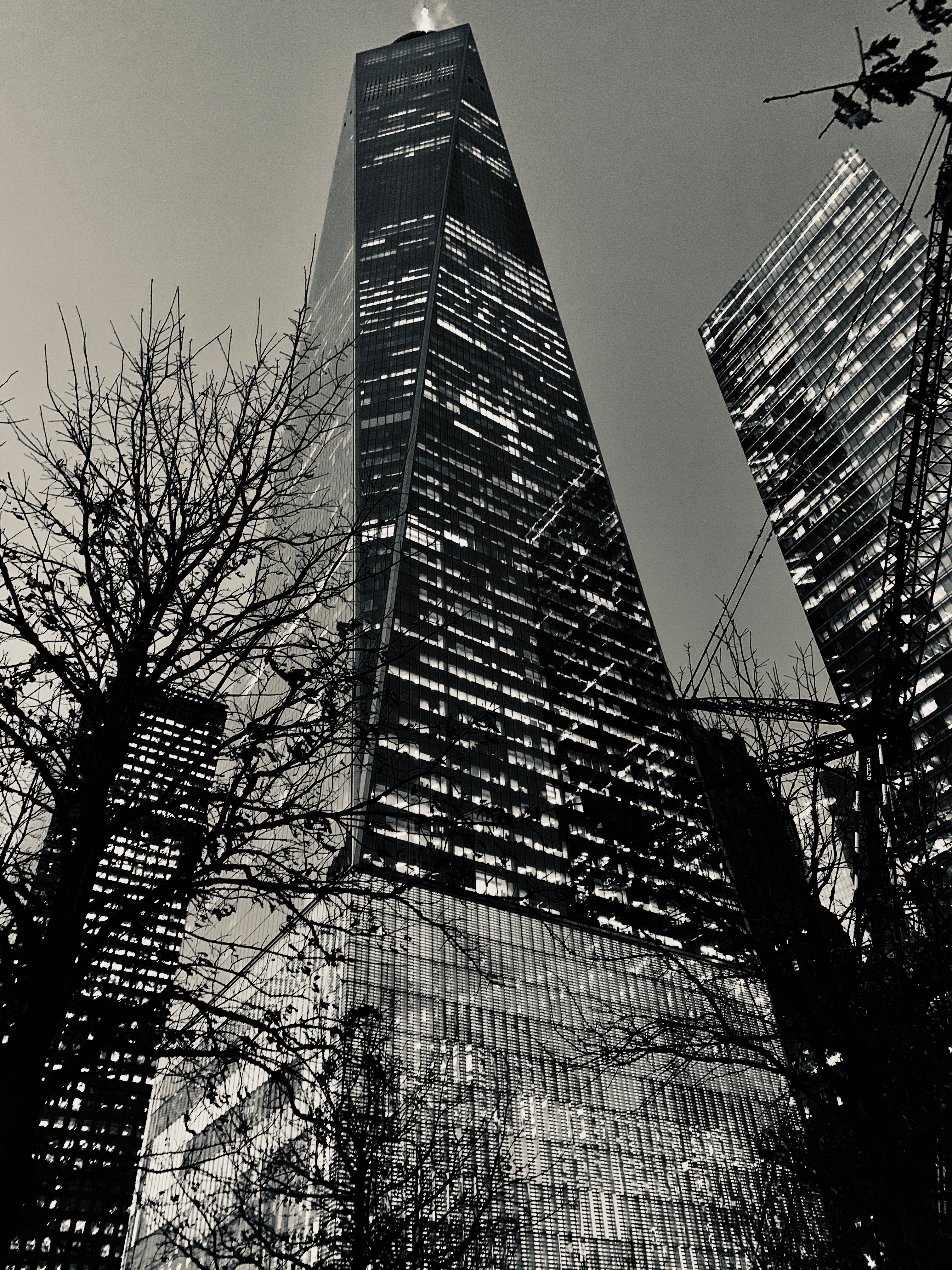
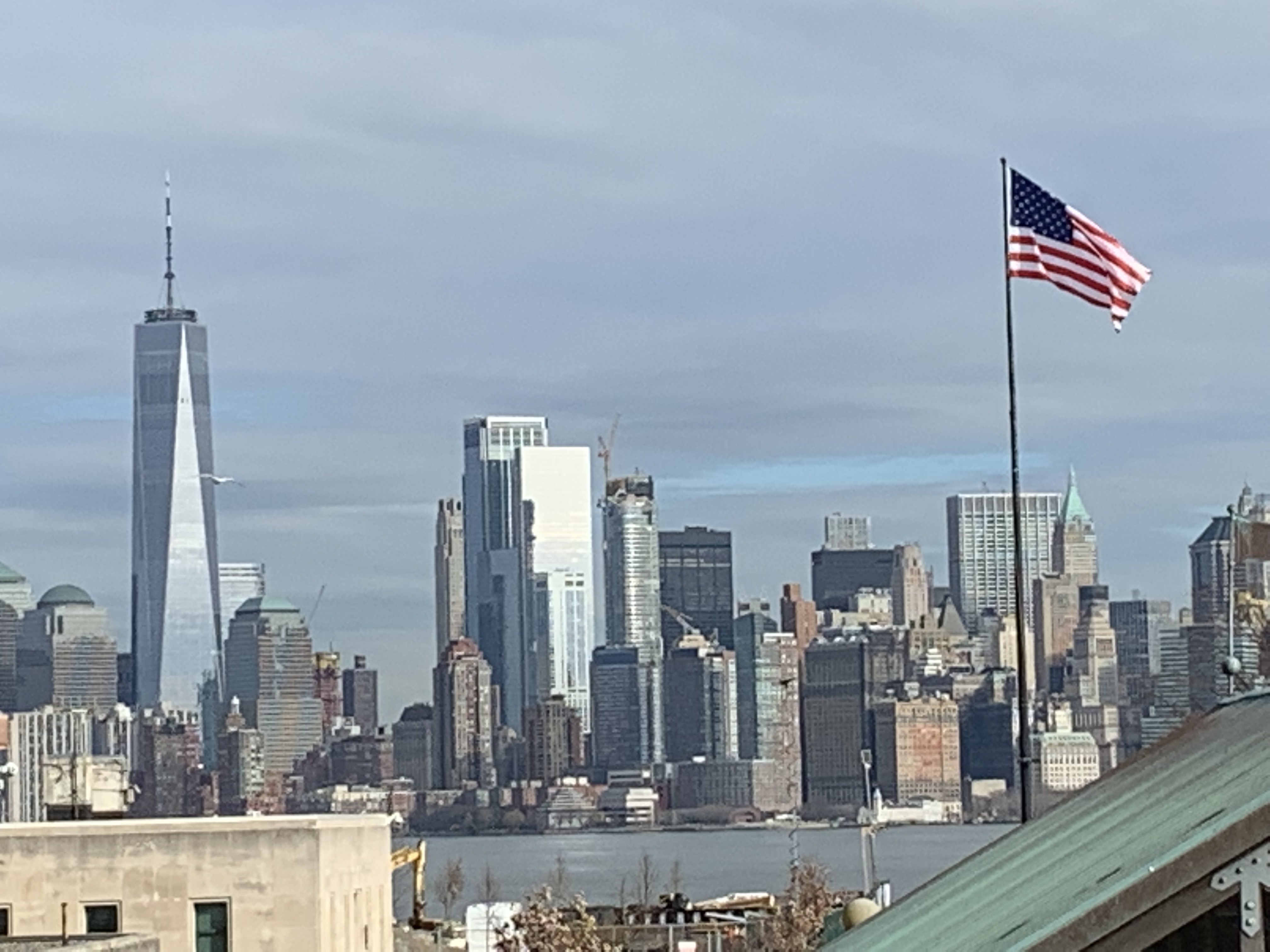
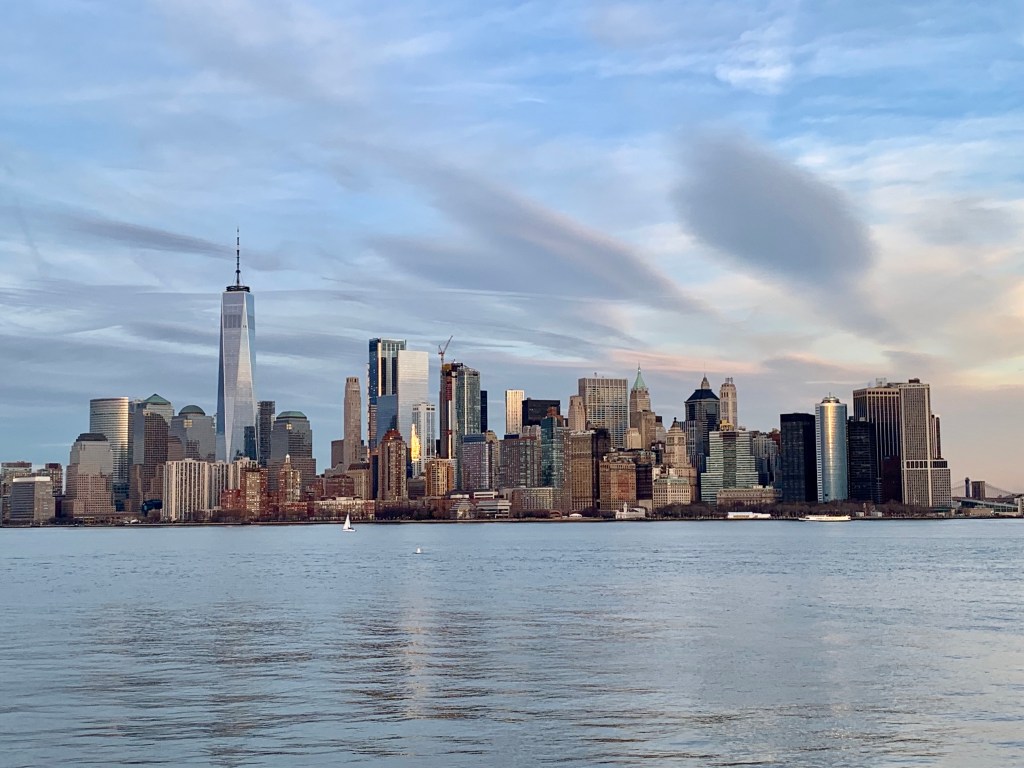
Next, I looked up at Freedom Tower, or One World Trade Center to call it by its proper name. I felt dwarfed, humbled as I glanced up at all 100 plus floors. It was so hard to imagine how this area was full of dust, rubble, death and fear some 18 years previously. I glanced around and for everyone it was business as usual, tourists, locals, commuters, life goes on.
Photo Ann Massey
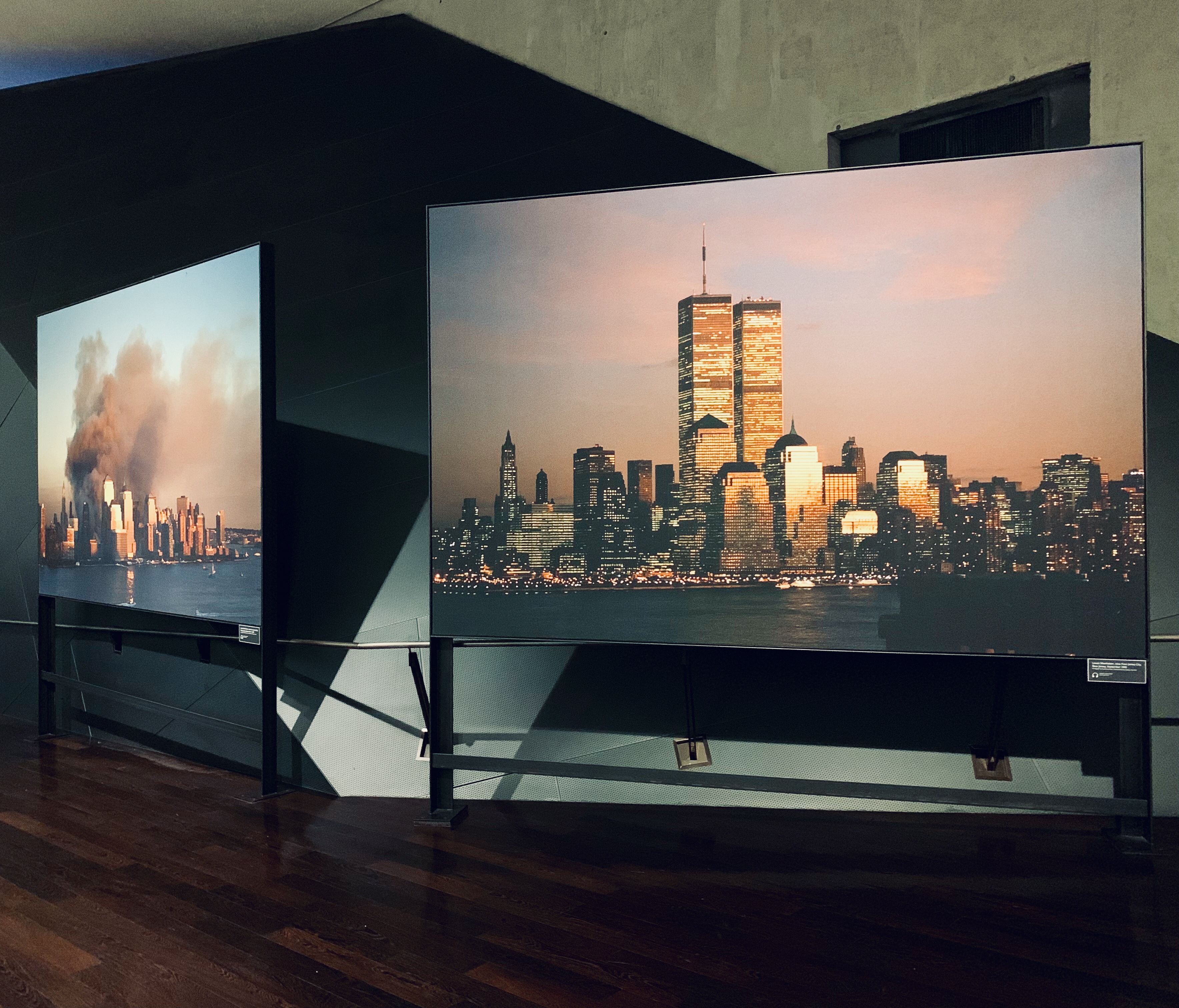
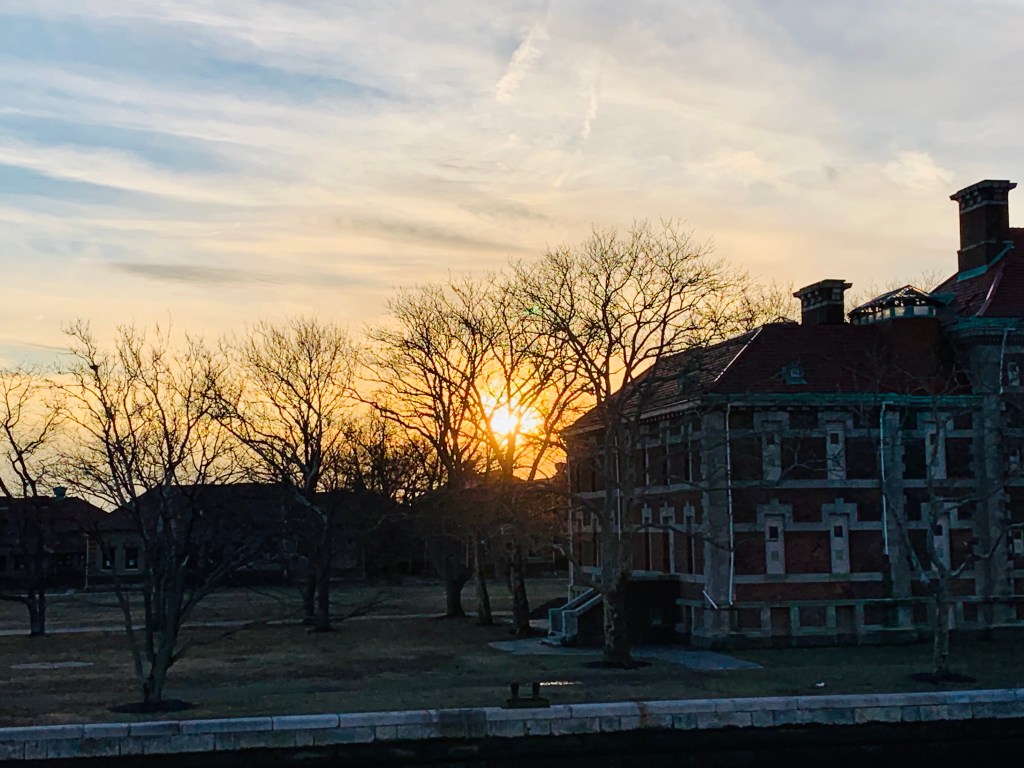
When we had visited Ellis Island (that’s another huge story to come) we spoke with Pam, our guide. Imagine being on Ellis Island, a ferry ride away from Manhattan and watching those towers crumble? Helpless, terrified, uncertain. How to get home, how long would they be trapped, were their loved ones safe? The view from there was far different from the one standing directly underneath. Anyway, let’s stay on track.
Photo Ann Massey
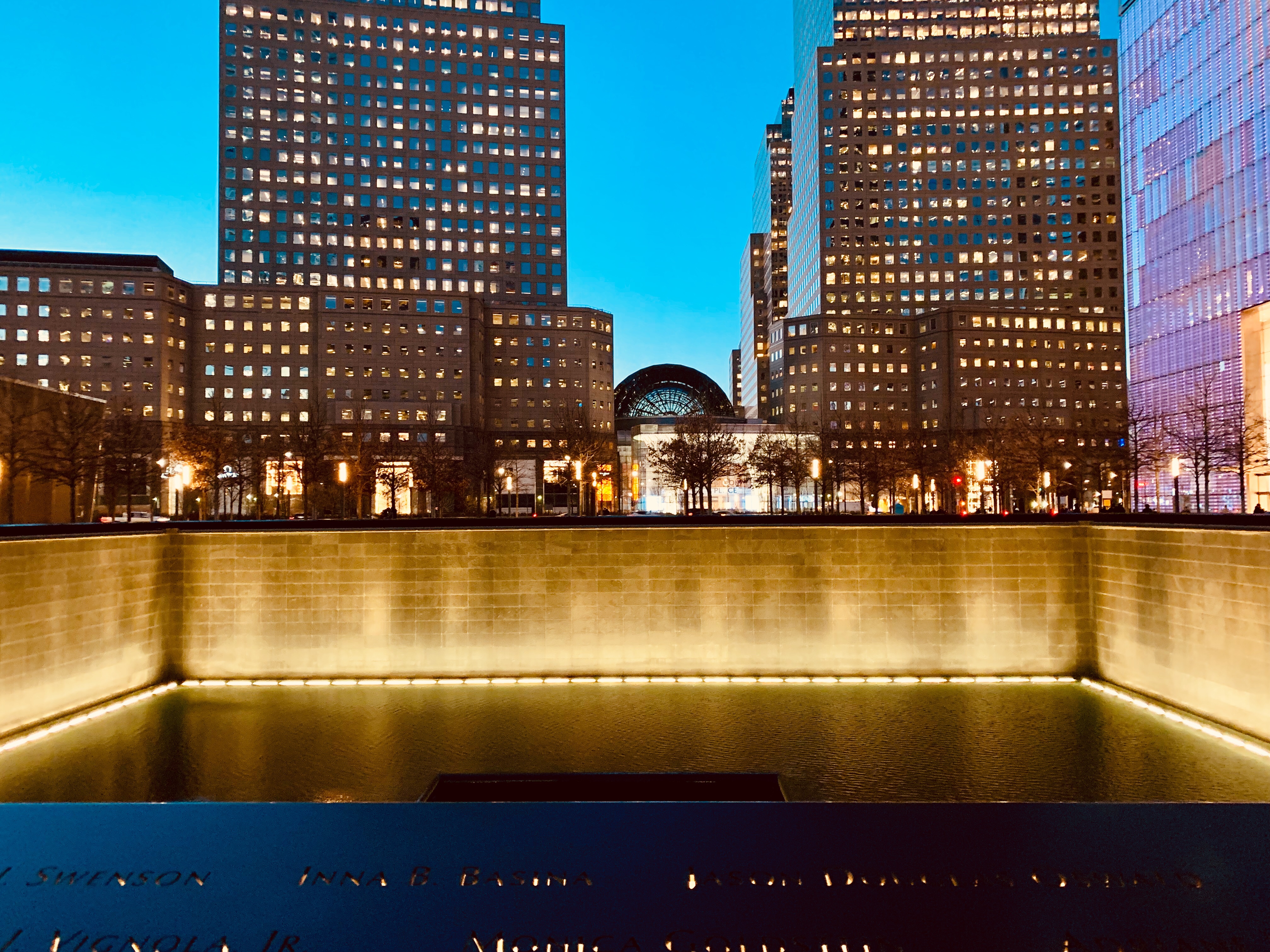
The memorial fountains are special. Set in the footprints of the original twin towers, ponds of water with cascading rivulets indicative of tears. Around the edges are the engraved names of every single person to die on 11th September 2001. Beside each name is a hole just big enough for the stem of a flower. Every morning a representative of the museum walks over and places a single white rose by the name of any victim who has a birthday that day.
Photo Ann Massey
I’m a sensitive, an empath. That means I feel what you feel, the ripples of tragedy run through me and I was most definitely not looking forward to this visit. When we stepped through security and descended the escalator, I burst into tears. Dominic knew it was coming and was ready for me.
Photo Ann Massey
After getting a grip so to speak, I started to take in the incredible pieces that had been selected to show the world the tragedy that had befallen Manhattan and the incredible spirit of the people of New York. The spirit that enabled a people in mourning to rise from the ashes and be a Phoenix from the flames of fear and start again.
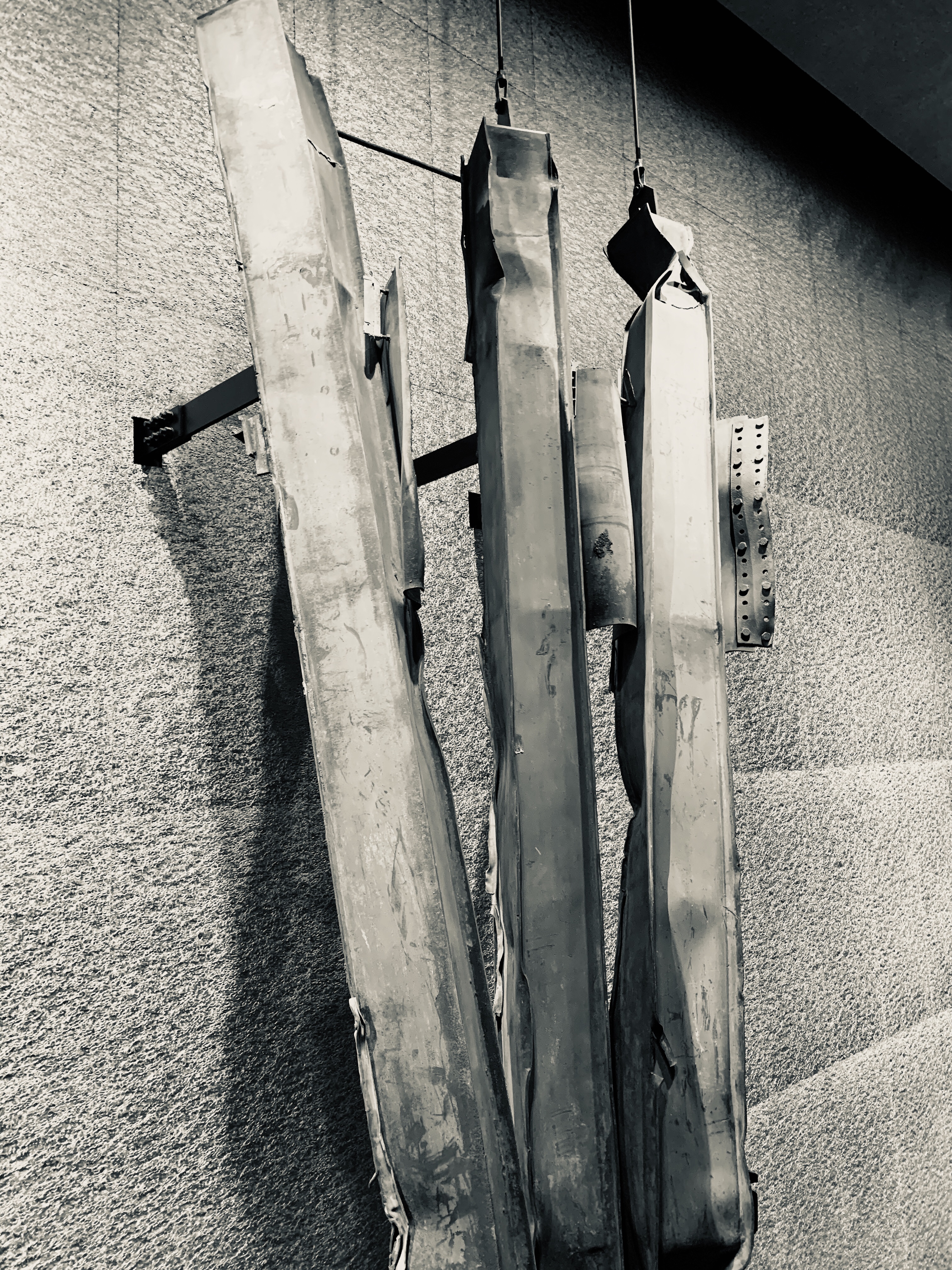
The girders. The iron girders that had held the weight of the Trade Center and then the weight of tragedy, twisted in a reflection of the day’s events.
Photo Ann Massey
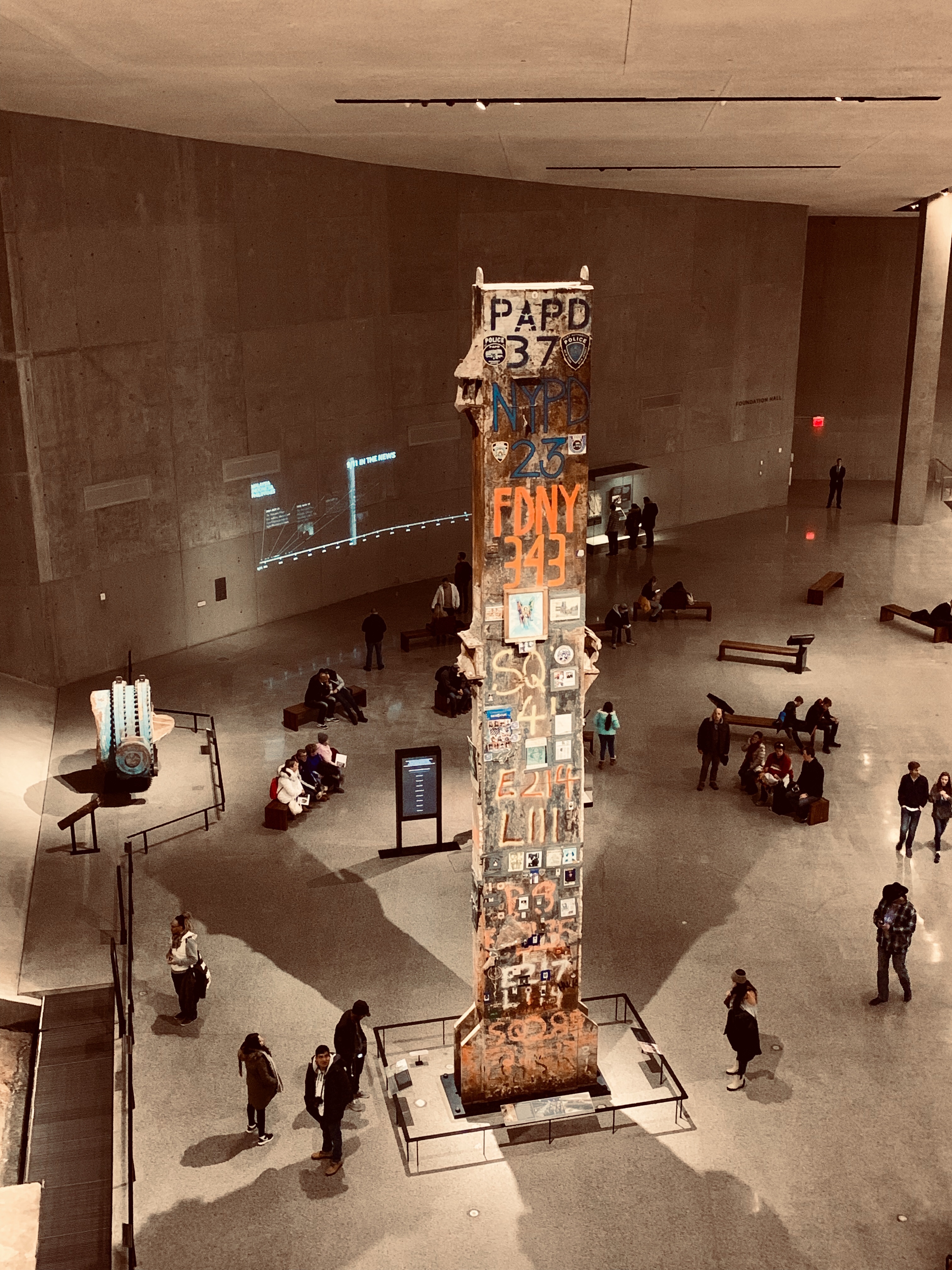
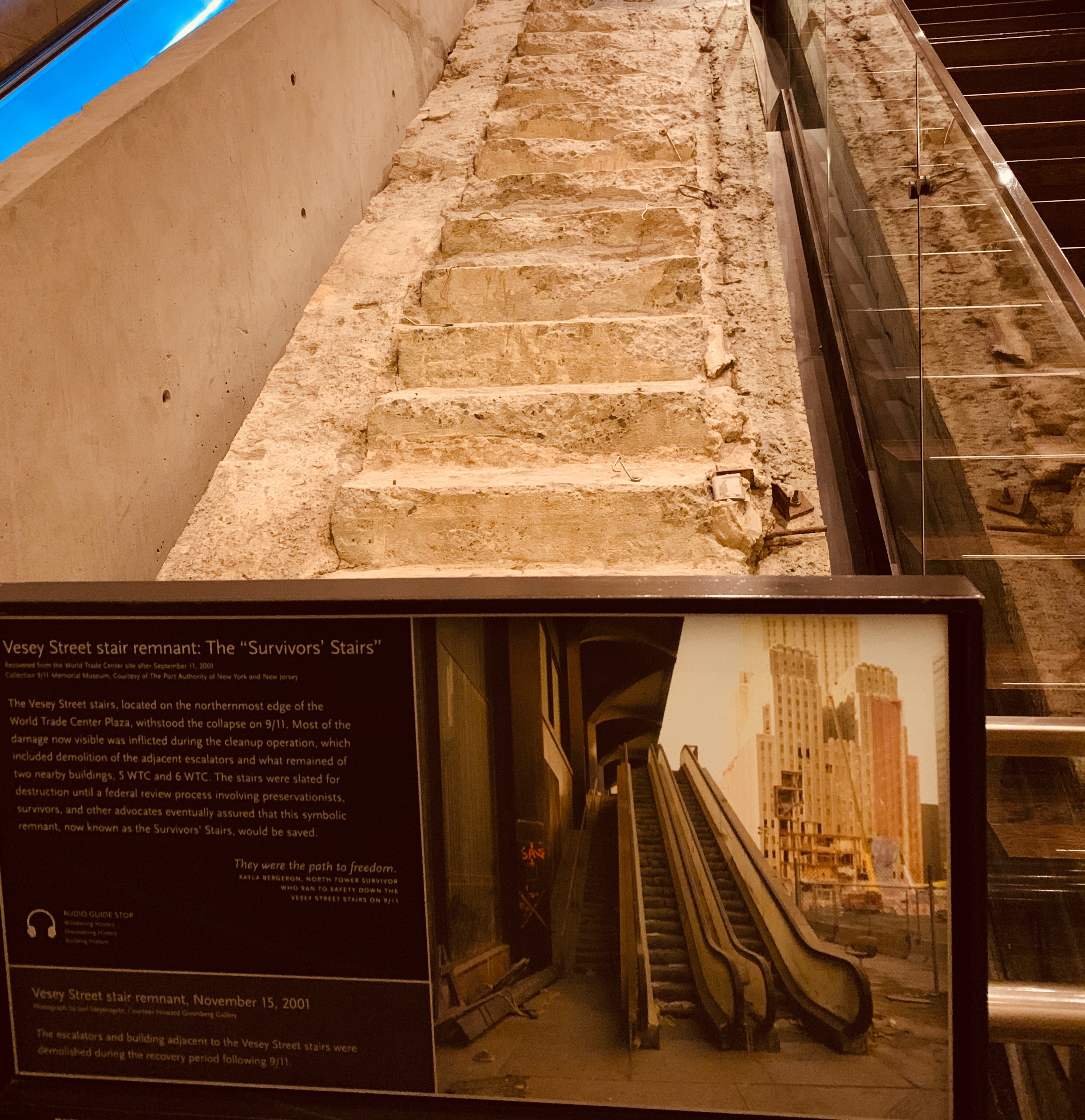
The Survivor’s Staircase. This was the very first artifact to be lifted into place in 2008. It was the staircase of the satellite building 5 World Trade Center leading onto Vesey Street. Hundreds of survivors escaped through this route and it dominates as a symbol of survival.
A
Photo Ann Massey
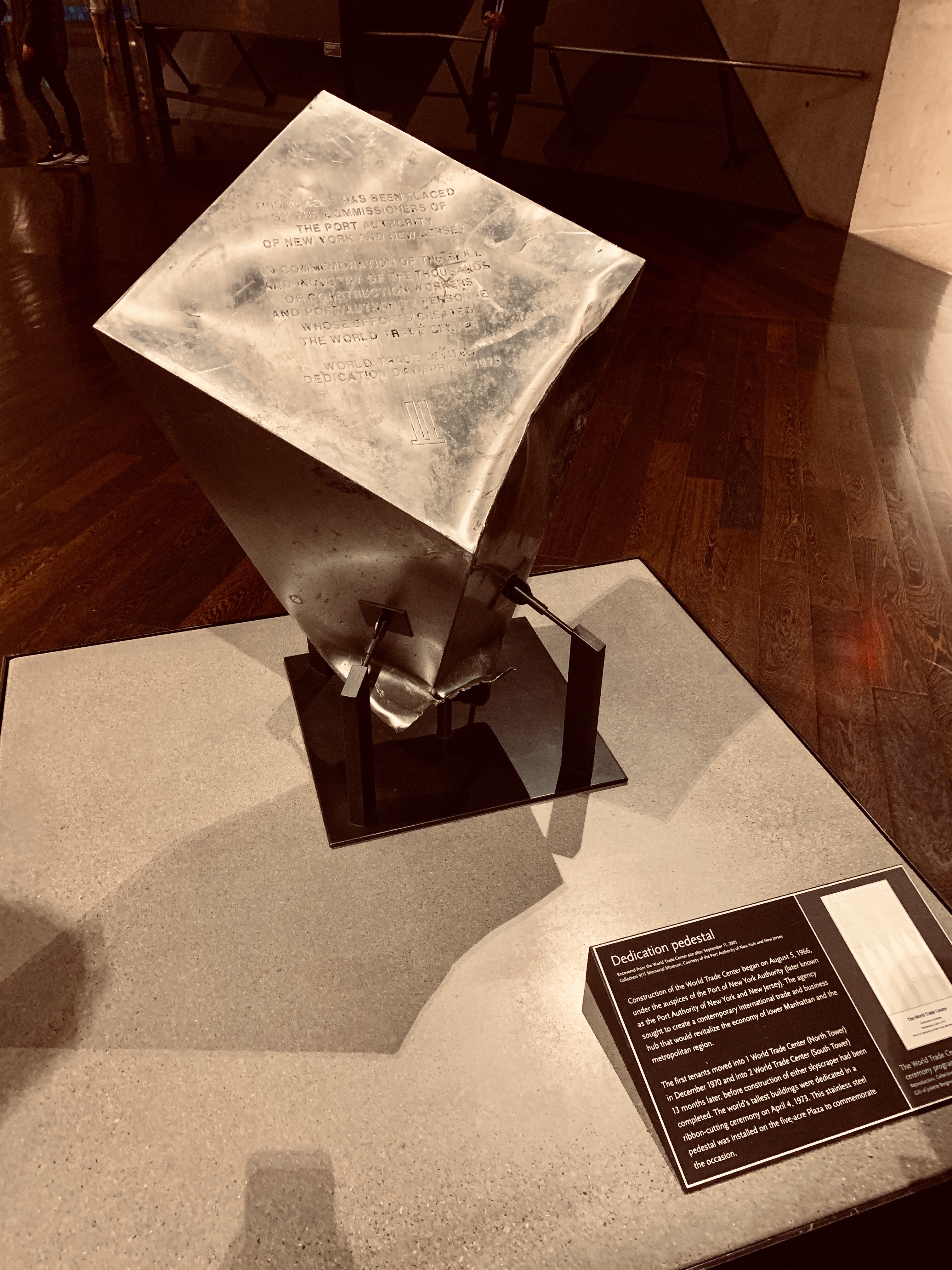
The original dedication pedestal from 1966 survived.
Photo Ann Massey
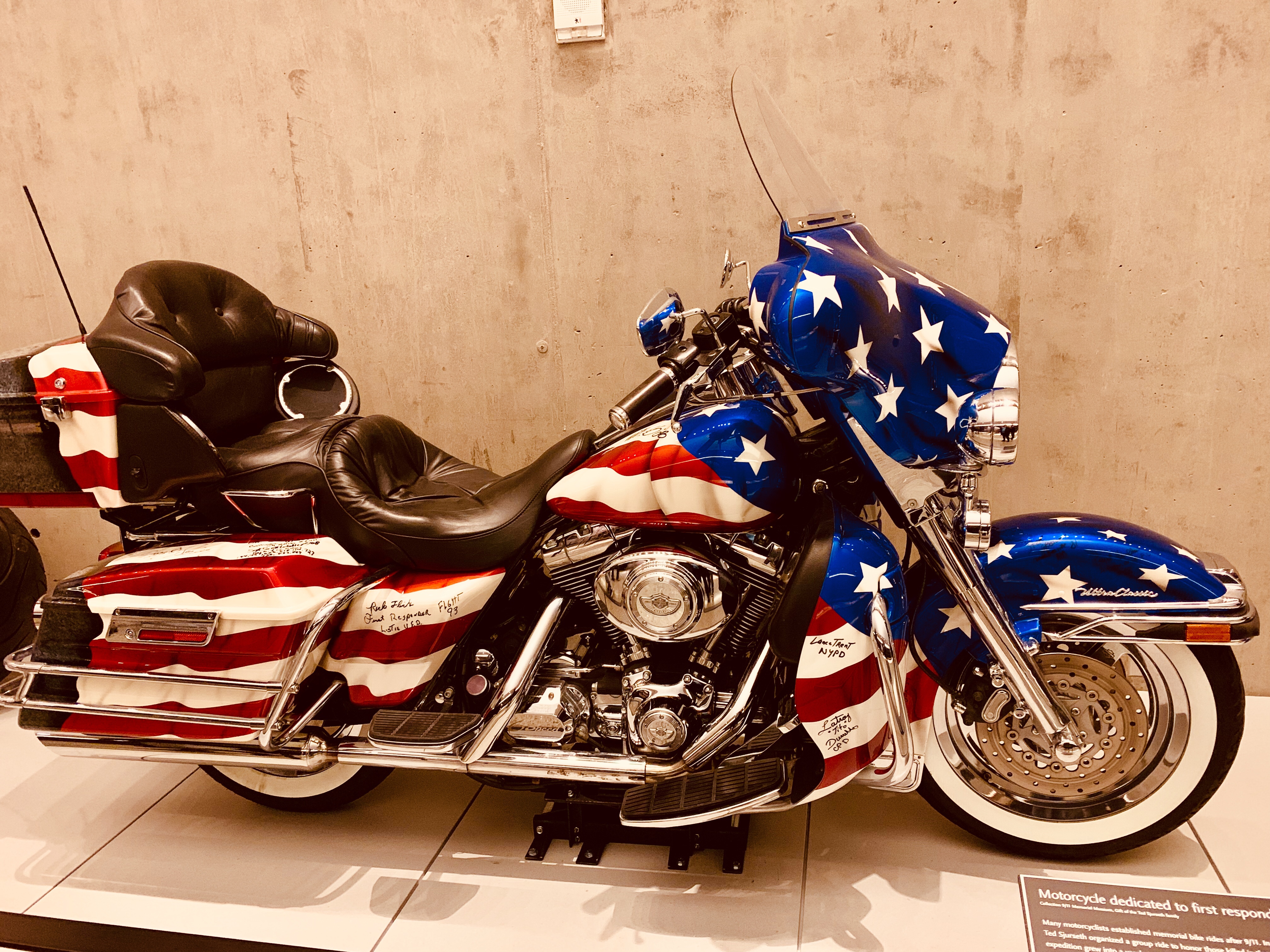
In Honour of the men of the New York Fire Department, Orange County Choppers were asked asked to create bikes representative of the event.
Photo Ann Massey
The deeper into the museum I entered, the more overwhelmed I became. The names and photos of every single victim are there, a room with the voices of family members telling us about their lost loved ones, bringing them back to life.
Photo Ann Massey
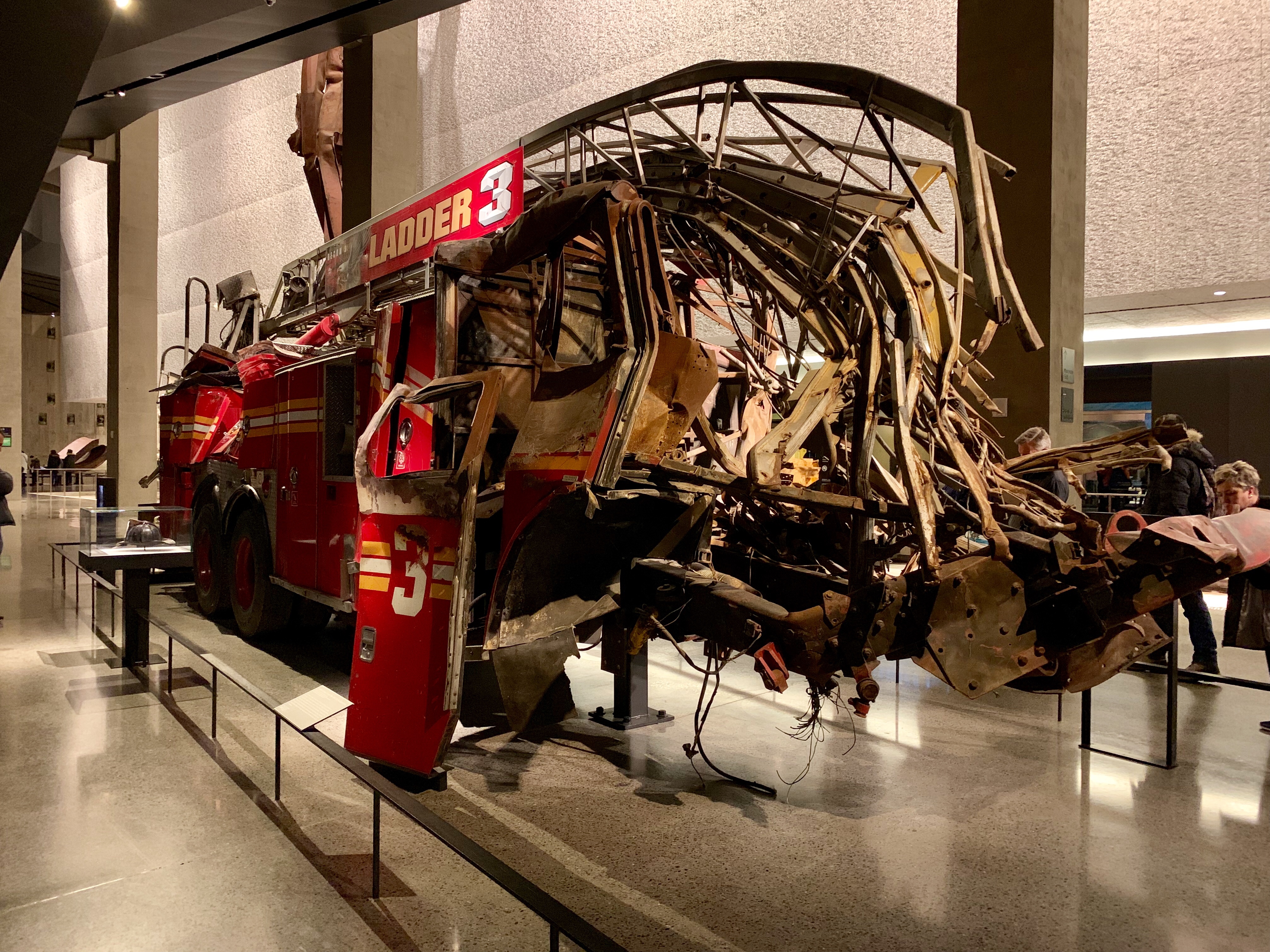
Then for me it became morbid, it became too much. I stopped taking photos. “Memorabillia” of papers that fell from upper stories along with terrified workers, shoes of people trying to run, the twisted remains of emergency vehicles, the recordings of terrified voices, live news footage, photographs of the fallen.
Photo Ann Massey
At first I was horrified, disgusted even, but then I realized we had to go through the discomfort, the pain, the fear. We had to, in order to understand.
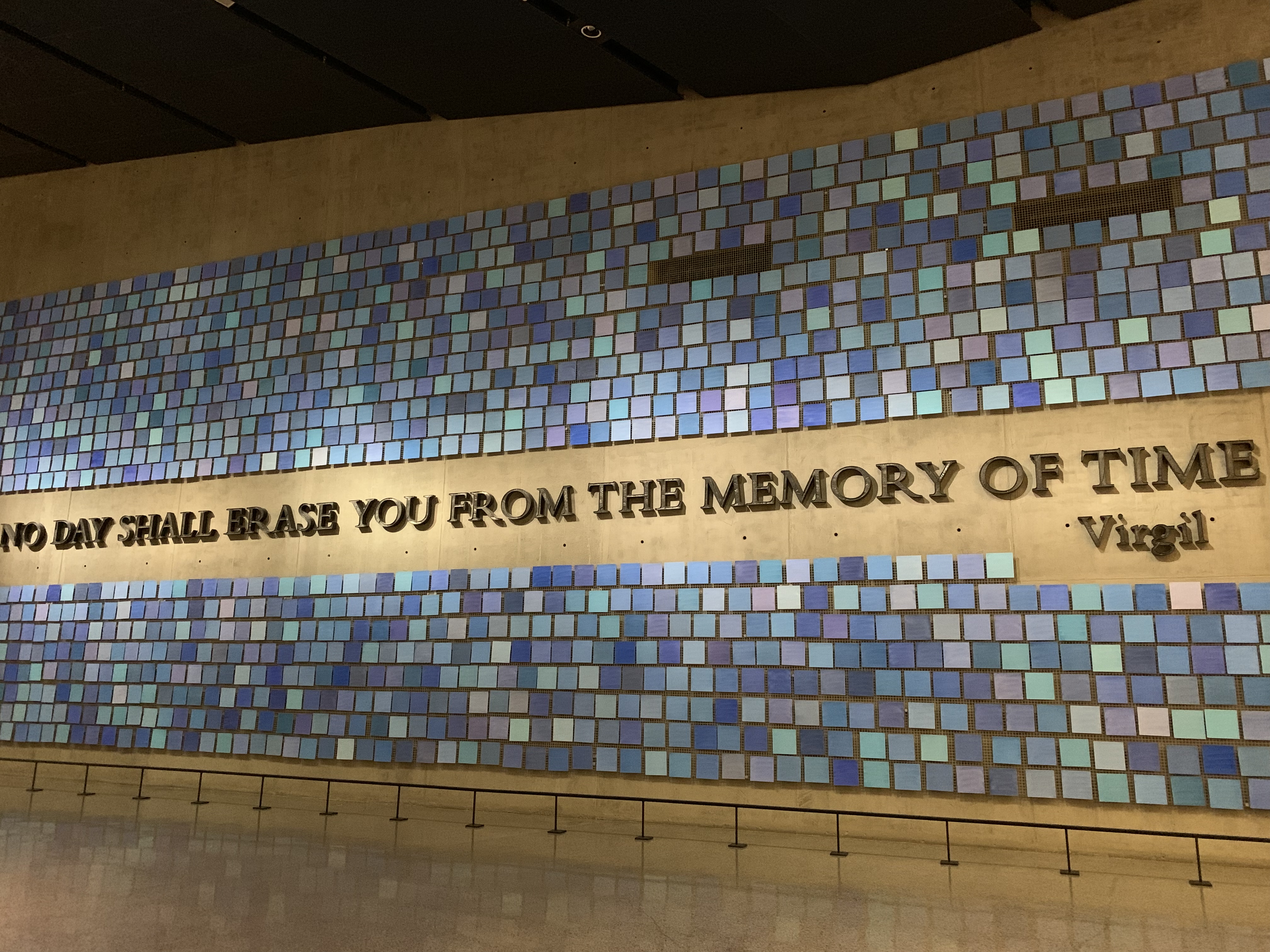
It is then we see the quote from Virgil. No Day Shall Erase You From The Memory Of Time.
There’s is no getting away from it, a trip to NYC can be costly, but it doesn’t have to cost the Earth and some things are actually free! Here are my top tips for making the most of your time in the Big Apple without breaking the bank.
When To Travel
Unless you are absolutely desperate to get caught up in all the Thanksgiving and Christmas madness, or wish to feel like a cow on a cattle ranch in the height of Summer, choose your time to travel CAREFULLY!
We tend to visit in January. This is when you get the best flight prices, hotel rates, restaurant week prices and reduced rates at attractions. Particularly in early January, there are many Christmas lights still up and you get to enjoy the wintery, festive weather without the crowds and hefty price tag.
While the idea of warm sun may be appealing, New York will be hot, humid, sticky and with higher pollution levels in the summer months, not to mention packed. Sunshine in Central Park may sound romantic, but not when you can’t see the grass for people.
We found that in January, people are nicer too! After the stress of Christmas and large crowds, the attractions and even the Central Park carriage drivers have more time for you, prices are lower and you get a far more pleasurable experience. We even get sunshine with our crisp weather to make it more special!
Who To Fly With And What Seats to Buy
Photo by Ann Massey
Dominic is a big, burly chap so for a flight of seven and a half hours or so needs to be comfortable. The question is, if you pay for an upgraded seat, what are you paying for exactly?
One time we decided to go with British Airways, which meant a short flight from Dublin to London Heathrow before boarding the 777 with premium economy seats. Now the seats were lovely, food and extras were fabulous and we were treated like VIPS, even though it wasn’t Business or First Class.
Photo by Ann Massey
The downside of this however is that we didn’t get to do the USA Pre-clearance which can only be done at Shannon or Dublin and of course, it added hours to our travel time. For the return leg on the Dreamliner, the journey was not of the same level of comfort and service was rushed, so essentially we had paid for nothing.
With Delta, their first level upgrade isn’t really an upgrade worth talking about. Marginally increased legroom and nothing else special.
Unless you can afford to fly Business Class or First Class, don’t waste your money on lower level upgrades, it really isn’t worth it. Instead, just opt for the economy/coach seating with extra legroom if you need it.
When looking at airlines, they are all much of a muchness and this time we will be flying Aer Lingus. Go for value flights that suit the times you want to travel. Remember the majority of flights coming back from NYC are red-eyes. Food tends to get served really quickly to be out of the way, lights are dimmed and folks try to sleep so forking out for anything else is a waste. Perhaps treat yourself outbound but definitely don’t bother on the return.
Airports
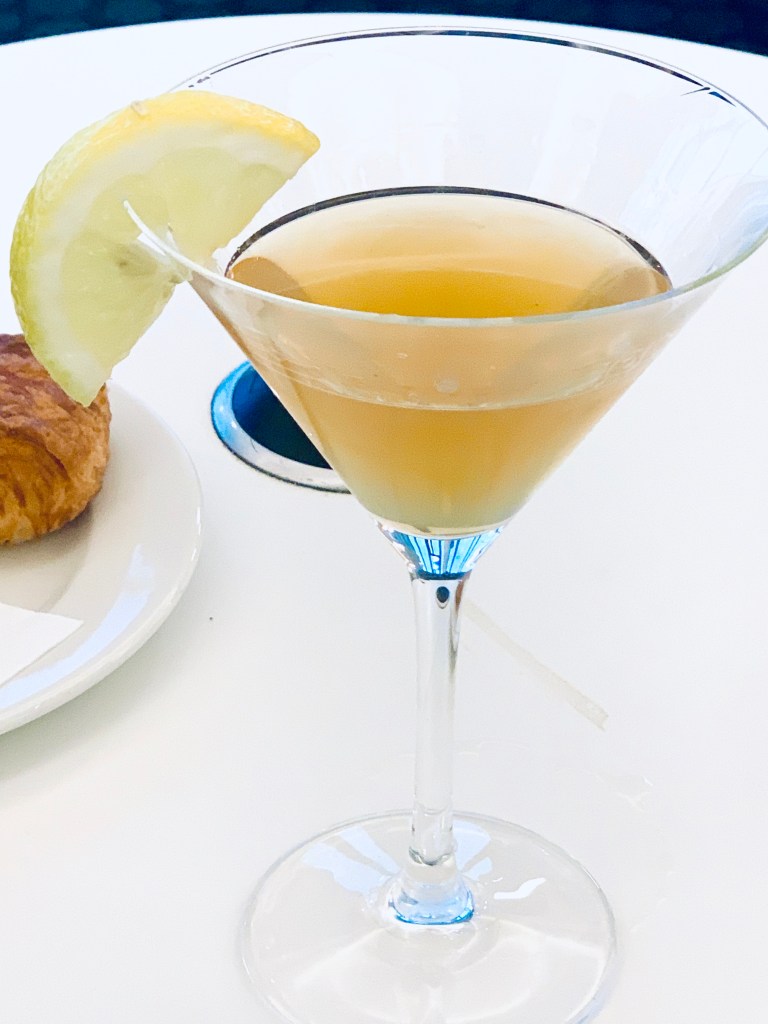
Cocktail at 51st and Green Lounge, Dublin Airport- photo by Ann Massey
Wherever possible, opt for an airport that has US pre-clearance, so in Europe that is Dublin and Shannon airports. The process is much less stressful and when you land in NYC you are straight out of the domestic terminal, no long lines after a long flight!
The airports are one of the times I will tell you to spend money. Book your car parking in advance for a smooth arrival. Make use of Fast Track security – again, something like this takes so much stress out of your journey. It’s uncomfortable enough having to unload everything into a box, take off items of clothing and go through scanners, without having to queue for ages doing it!
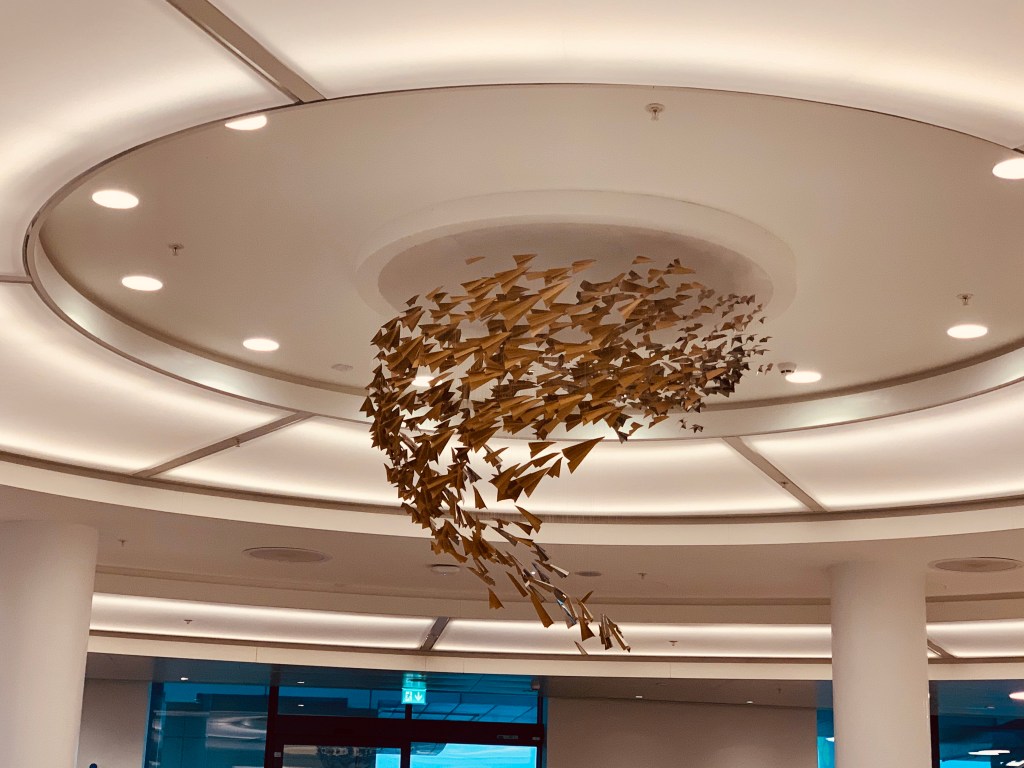
Pay for use of an airport lounge. In Shannon Airport it is the Ború Lounge and at Dublin Airport it is the 51st and Green Lounge exclusively for US pre-clearance. So civilised and quiet, with comfortable seats, good food and drinks and you can sip on a pre-flight cocktail while watching the planes. There are also good facilities for refreshing and even changing into flight clothes if you wish.
51st and Green Lounge, Dublin Airport – photo by Ann Massey
On your return, if you are buying duty free, your items will be taken from you and placed in a sealed bag, to be handed to you at the aircraft. Ensure the seal is intact as that is a requirement for bringing it back into your home airport.
Hotels
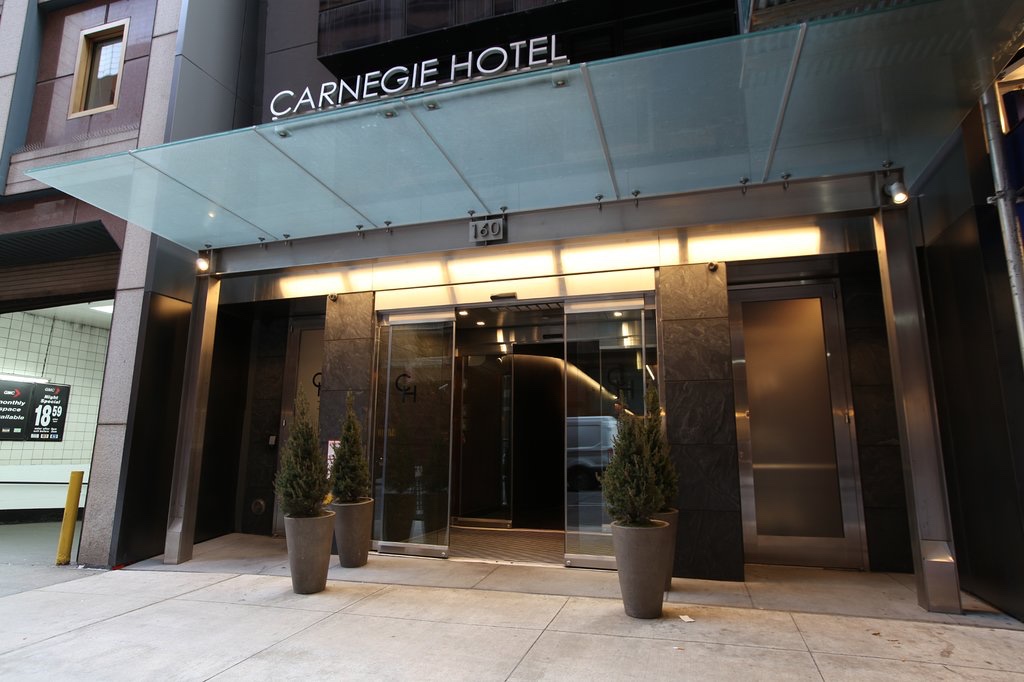
The Carnegie Hotel
When selecting your hotel, make sure that all the taxes are included in the price so you don’t have a nasty shock on checkout. To be fair, whether booking direct or through someone like Booking.com there is clarity on your final price. Many hotels do not include breakfast in your price so if you can find a good deal, go for one that does.
Here the cheapest isn’t your best option. Location is key, both for safety and accessibility. Go for somewhere that has a radial walking distance of around 15 minutes to main attractions and locations you want to visit. Midtown is usually best for value hotels that cover this and do read reviews before you book. We have been staying at The Carnegie Hotel, which was a perfect location opposite Carnegie Hall and had a free and very nice buffet breakfast as well as a free cheese and wine hour in the early evening, however this time around their prices have rocketed so we will be looking elsewhere.
While views and large fancy rooms are nice, they are a waste of money! You aren’t travelling across the Atlantic Ocean to stay in a hotel room. To make the most of your time in the city you are going to be spending very little time in bed. A place to lay your head with heating/air-con and a decent shower are all you need!
In your hotel you would tip a porter, waiter or bartender, but that is pretty much it on the cost front.
Transport
Photo by Ann Massey
The great thing about airport taxis into the city, are that they are set pricing from JFK. It’s a set journey rate plus toll, tax and peak hour surcharge but you do need to account for a tip. All told you will be looking at around $70 for this journey including a decent tip. Remember tipping is everything in NYC and we will cover that as we go.
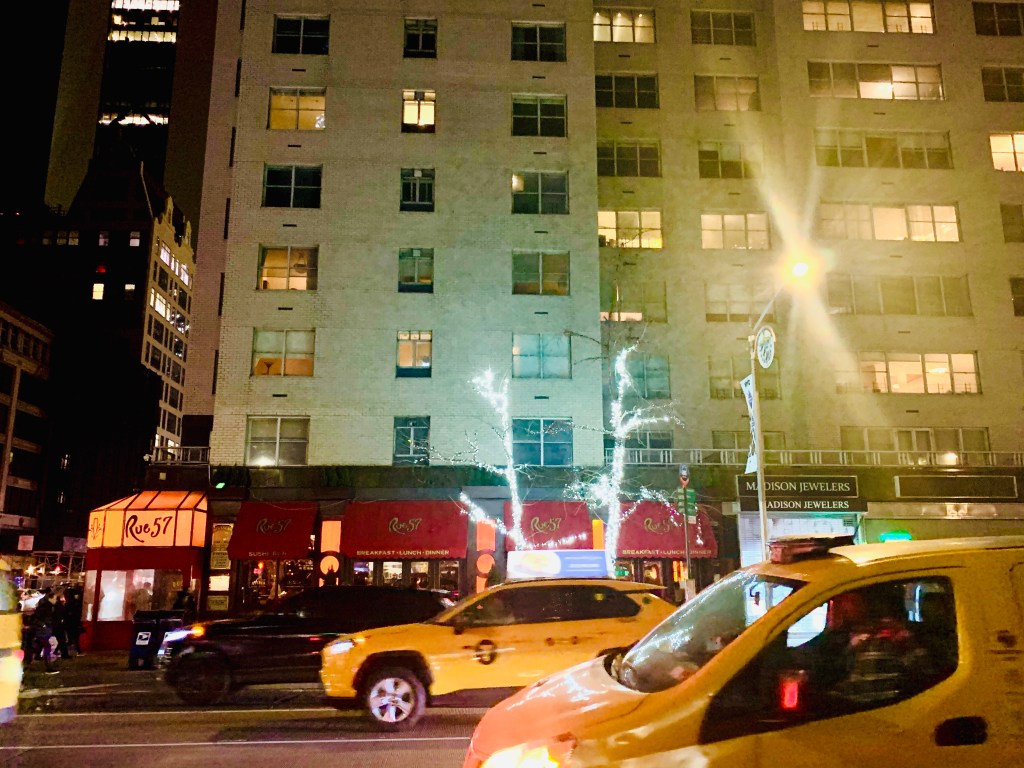
So you’ve had your yellow taxi ride and this is the one definite time to use it. After this, because of traffic levels, don’t waste your time or money unless you are out for the night and it is a question of feeling safer going back to your hotel. Yellow taxis are also very uncomfortable, another good reason to avoid them where you can. I am only 5′ 3″ and my knees were jammed against the divider. We never touched an Uber. For your return journey, get your hotel to book your car back to the airport – the price is similar and they will be using a reputable service.
Photo by Ann Massey
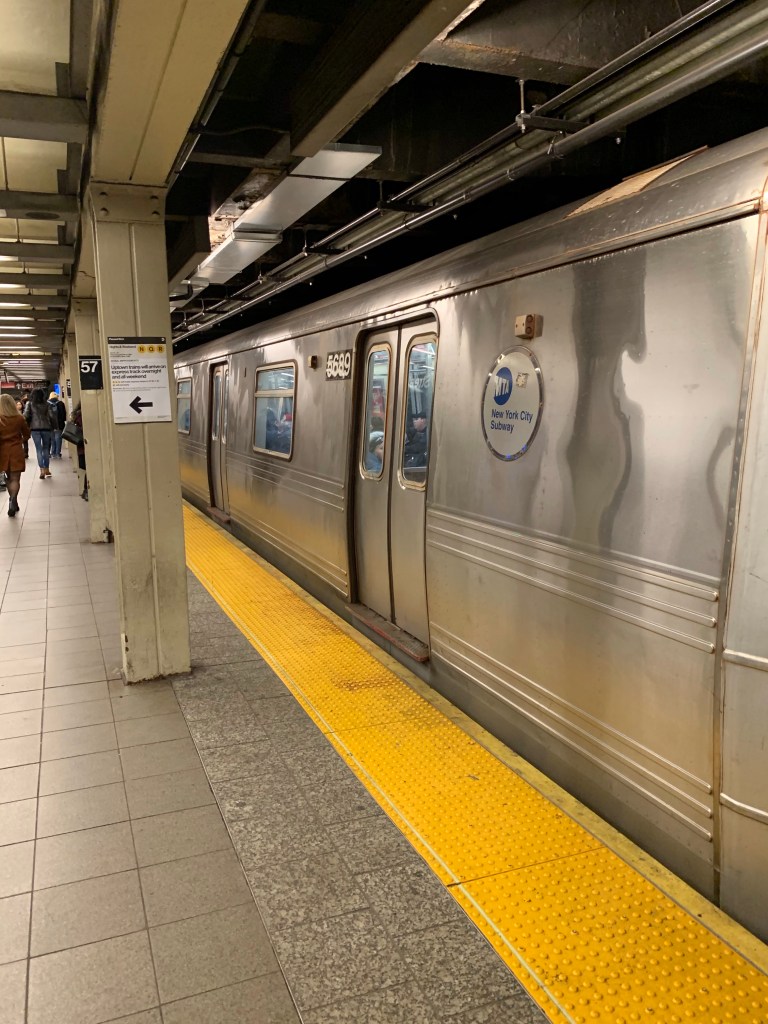
Our first primary method of getting around NYC is the Subway. We bought a 7 day pass and it takes you everywhere all the time without further outlay. Download one of the NYC navigation maps and your routes, subway times and distances to subway stations are all laid out for you.
The subway is a different world, remember it is how New Yorkers get around on a daily basis. The stations are great bits of history, with good art pieces and of course, buskers. My advice is don’t be putting your hand in your bag to take out change for buskers, beggars or anything else while travelling the subway. If it is loose in your pocket fair enough, just don’t draw attention to yourself. That said, I was serenaded on the downtown train by a group of retired gentleman singing Motown and Dominic had a couple of dollars in his pocket which we were more than happy to give!
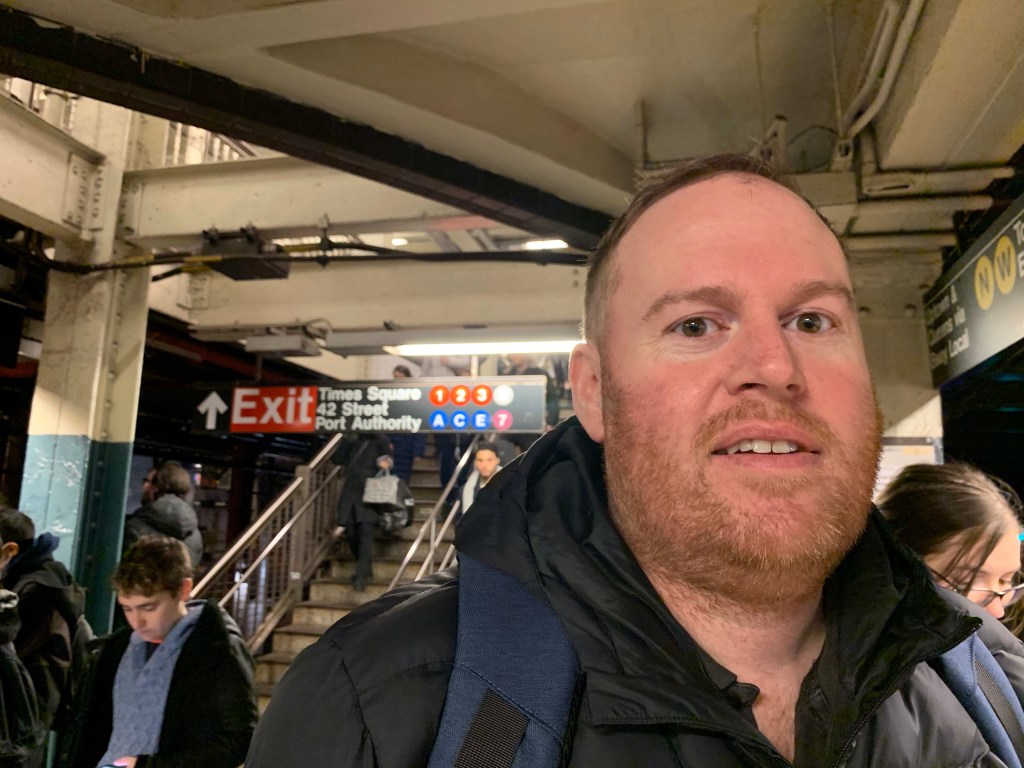
Dominic on the Subway platform – Photo by Ann Massey
You will also see strange things, but that is par for the course in any major city, just be alert and act like you belong and you will be fine. It really isn’t any different than riding the Underground in London or the LUAS in Dublin.
Our other primary transport was a simple one – OUR FEET! With the right hotel selection and studying a map before you go, you can really make the most of this option and your time. It is also the best way to find hidden gems to explore and places to eat that you would otherwise miss. Even in the rain it is manageable and we just bought an umbrella from one of the stores we passed for a few dollars and binned it when we left.
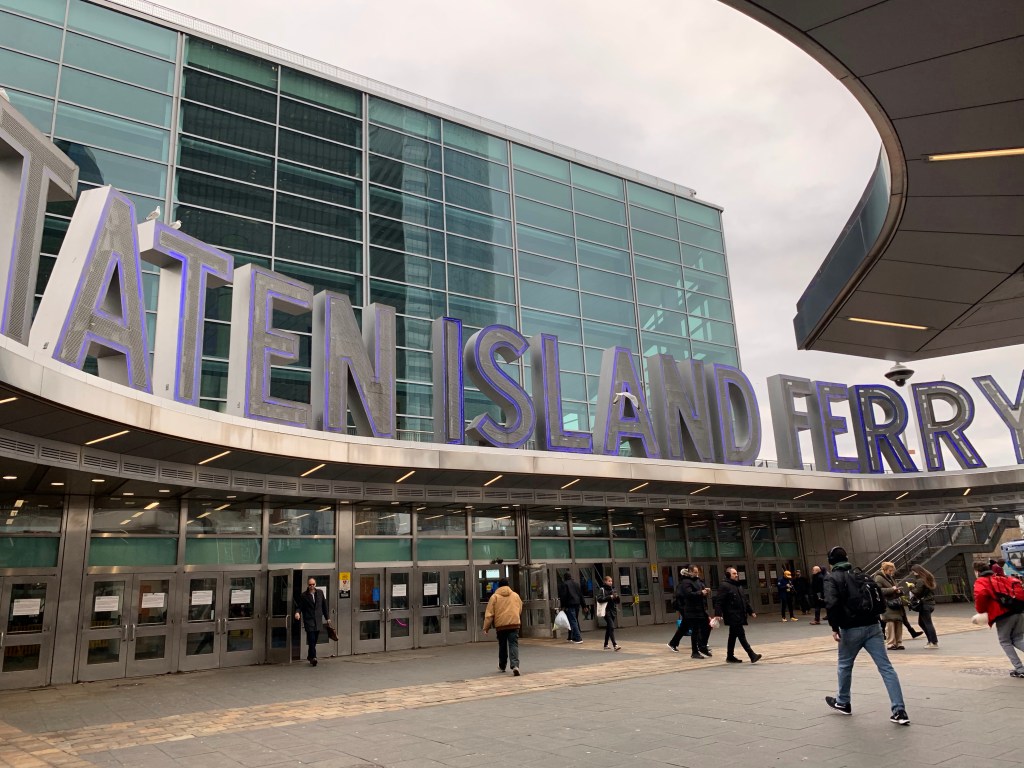
Staten Island Ferry Terminal – photo by Ann Massey
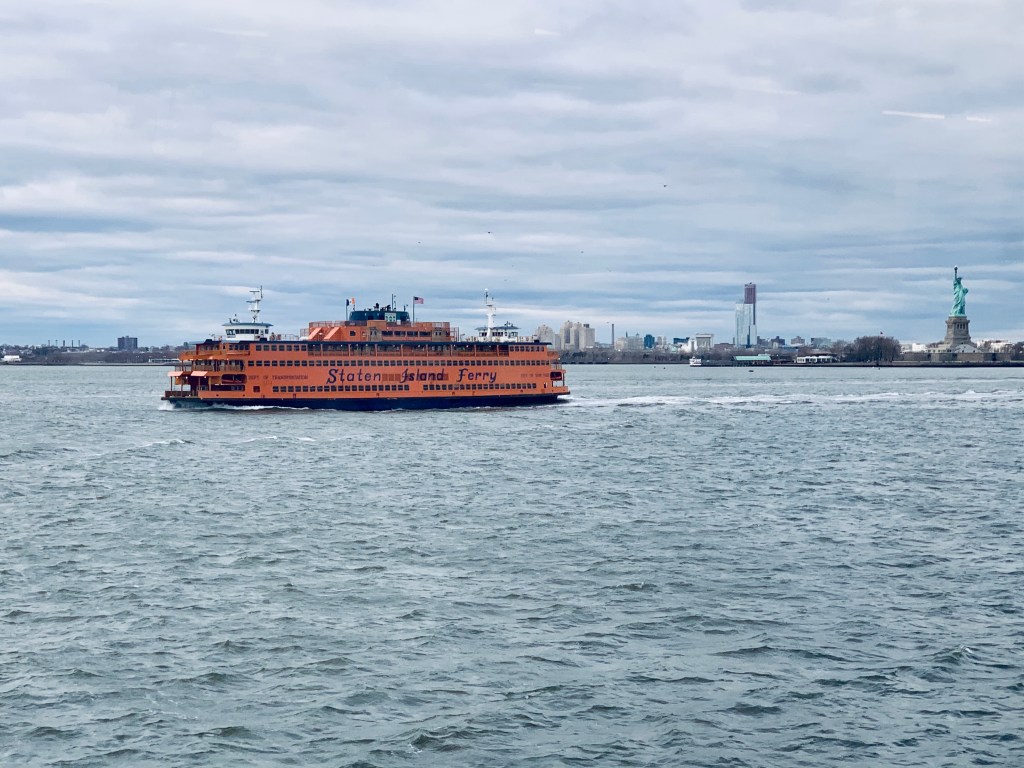
A great free resource that visitors tend to forget is the Staten Island Ferry! Running 24/7, the distinct orange vessel is a great experience in itself and you get amazing views of downtown Manhattan and of course, the Statue of Liberty. Staten Island itself is not shy of a few nice places to eat or explore if the mood takes you, however we just had a small wander and got the next ferry back.
Photo from Ferry to Ferry! By Ann Massey
Dining Out
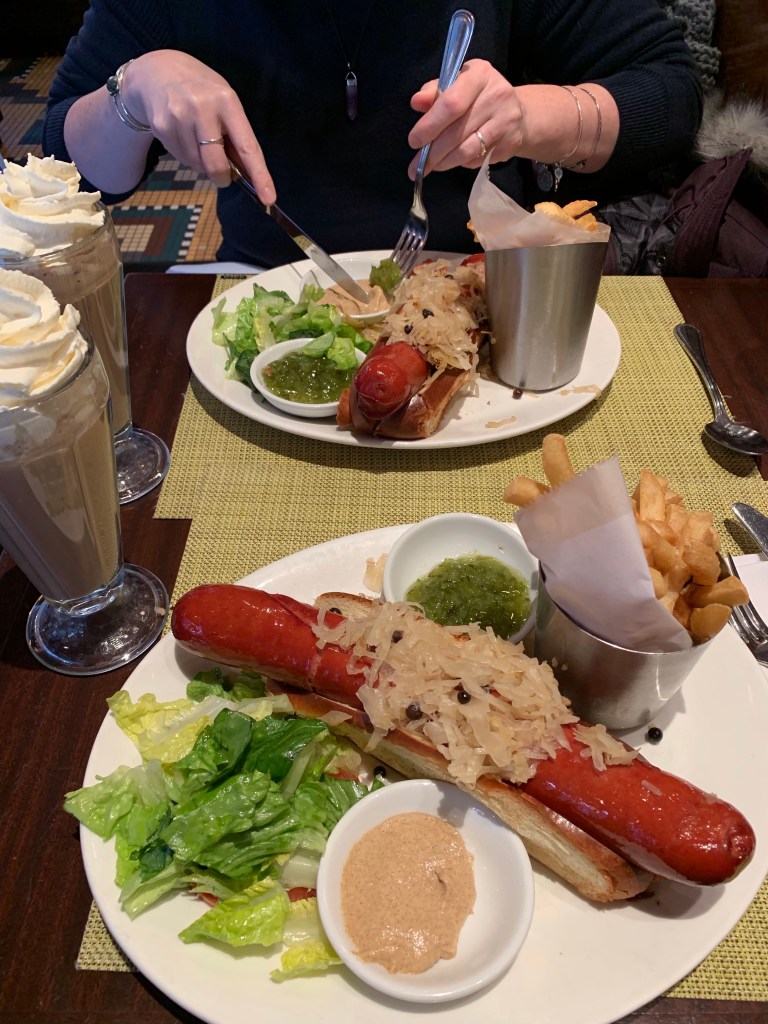
Hotdogs at Brooklyn Diner – photo by Ann Massey
This can be pretty pricey with taxes and tips if you haven’t done your homework or taken advice from someone. So let’s break down the options for you.
Breakfast/Brunch
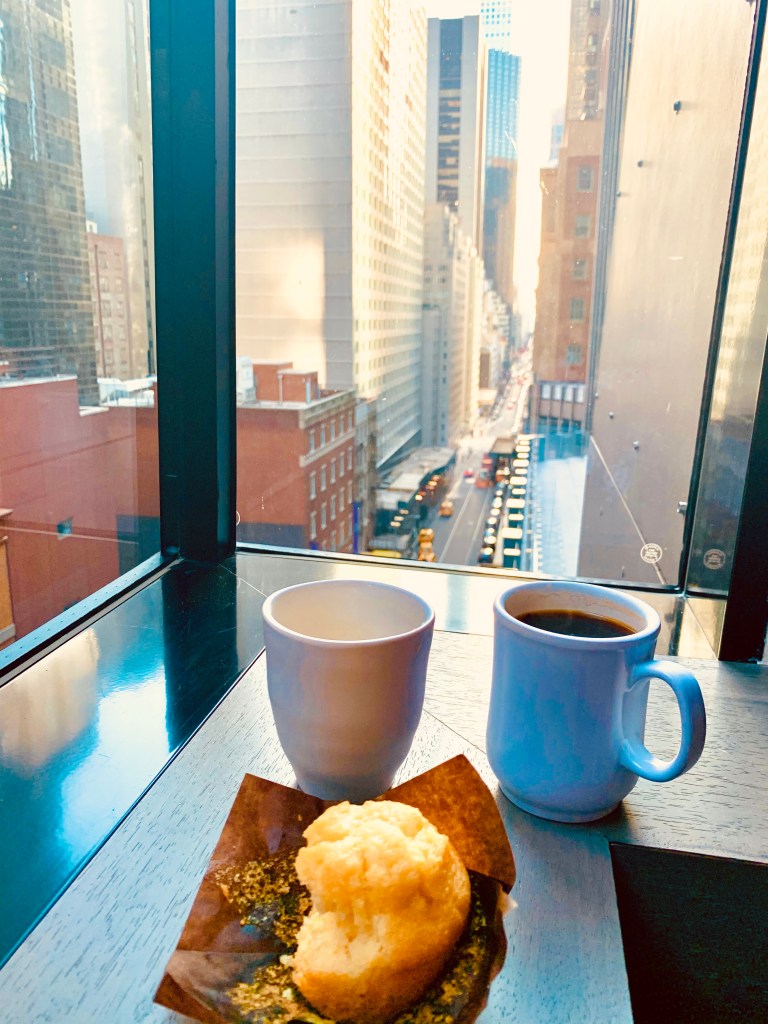
Breakfast with a view at The Carnegie Hotel – photo by Ann Massey
If you have breakfast included in your hotel price, load up! There are also many dining options with good value breakfast and brunches around NYC but go for one closest to your hotel. The hungrier you get walking, the worse your decisions and the damage to your pocket.
Lunch
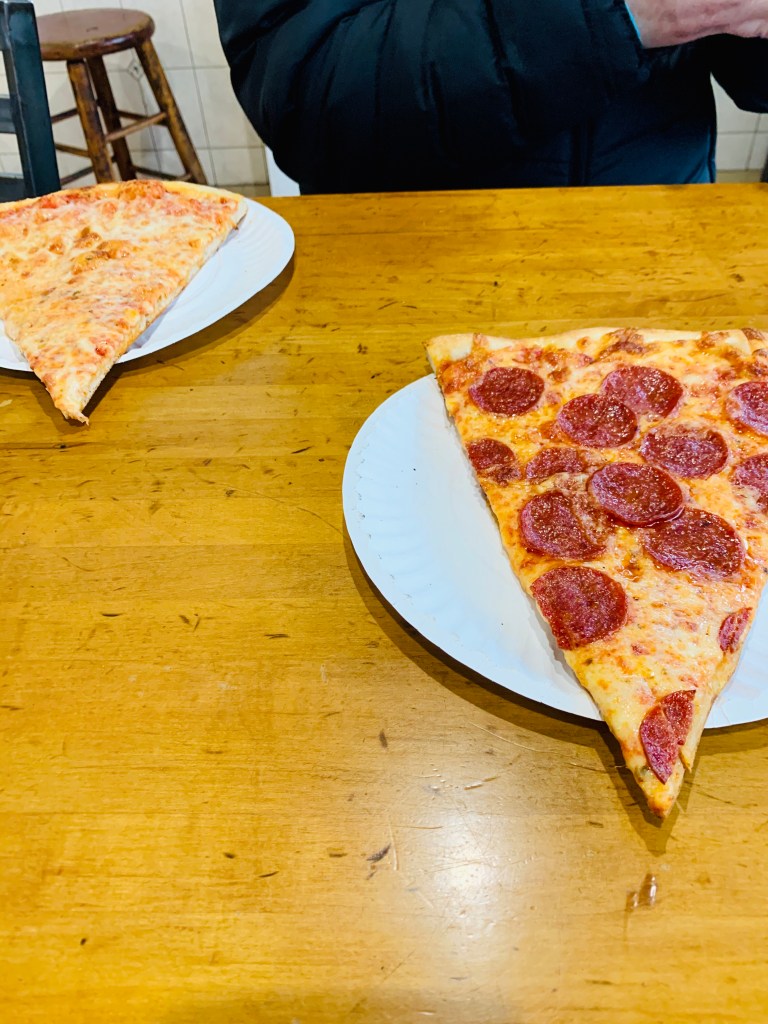
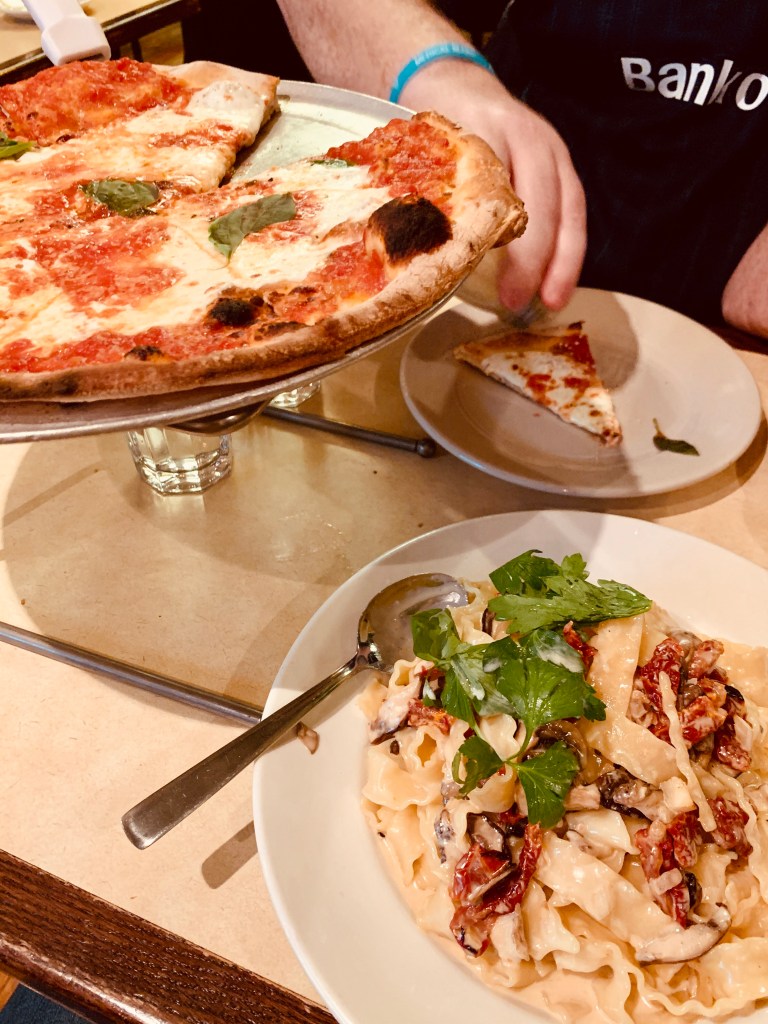
East Village Pizza – photo by Ann Massey
Again, there are good value lunch options, or you could grab from a food truck, but just make sure you are using a vendor/establishment that is displaying the A rating. Keep away from the rest! On busy days, we would return to the hotel for a brief rest and change of clothes and order take out to be delivered to the hotel. It meant we were comfortable, got the choice we wanted and paid far less than we would sitting in somewhere. In NYC lunch is fuel to keep you going!
Dinner
Angelo’s – photo by Ann Massey
This is where things can get pricy and I will elaborate on some of the more famous places next, but generally I would suggest choosing a couple of nice restaurants for dinner and booking in advance and go mid-range for the rest. There are some great places like the Brooklyn Diner that do breakfast, lunch and dinner, with a good choice, good vibe and serve alcohol if you want a glass of wine with your food. If it is used by locals its a good thing! We also used small Italian restaurants near to the hotel which were authentic and very well priced with a great ambience.
Big Name Establishments For Dining – Are They Worth It?
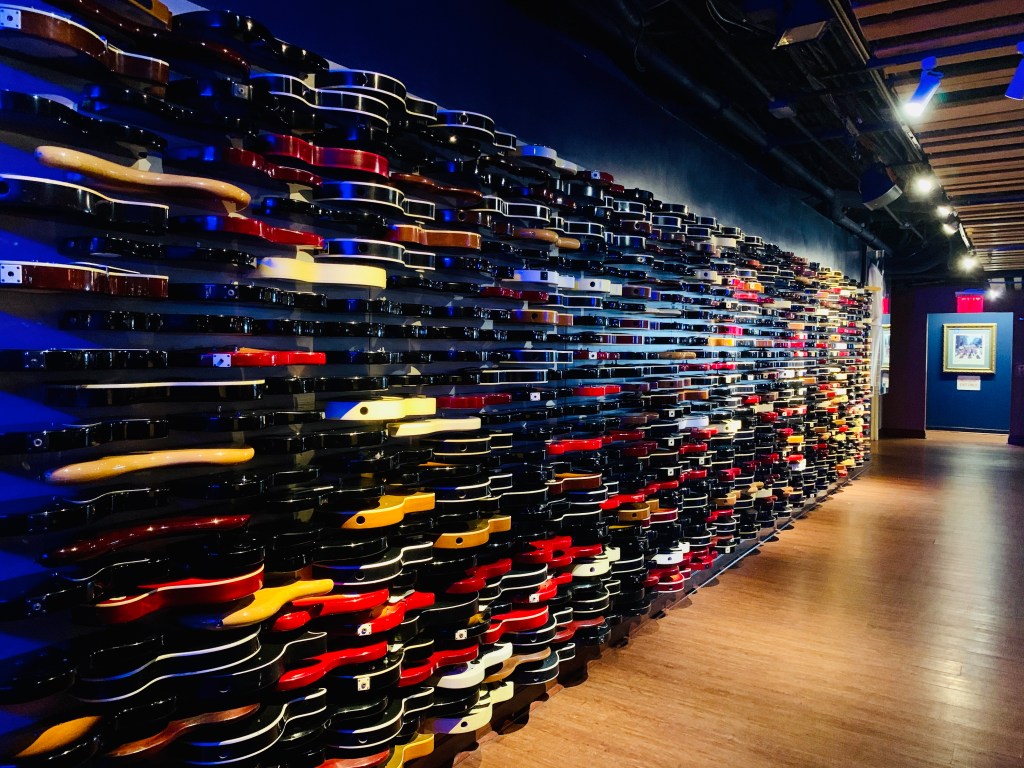
Hard Rock Cafe – photo by Ann Massey
The more well known, the higher the price, pure and simple. We dined at Planet Hollywood and the Hard Rock Cafe and both are completely overrated. We are music and film nuts so we did appreciate the memorabilia but the quality of food and service versus the price was not worth it be honest.
Avoid dining in key landmark attractions as you are a captive audience and they price accordingly for average and sometimes below average food. Places like the Tavern on the Green in Central Park are also ok to give a miss as you are paying for the name and not necessarily getting the right return on your buck.
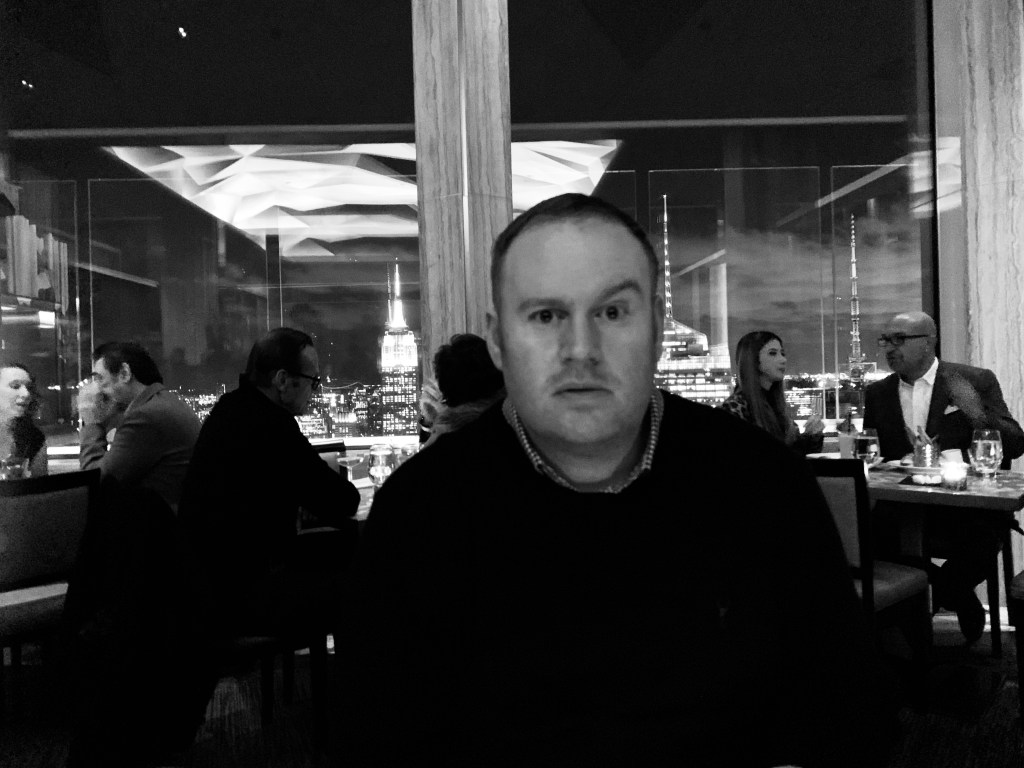
Dominic at The Rainbow Room, Rockefeller Center – photo by Ann Massey
We did choose to have a small bite and a cocktail on our first night in the Rainbow Room Bar SixtyFive at the Rockefeller Center. The price was reasonable for the location and a burger and chips, it was elegant and full of a well to do crowd with a great view of the Empire State Building. As there are so many options for Manhattan skyline viewing now, I would avoid the Top of the Rock Observation Deck and pop into the Rainbow Room instead for a treat.
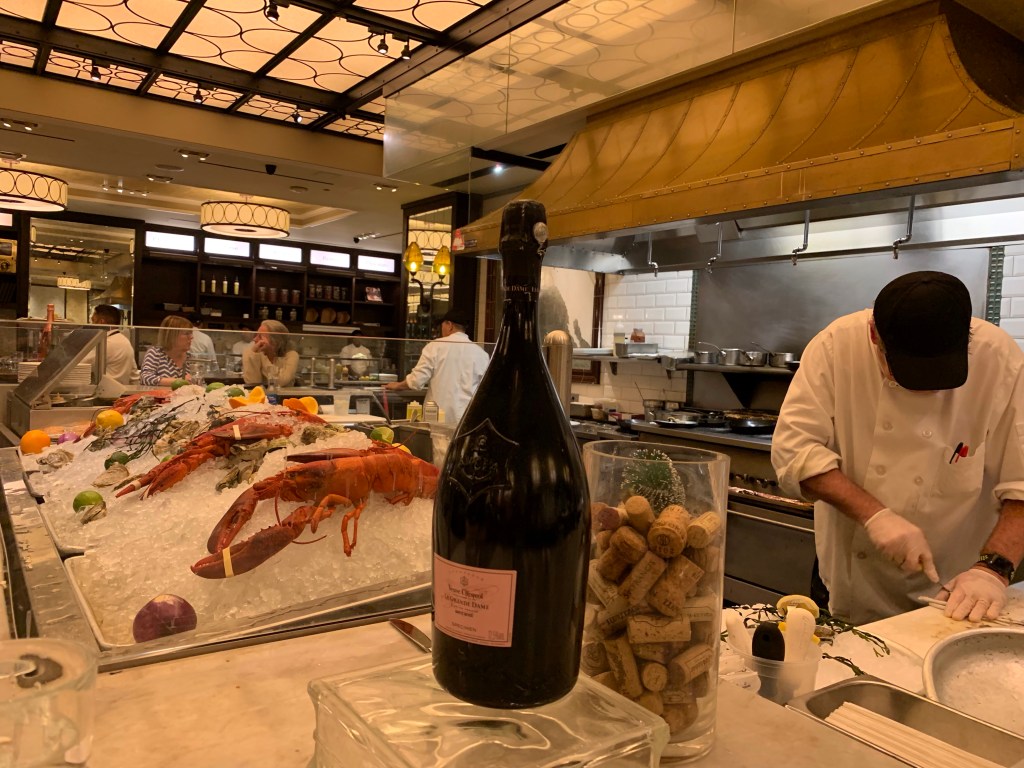
Enjoy The Plaza without the hefty price tag! You can wander around The Plaza hotel and they welcome visitors, just not in the private residents area (some of the hotel is now private apartments). So go in, take your photos, look at the Palm Court and Champagne Bar, but do your dining in the lower level food hall. Here you can have everything from lobster and champagne to burgers, Sushi and Italian food, all without breaking the bank. It is a really great location for lunch.
Food Hall at The Plaza – photo by Ann Massey
Make use of well used smaller establishments, particularly for lunch such as East Village Pizza or some of the lower priced chain restaurants and take outs.
I will be covering all our dining locations in a separate article, but for now remember when it comes to breakfast and lunch, you are fuelling up for your explorations! Save your money for dinner.
Free Locations to Visit
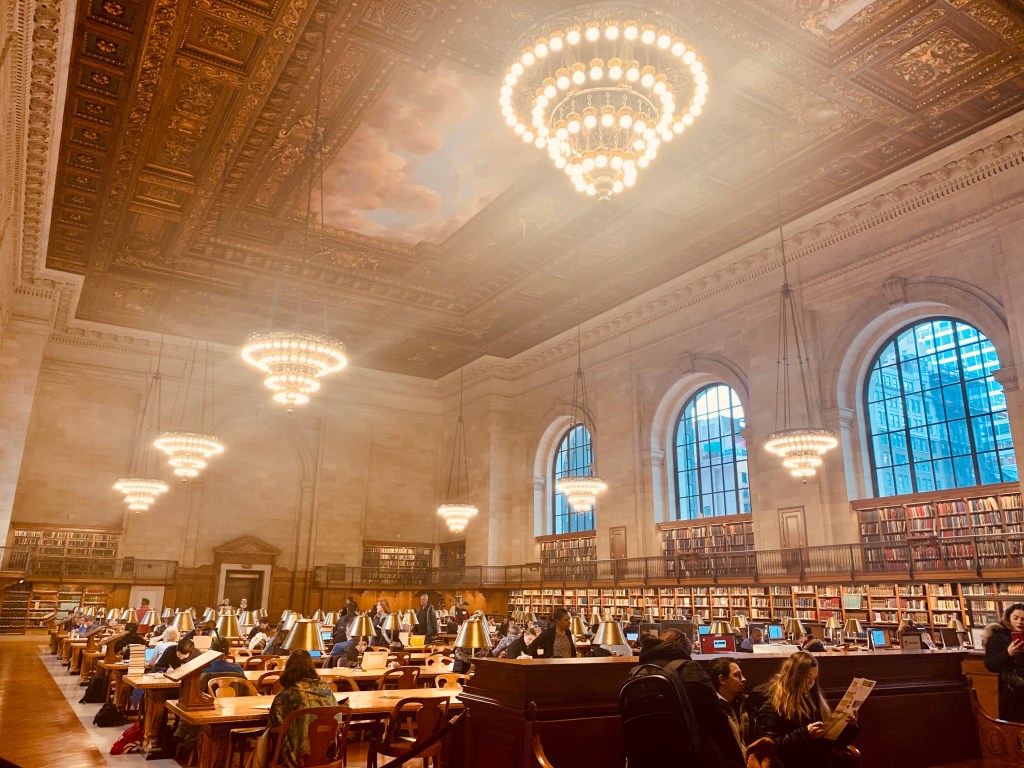
The Rose Room, New York Public Library – photo by Ann Massey
As we have covered, the Staten Island Ferry is free, as is walking around Staten Island! Of a similar persuasion, Brooklyn Bridge and walking across to explore Brooklyn, Central Park, Washington Square Park, Grand Central Station, all free! Along with Central Park of course, you have a chance to see the famous Dakota Building, Strawberry Fields and the John Lennon memorial, as well as your movie locations without putting your hand in your pocket.
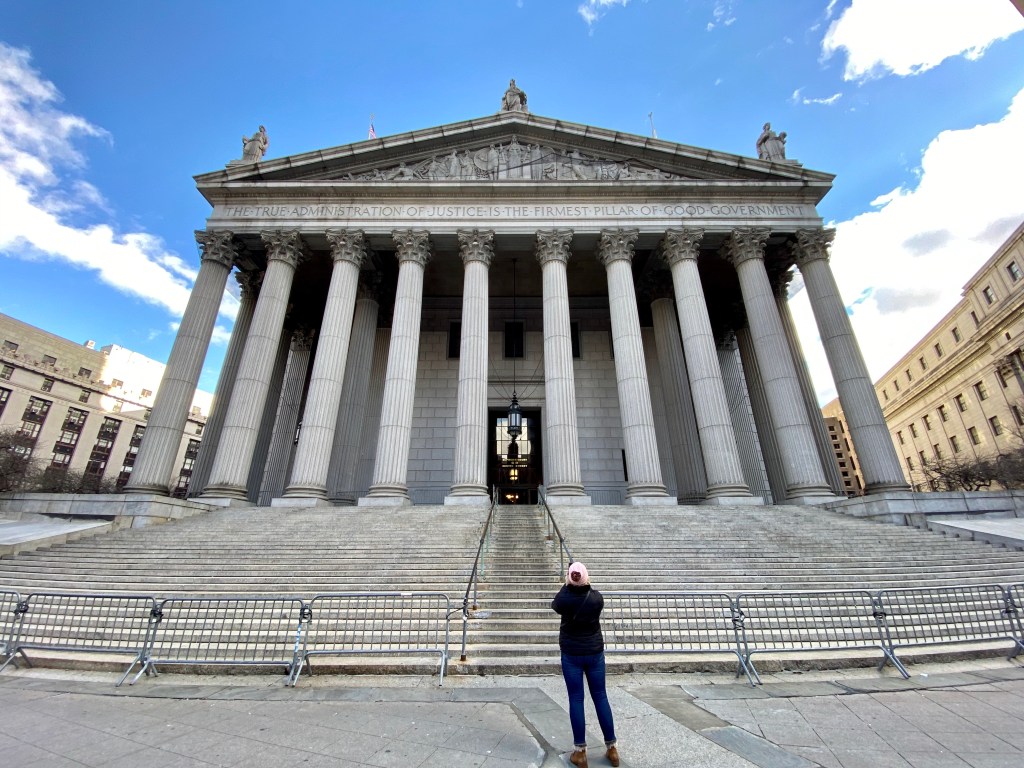
Me Photographing the Supreme Court – photo by Dominic McElroy
Grand Central Station does do guided tours that are inexpensive and well worth it if you love history and haunted locations! Battery Park is another free place to visit with amazing monuments and sculptures, views out to Ellis Island and the Statue of Liberty. Beside it is the Irish Hunger Memorial which is also free to enter and explore.
Visit Bryant Park and beside it, the New York Public Library, with great artefacts, books and architecture, and of course the majority of Manhattan museums are free to enter, including the Met, the Guggenheim and American Museum of Natural History.
Of course you then have all your stores, Bloomingdales, Macy’s, Tiffanys, The Apple Store, all free to walk around. Times Square is of course free to access and has a very different vibe in the day and at night so make sure to explore both.
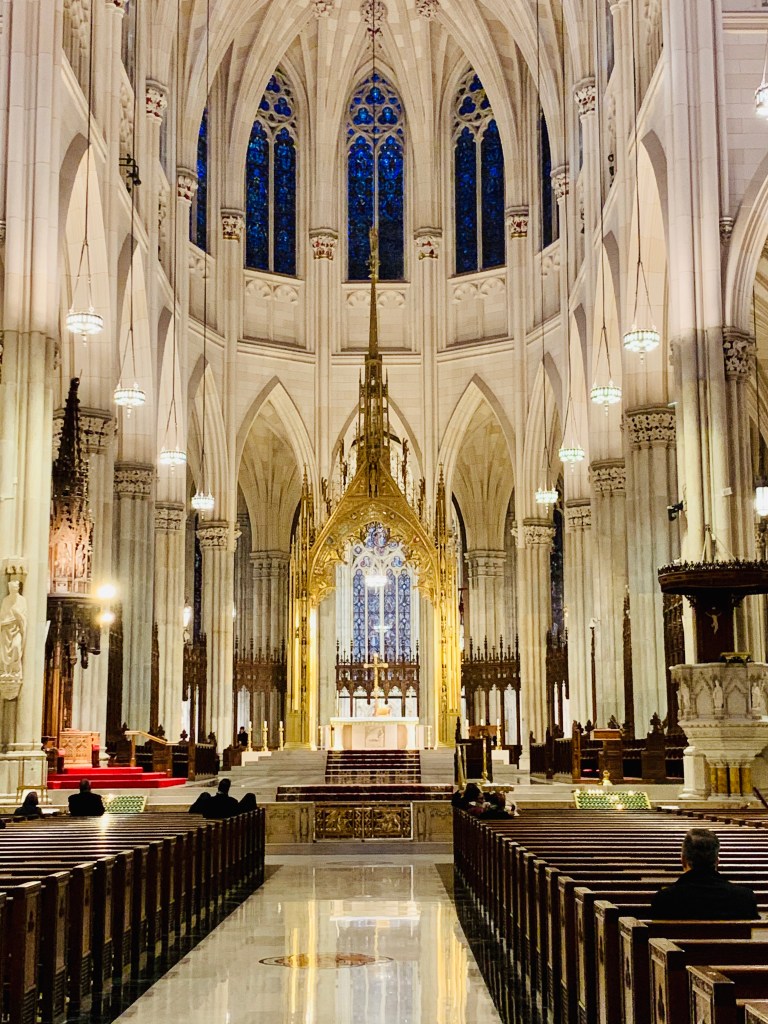
Saint Patrick’s Cathedral – photo by Ann Massey
As you are on 5th Avenue anyway, explore the Gothic wonder of Saint Patrick’s Cathedral, costing you only a bit of time and a prayer if you want and maybe small change to light a candle. Travel to Union Square, take your photos of the Flatiron and then go to City Hall, before climbing the Law Court steps and re-enacting your favourite TV and film scenes, all free of charge!
Getting The Best From Your Attractions and Landmarks
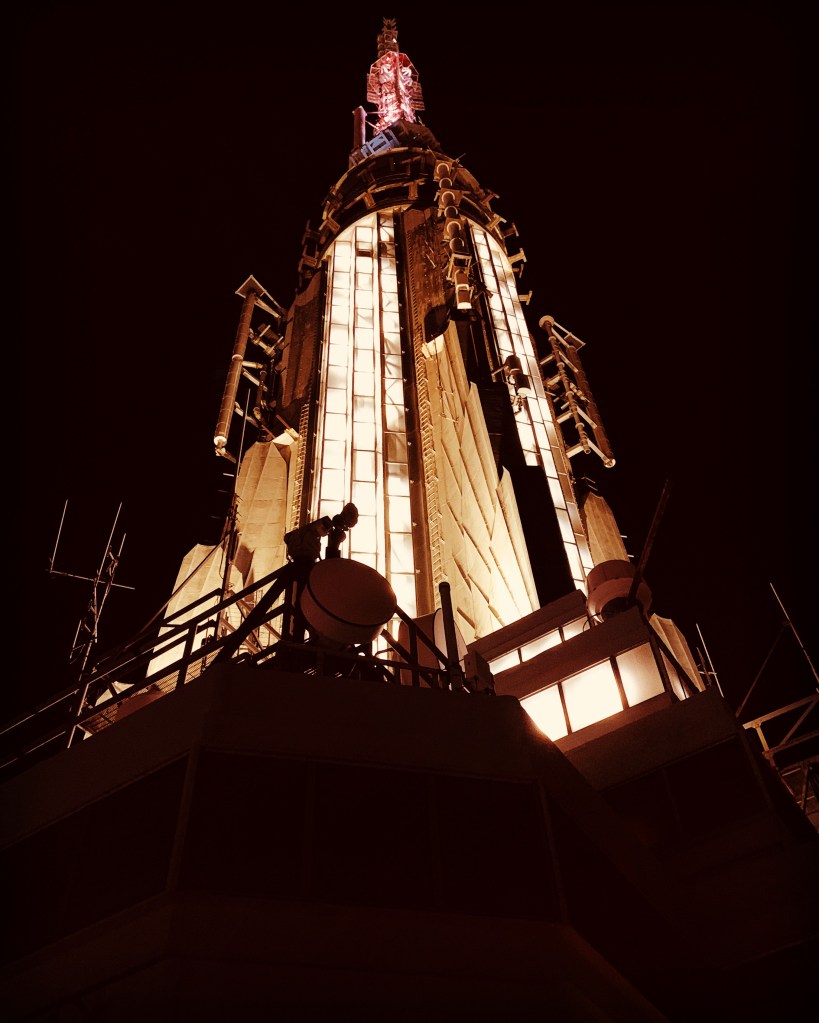
Top of the Empire State Building from the Observation Deck – photo by Ann Massey
There are several options for combo tickets that on the face of it will save you money, however they are often basic entry with add ons, restrict visiting times and some of the things on the list you may not want to do so you don’t really end up saving much at all and make sure you avoid the tour buses.
When you are planning your day, check the forecast and locations of where you want to visit to work around the weather, maximise your time, reduce travel and minimise your expenditure. For example, City Hall, the Law Courts, Wall Street, Brooklyn Bridge, 9/11 Museum, Freedom Tower, Battery Park and the Irish Hunger Memorial are all in that 15 minute radius I talked about.
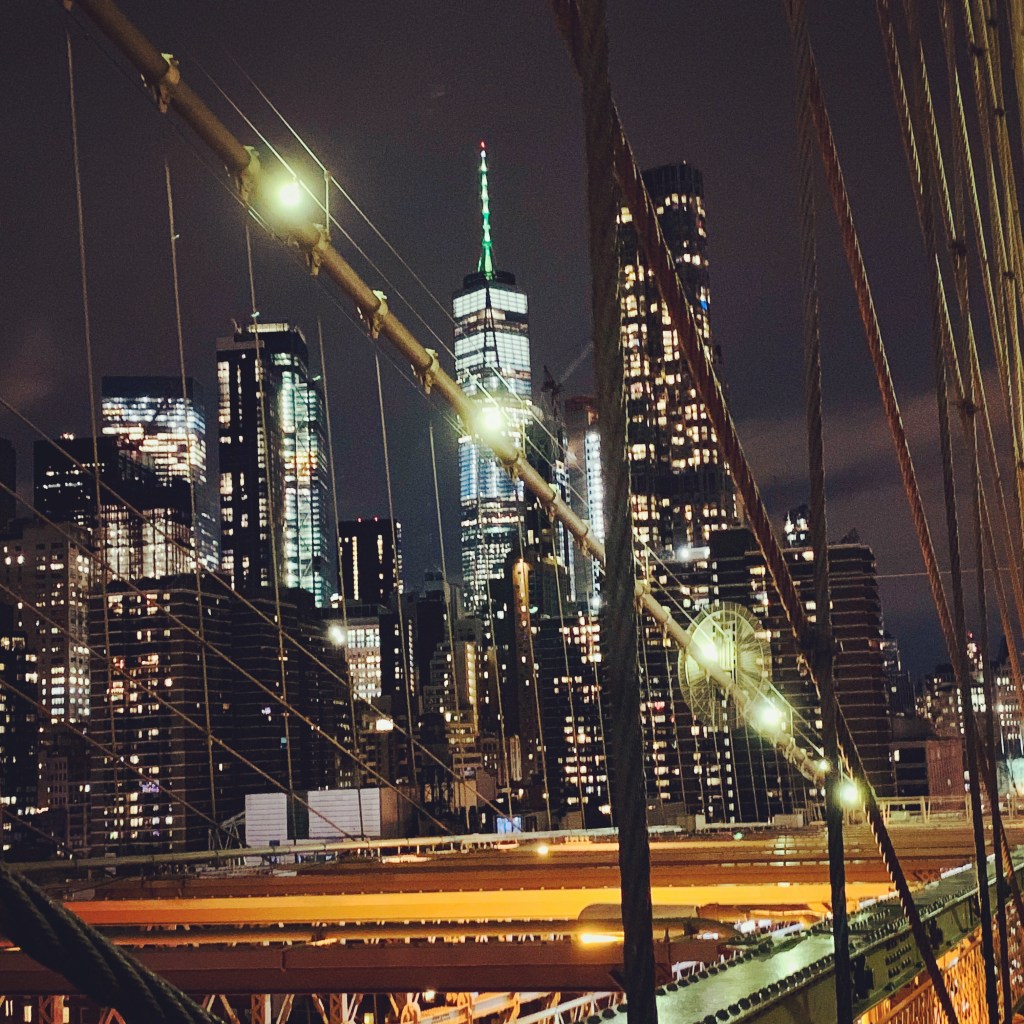
Night View from Brooklyn Bridge – photo by Ann Massey
A day for us then, was to explore the Financial District and Courts, the Irish Hunger Memorial, take the Staten Island Ferry, visit the 9/11 Museum and then see Brooklyn Bridge at night. We then returned to explore Battery Park, take the ferry out to Ellis Island and visit Freedom Tower for sunset.
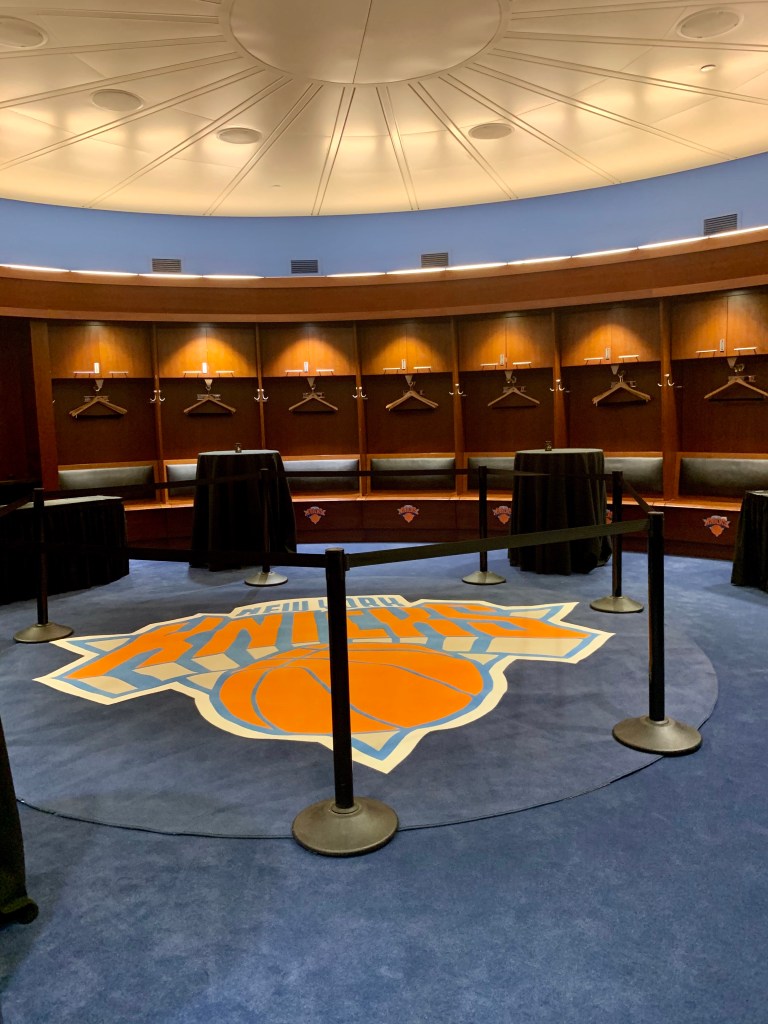
We saw that it was going to be torrential rain on one day, so we booked the Behind the Scenes Tour at Madison Square Garden. We had thought of going to see Billy Joel, but he was completely sold out and to be honest, concert and theatre tickets don’t come cheap and take hours out of your trip.
Knicks Locker Room, Madison Square Garden – photo by Ann Massey
The Behind the Scenes tour is brilliant, covering history and the venue top to bottom, including VIP areas, the floor and even the Knicks and Rangers dressing rooms. It is very inexpensive for a two hour tour and you stay dry. Nearest station is Penn so you get to visit that too!
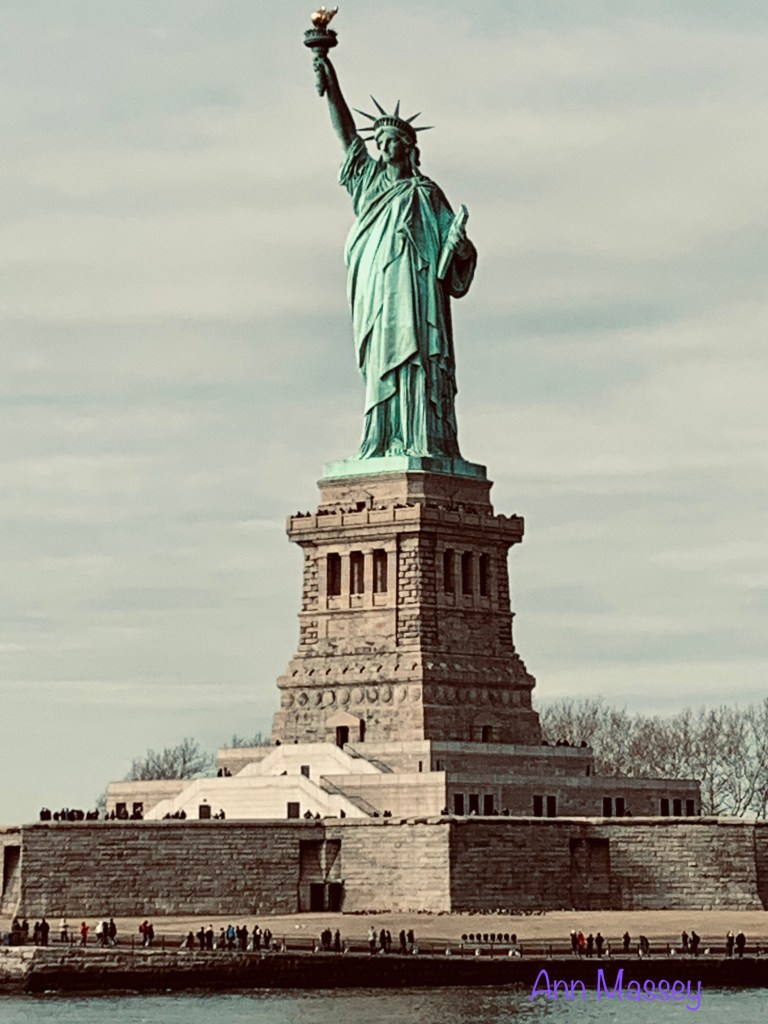
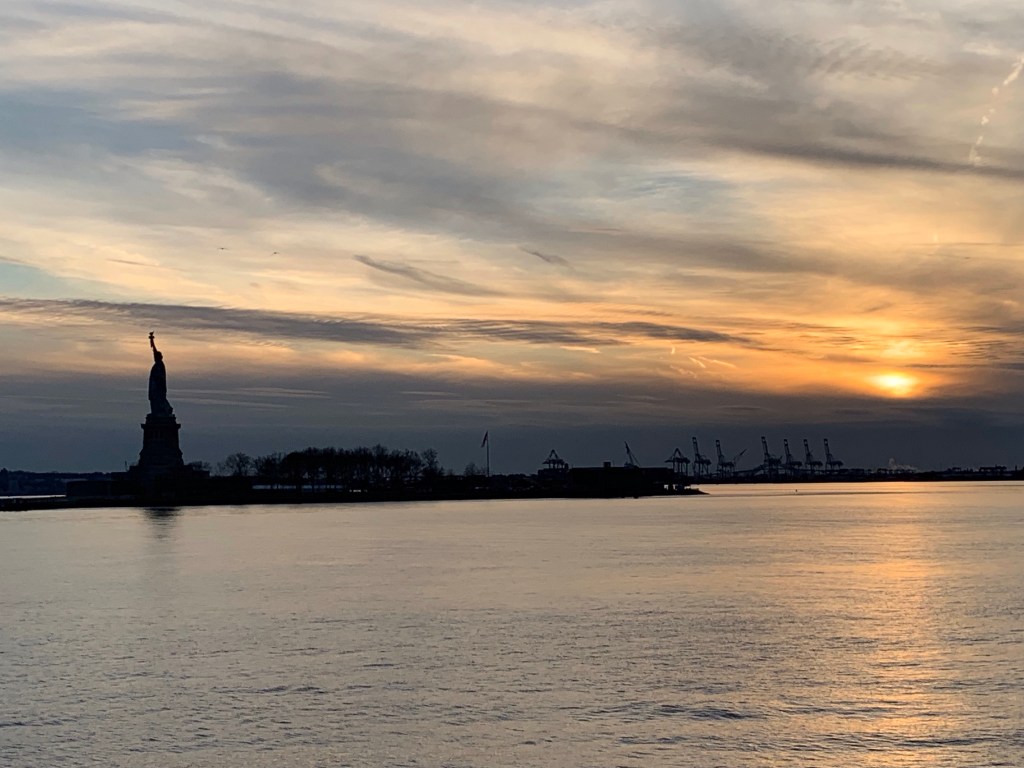
Before paying to visit the Statue of Liberty and Ellis Island, ask yourself why you are going there. If you really want to climb to the top of the Statue of Liberty then go for it! Otherwise you are stepping onto Liberty Island for the sake of it. Your photos come from the ferry, either the Staten Island Ferry or the boat to Ellis Island that stops at Liberty Island on the way.
Statue of Liberty from Ferry to Ellis Island – photo by Ann Massey
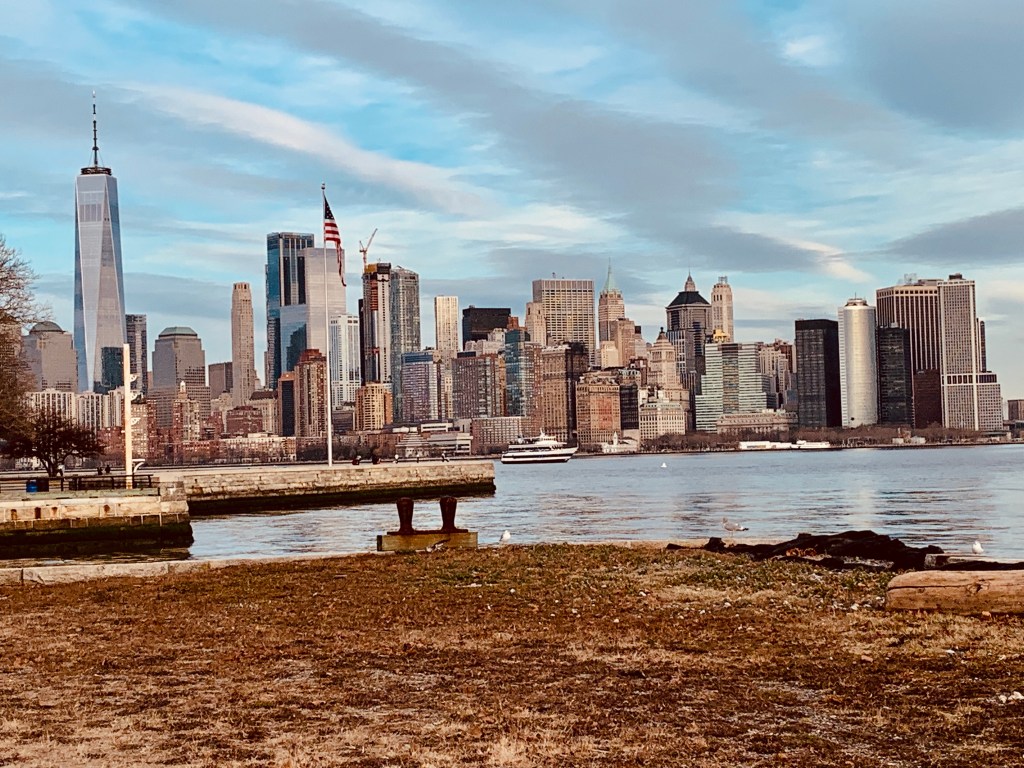
If you are going out to Ellis Island, this is one where I suggest you go the whole hog and pay for the Hardhat Tour. You do the normal things, but then get a guided tour of the entire island, the old abandoned hospital buildings and get the full story of the island. You also get to stand on the shore and look out to the most amazing views of Manhattan.
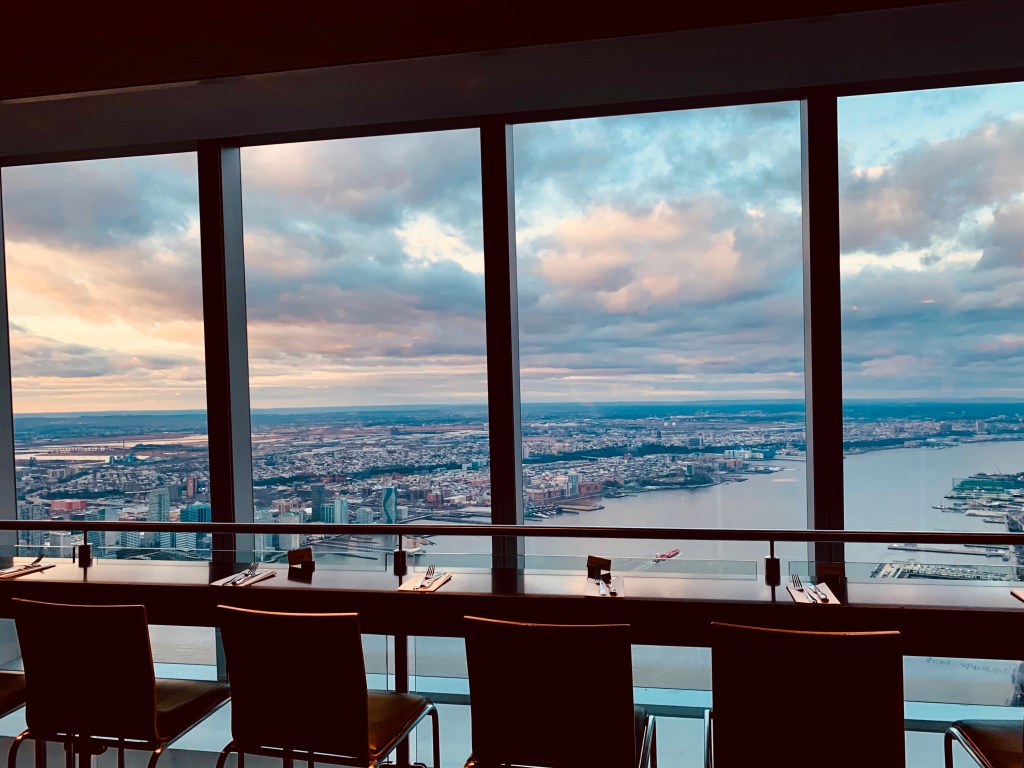
If you are looking for the best all round view of NYC from a height, you won’t get better than One World Observatory at Freedom Tower, but try and go for sunset so you get the best of everything. The gift shop here is very pricey though so think before you buy!
Part of the Bar View at Freedom Tower – photo by Ann Massey
The Empire State Building is another must, but pick your time carefully. We actually visited at midnight in January – yes places stay open that late! By taking this option it was the cheapest entry, we had the elevator to ourselves, no queues and at the top there were only three others. Let’s be honest, its the city lights we love so a midnight Manhattan skyline was perfect!
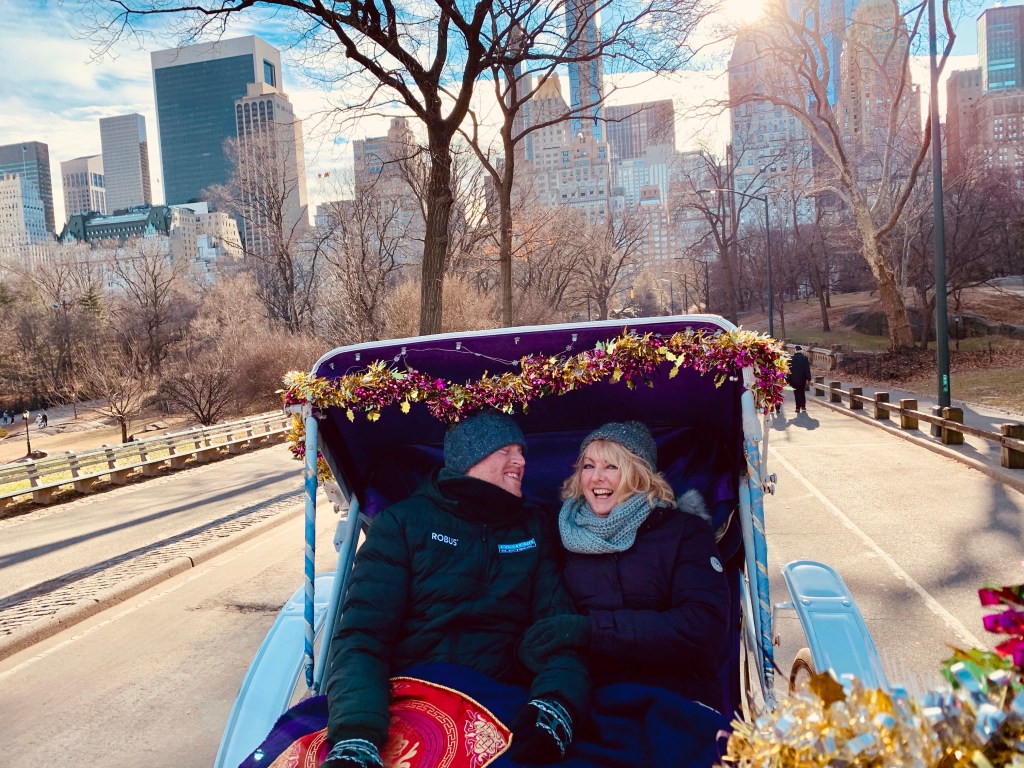
When it comes to the Central Park carriages, go for the quirkier looking drivers. Ours had an Abraham Lincoln style hat and steam punk sunglasses and was an absolute joy, knowing his history, movies and taking great photos of us. But check the price and if you’re nice you can get a bit extra with a good tip – ours actually dropped us off at The Plaza which they aren’t supposed to do!
Shopping
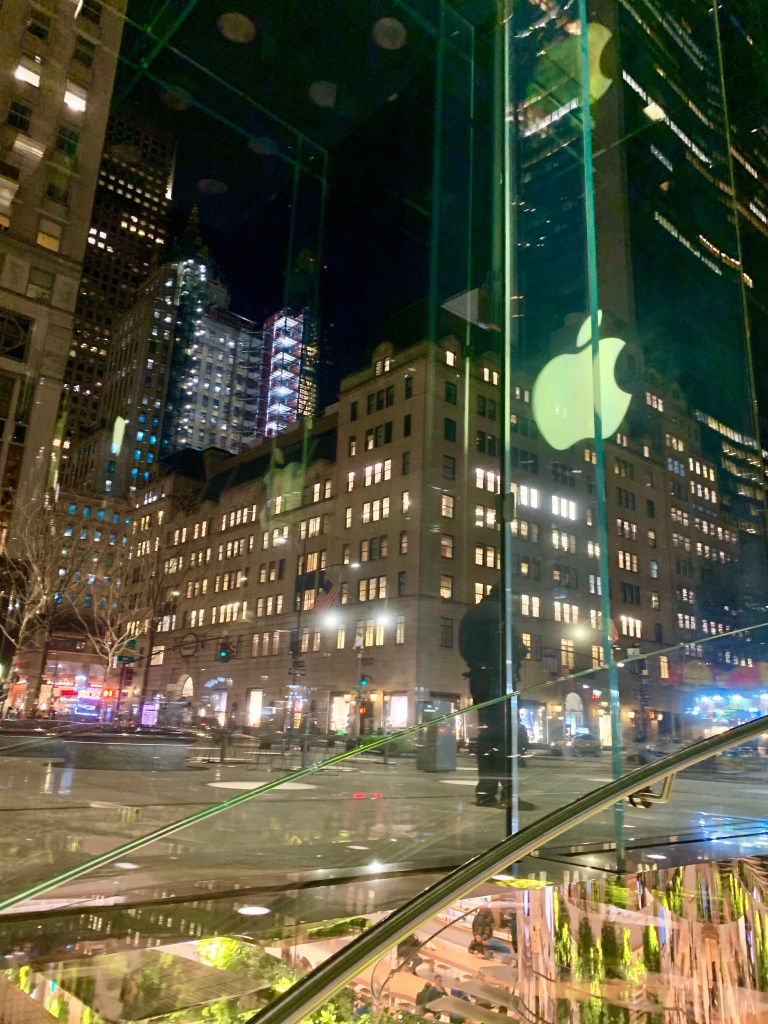
Inside the Apple Store – photo by Ann Massey
The good old days of shopping bargains in NYC aren’t what they used to be, so if you are shopping, be mindful and only buy what you can’t get at home. Also remember that purchases brought in from New York are subject to Customs and Excise and will need to be declared on arrival and duty paid. If you try and sneak through and get called for a random baggage check, the fine is seriously going to outweigh any bargain you got in Saks!
Generic keepsakes, fridge magnets, mugs, NYPD and and NYFD style mementos are better purchased in convenience stores or even at the airport. I got some lovely t shirts and sweatshirts so cheaply at JFK.
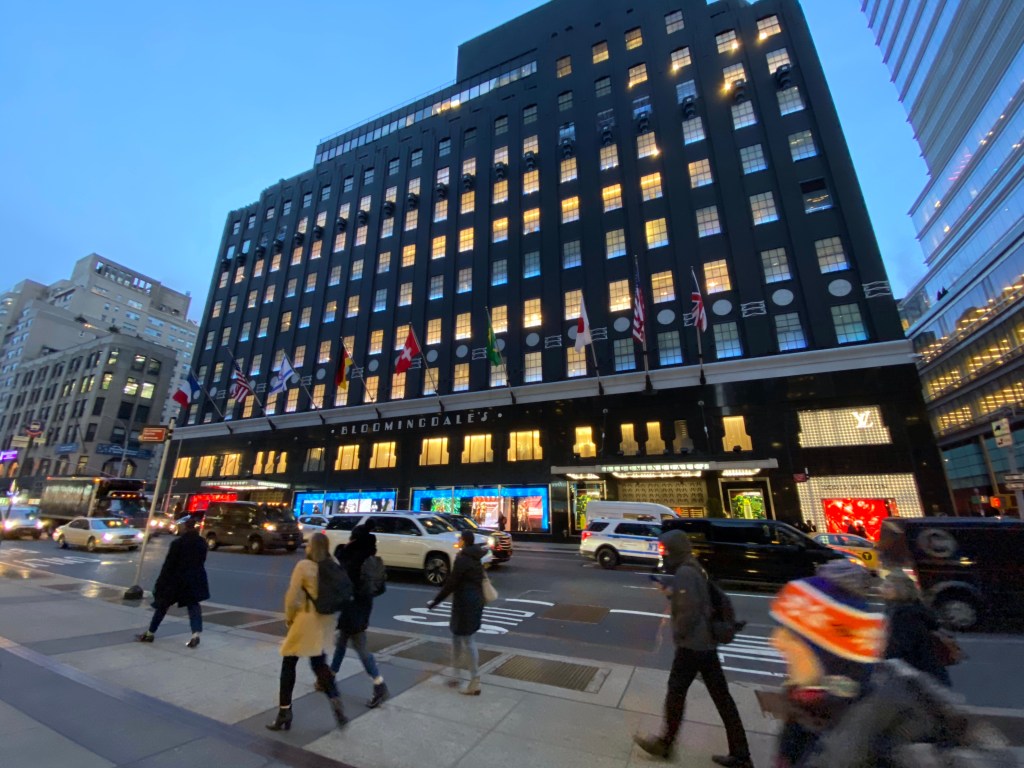
Bloomingdale’s – photo by Ann Massey
The tourist stores tend to be poor quality and the attraction gift shops are extortionate. Only buy items in themed gift shops that are unique to the location. For example I got Christmas ornaments from Ellis Island and the Empire State Building. Lightweight, easy to pack, not expensive and great mementos.
The Disney Store, Hersheys, M&Ms and these kind of stores are fun to look around and buy a couple of small items, but remember you can get all these things online much cheaper and they take up room in your case.
So there you have it, a simple guide to getting the most out of your time and money on your trip to New York City. I shall be covering so much more on the myriad of places we have visited and experienced, but for now this is your starting point. Planning is everything when it comes to a successful and enjoyable NYC experience so start yours now!
Carriage Ride in Central Park – photo by our helpful driver!
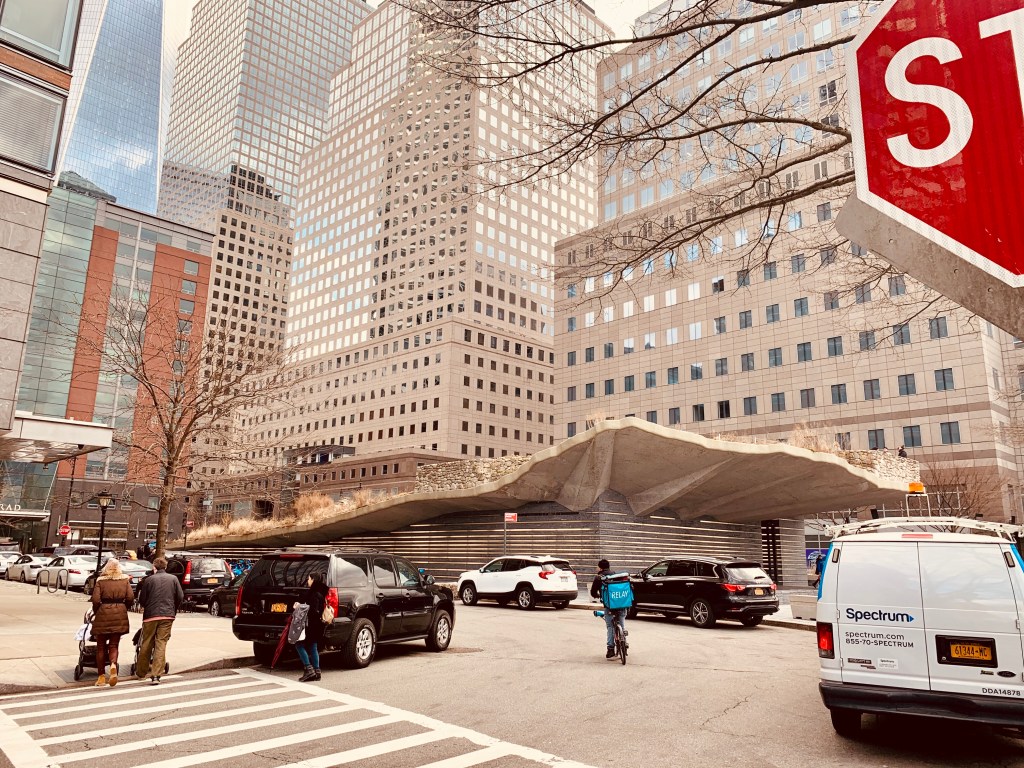
Nestled in the protective shadow of Freedom Tower, stands a half acre plot memorialising one of the most horrific eras in history. A place that is over 3000 miles away, yet so many New York Immigrants and their descendants call home – that place is Ireland.
Distance and time do not fade the mind and heart, as this poignant New York City dedication to The Great Hunger of Ireland demonstrates. A mark of respect and remembrance for 1 million Irish who died and the 2 million Irish who ultimately emigrated out of desperation.
How the Great Hunger Began
The devastation began in a suppressed Irish nation in 1845 and continued to destroy lives, lands and communities for the next seven years – families torn apart by death and of course, emigration.
The humble potato had only been in Ireland for 100 years or so, yet it had become a food staple in Ireland due to it being hardy enough to survive Irish weather, was a cheap product and went far for the hungry mouths it fed.
Potato crops became infested with an airborne fungus called phytophthora infestans, also known as potato blight. It is believed that this fungus that seemed to originate on merchant ships between North America and Britain, actually carried on the wind across the Irish Sea and began destroying the potato crops of Dublin and the surrounding counties before it became a countrywide disaster.
The legacy left by Penal Law that prevented Irish Catholics owning land or being able to vote, combined with Corn Laws that kept prices artificially high with imposed tariffs, were going to be among the catalysts for the devastation that followed.
These restrictions, combined with the continued high level of produce continuing to be exported out of Ireland by British landowners and merchants meant one thing – a food shortage of catastrophic proportion that brought a nation to its knees at the hands of one of the most despised British men in Irish history, Charles Trevelyan.
Winter after brutal winter and failed potato crops did not matter to Trevelyan. He demanded the masses be put to work in order to earn for food, food that was not there for them as he had stopped any charitable imports of corn. The man without compassion or decency persuaded the British Government to withdraw all aid to Ireland in a bid to force them to restart the economy. They all believed the crisis would be short-lived, they couldn’t have been more wrong.
Children were left without sustenance as parents opted to feed themselves with what little they had in order to work under Trevelyan’s demands. By 1847, known as Black 47, things were worse than ever. As Trevelyan’s enterprises failed, one simple truth became evident – a nation was dying.
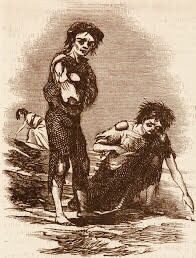
So much was the suffering, the malnutrition, the starvation, working with no strength for little wage and no food, death for many, was welcomed. Men, women, children, skeletal, shadows of who they once were, dying of Black Fever, Typhus and Dysentery.
Bodies were piling up at such a rate, mass pits were dug in un-consecrated ground, thrown unceremoniously on top of one another, without coffins in the shallow graves.
Once again, the situation became more dire, as the landlords who had not been paid rent for sometime, wished to reclaim their lands for grazing and crop planting. The destitute and dying were evicted from there prisons of disease, many forced to emigrate by their manipulative landlords, taken in by promises of food and care on ships to North America. Over half a million people were evicted and a further 100,000 forced to emigrate.
Coffin Ships
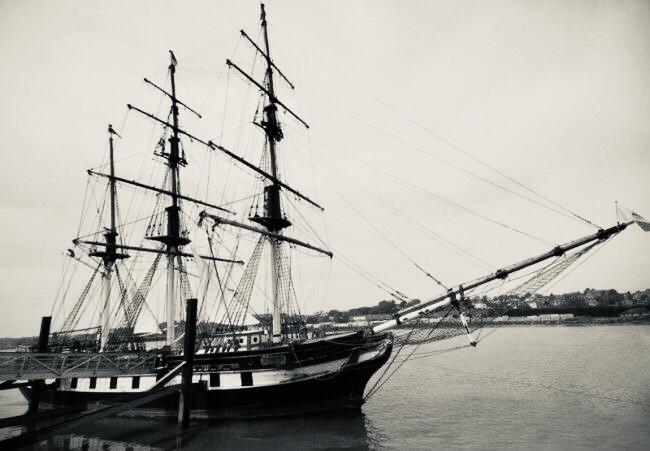
Dunbrody Famine Ship
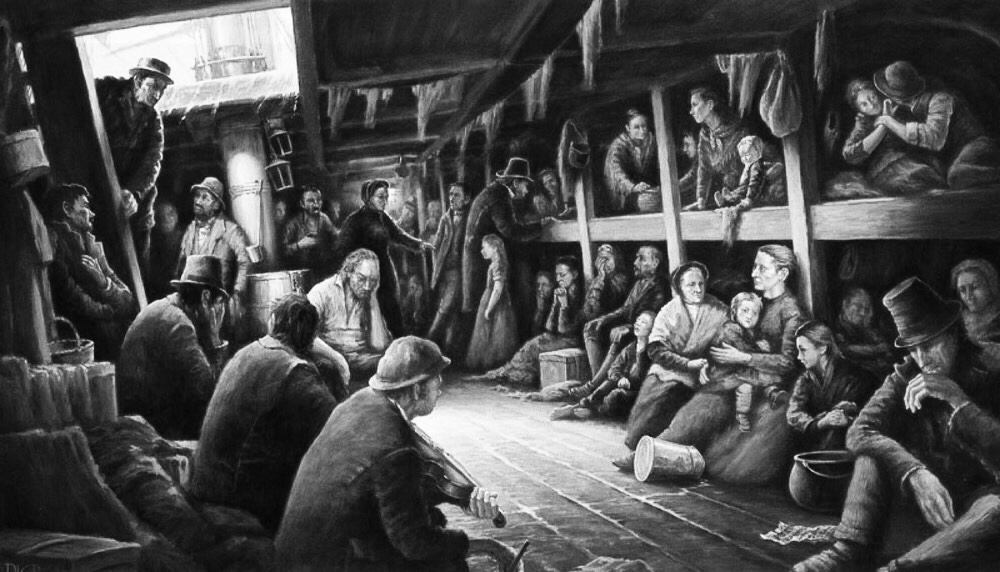
Small, barely sea worthy vessels, crammed with skeletal families, broken and ravaged by disease, still hoping for a better life. Conditions on board were horrific. The journey would take up to six weeks, with only communal buckets for sanitation. Cholera and Typhus were rife and many would die onboard, their rotting corpses a stark warning of what may come to those watching and breathing in the stench of death, until the bodies of loved ones were tossed unceremoniously overboard.
One in five would not make it, others would die in makeshift hospitals on arrival. Those who survived were covered in their own filth, destitute and usually illiterate. They were not welcomed and were received with hostility and fear from the largely Puritan communities of Canada and North America.
The Irish have four vital traits however, strength of character, survival instinct, adaptability and faith. Those who made it onto American soil made New York and further afield their new home, never to return. They began a tradition of Irish emigration that was to follow through generations, including my own family who settled in New York and Washington State.
Creation of the Irish Hunger Memorial
The bond between New York and Ireland is strong, long standing and far-reaching. The introduction of the Irish Hunger Memorial is a poignant reminder of the bond, the suffering of the Irish people and a beacon of light and hope for the strength of the human spirit.
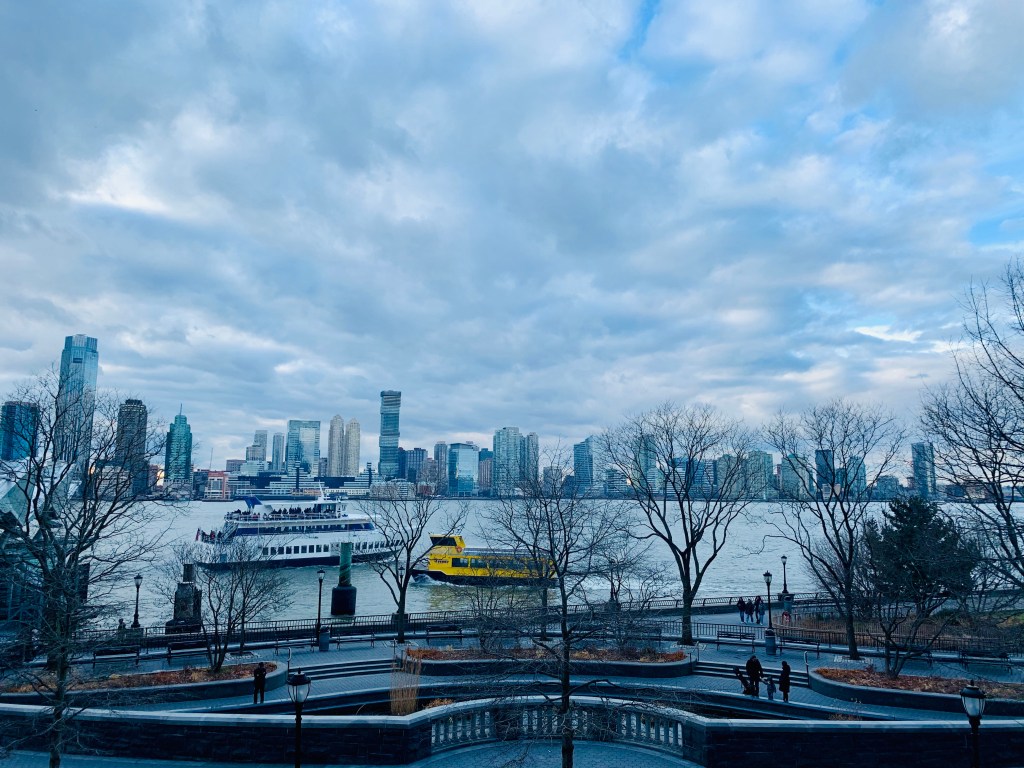
The memorial location on Vesey Street, in Battery Park City overlooks the Hudson River and out towards the Statue of Liberty and Ellis Island, where so many Irish started their new lives. This site seems to have been carefully chosen for its proximity to the gateway to the New World and serenity for reflection, looking out over the water. An historic oasis in the midst of one of the busiest cities in the world.
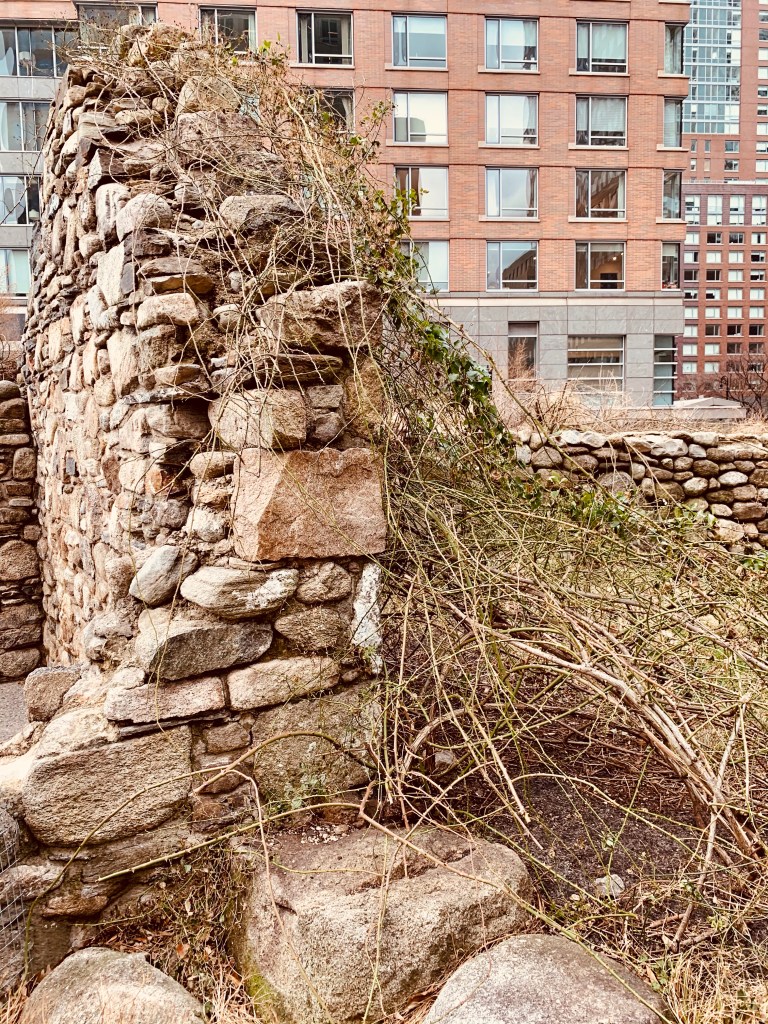
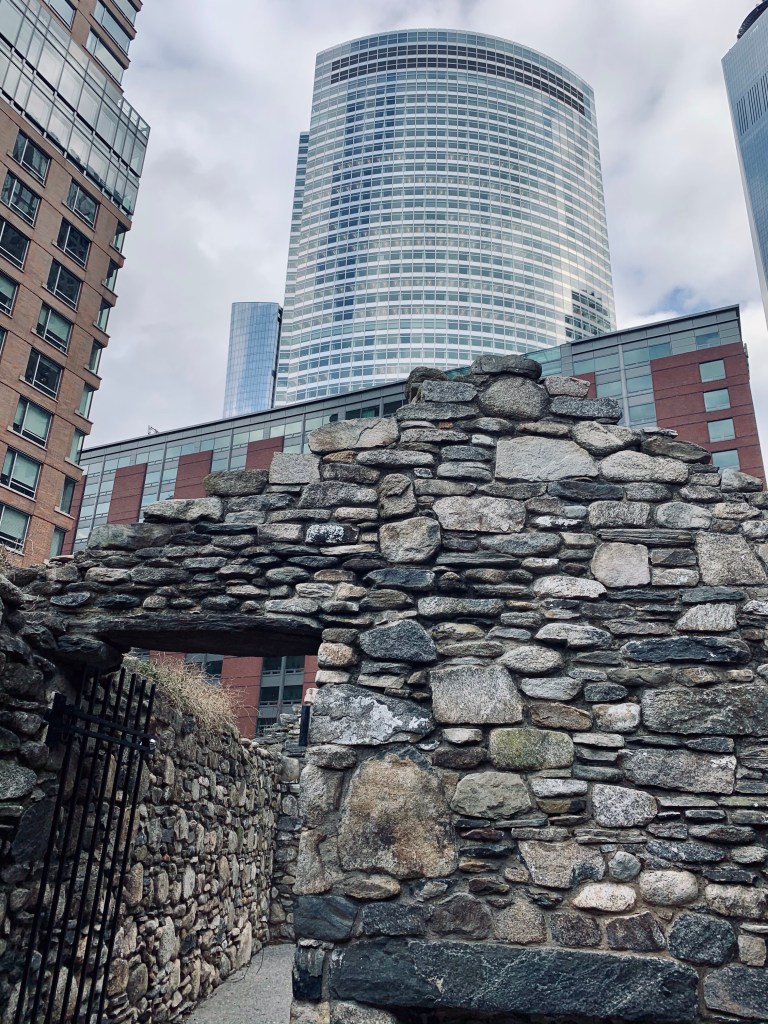
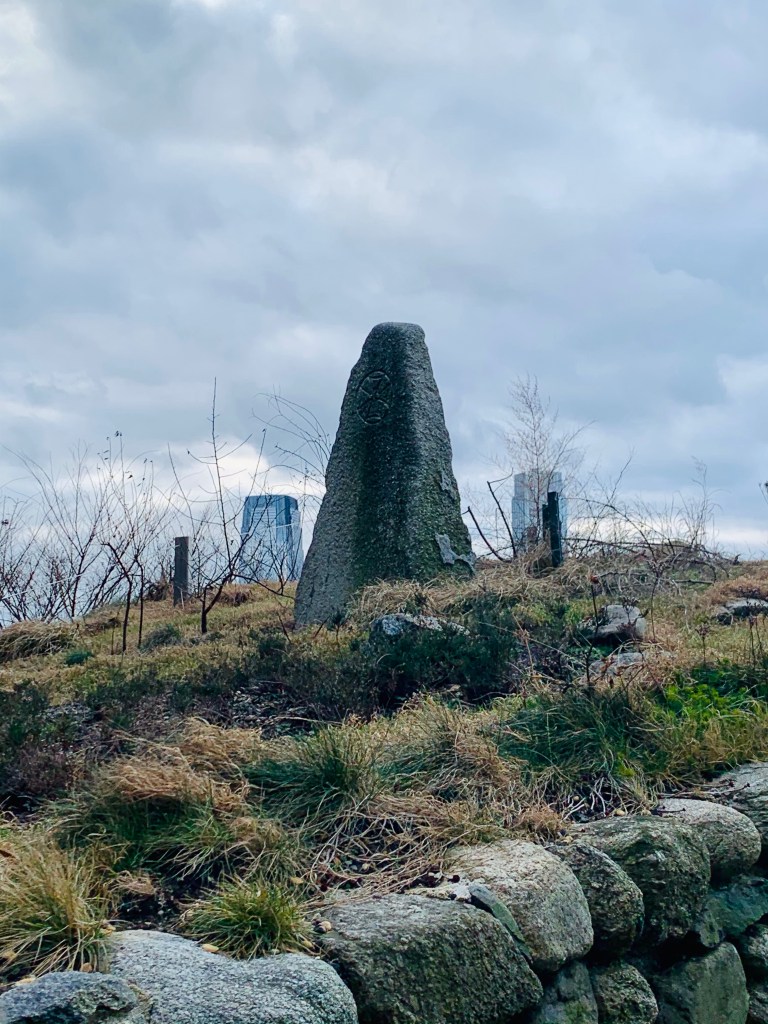
The structure itself was designed by New York native and sculptor, Brian Tolle. Construction actually began in March of 2001 and while brought to a terrifying halt by the collapse of the Twin Towers and the devastation that followed, in a testament to overcoming adversity, it was completed the following year. The centrepiece is an old Irish cottage ruin, shipped across the Atlantic from County Mayo, donated by the Slack family, distant relations of the artist. There are 32 rocks, each inscribed with the name of the county from which it was collected and the moss, plants and grass are all indigenous to the Emerald Isle.
Irish President Mary McAleese officially opened the installation in 2002, however it became heavily water damaged and underwent over five million dollars worth of renovations, re-opened to the public in 2017.
Our Visit
At the time of our visit, it was a cold, cloudy January day and it was quiet. You almost stumble upon it, as there is no fanfare, no grand entrance, flashing lights or gaudy signs pointing the way. It’s just there, dignified, humble and solid. It is unobtrusive, almost disregarded by the locals walking along Battery Park, dwarfed by Freedom Tower, a silent guardian of all beneath it.
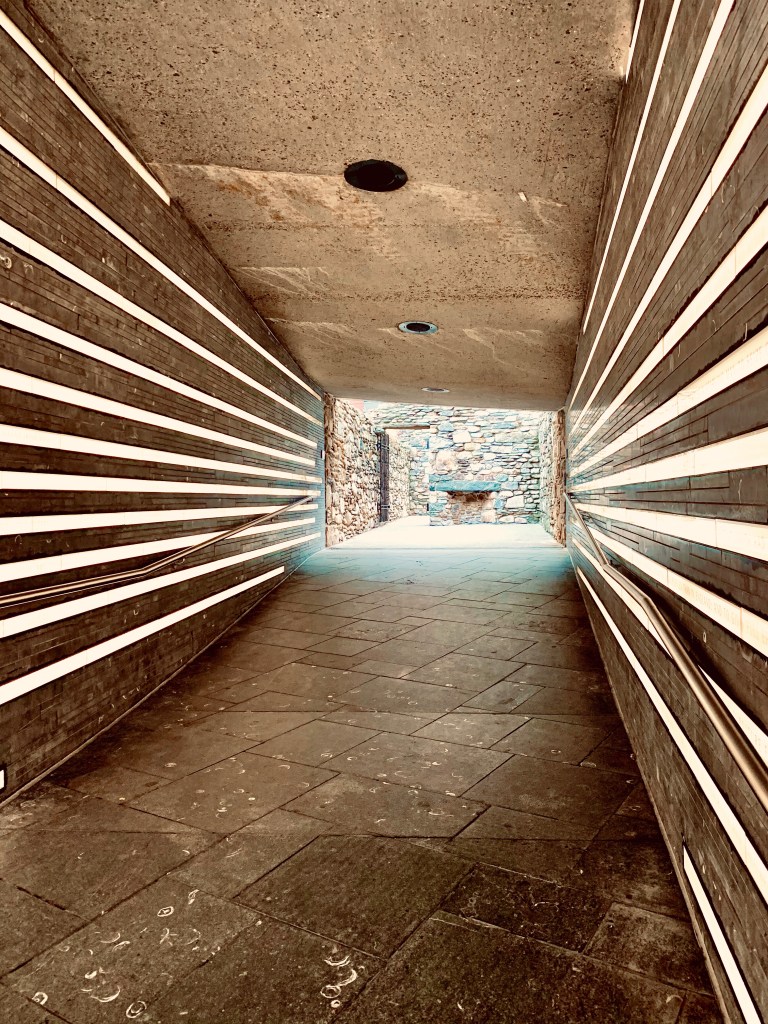
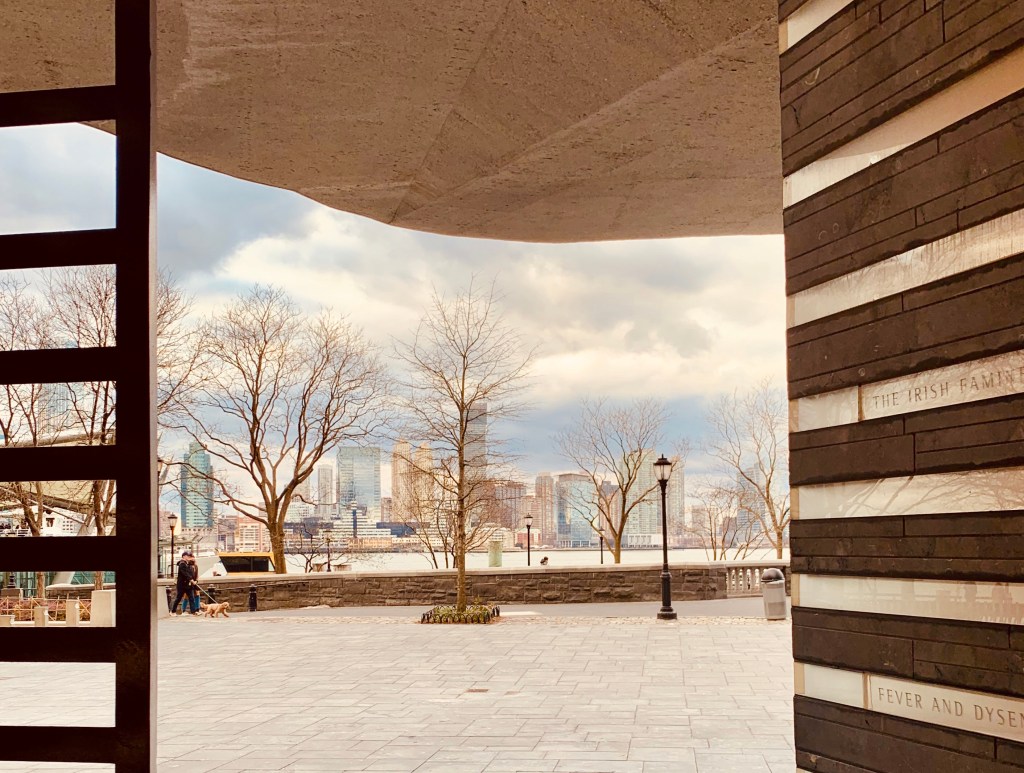
My first thought was of its contemporary elegance, unexpected and intriguing. The entrance walkway is wood and light, inscribed with old Irish proverbs, poetry and information on the atrocity as well as recorded audio excerpts.
I looked back through the street opening and it created a lively picture of the Hudson River and boats, walkers and the Battery Park promenade – a stark contrast to the poverty, death and despair the memorial represents. It opens out into a stone walled ramp, through a gate and a step back into rural Ireland, a portal to a faraway land, carefully balanced on a limestone plinth.
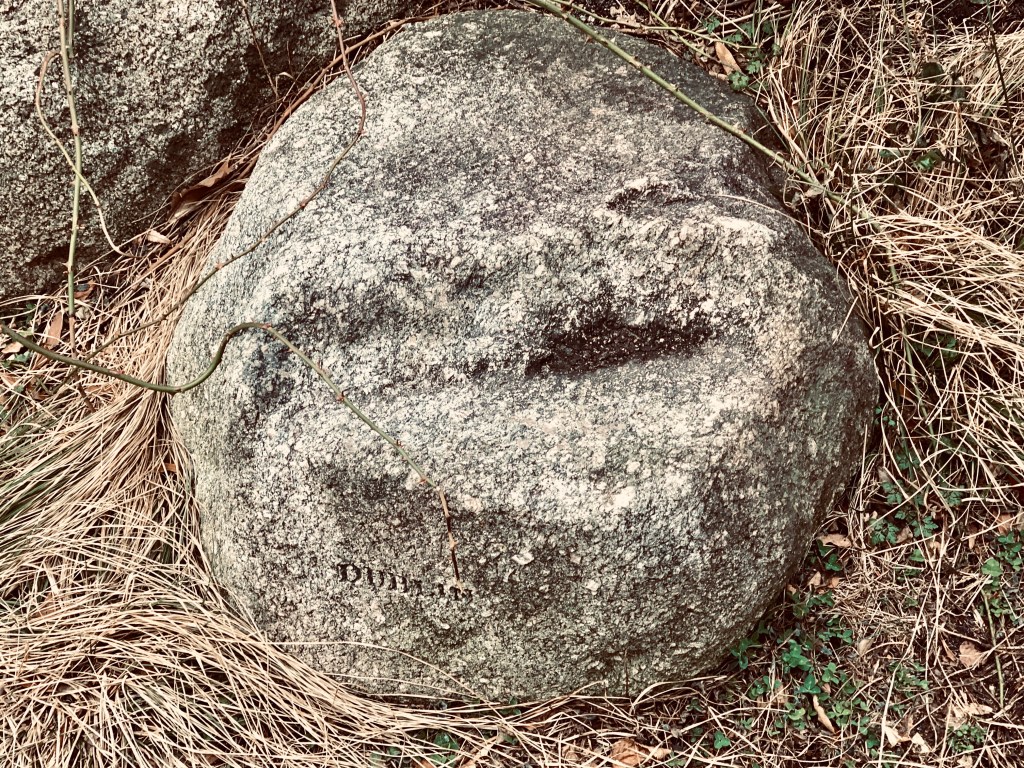
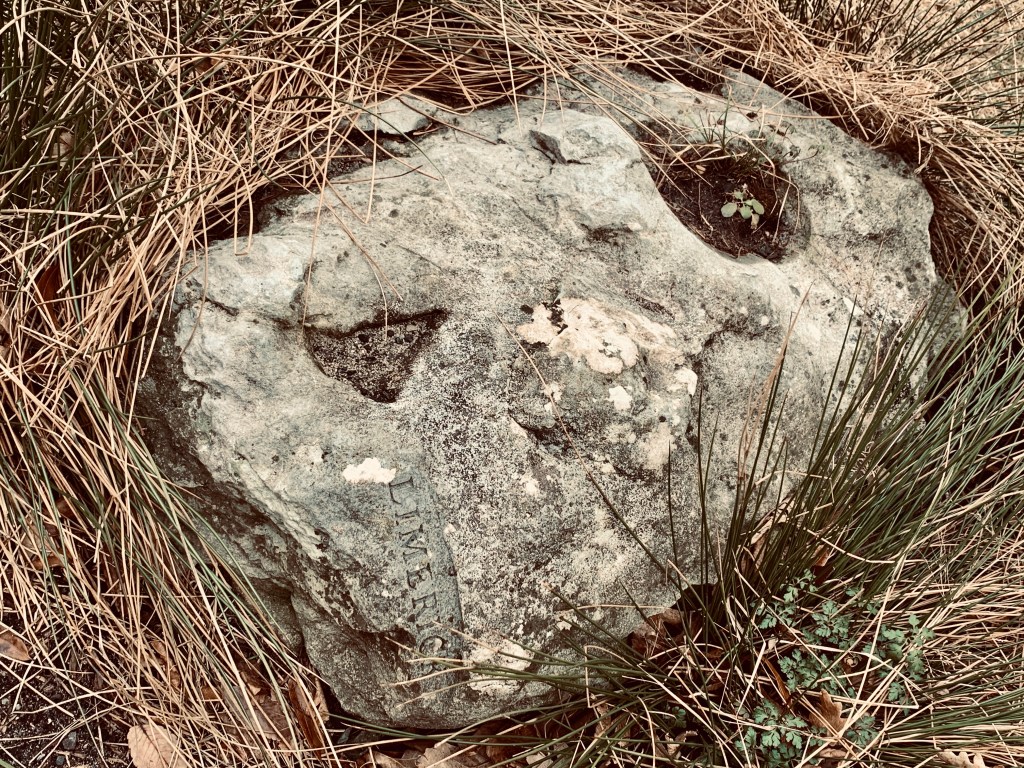
Scattered among the flora and fauna surrounding the cottage ruins are the county stones, a race on to see would I find my Limerick boulder before Dominic found his Dublin one! As usual, the Dub was victorious. Respectful tourists whispered as they explored each detail, pausing to look out to the water and over to New Jersey.
The Irish Hunger Memorial is peaceful and poetic, thought provoking and inspiring. For any tourist it should be added to the list to visit, if only to take time out from the hustle and bustle of Manhattan. For any Irish visitor or Irish descendant, its a must. Entry is free, the only cost is your time spent remembering the fallen and survivors of the blackest period of Irish history and the bond between two nations.
For more information on Emigration and Ellis Island:
My name is Ann Massey and I am an author and blogger.When I was a young girl I had a dream. To visit New York.
New York -The Dream
As I grew older that dream became an ache inside, a missing part of my life puzzle. Sadly a myriad of life curveballs and a morbid fear of flying meant it would remain an unfulfilled ambition – until now.
Yet another huge change to my life forced me to take a hard look at all the opportunities I was missing, the experiences I was forsaking and it was time to stop letting life pass me by.
I turned to writing, a passion I had since school and saw that my dreams of being a published author were coming true. When one of your dreams is realized, you begin to take the others a lot more seriously and fears become something you can conquer.
New York -The Goal
I met a man who not only wanted me to fly metaphorically speaking, but literally too. He wanted me to realize my ambitions, especially as we had both recently lost parents and understood you only get one crack at the great adventure called life.
So late 2018 I found a hotel in central Manhattan called The Carnegie Hotel and I booked it for January of this year. We found ourselves googling everything we could on New York and I was crazy with Google Maps and street view. It was still all a dream, I was still a small girl wishing on a chance to visit the Big Apple, until Dominic bought our plane tickets and the reality, excitement and yes, dread and panic kicked in.
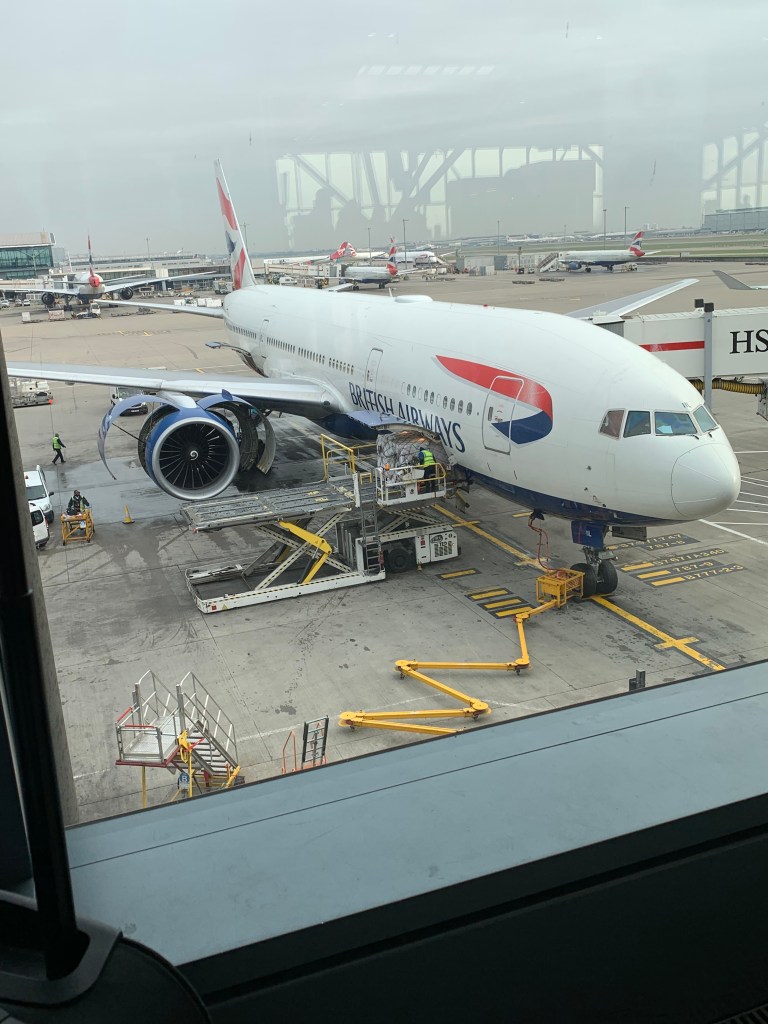
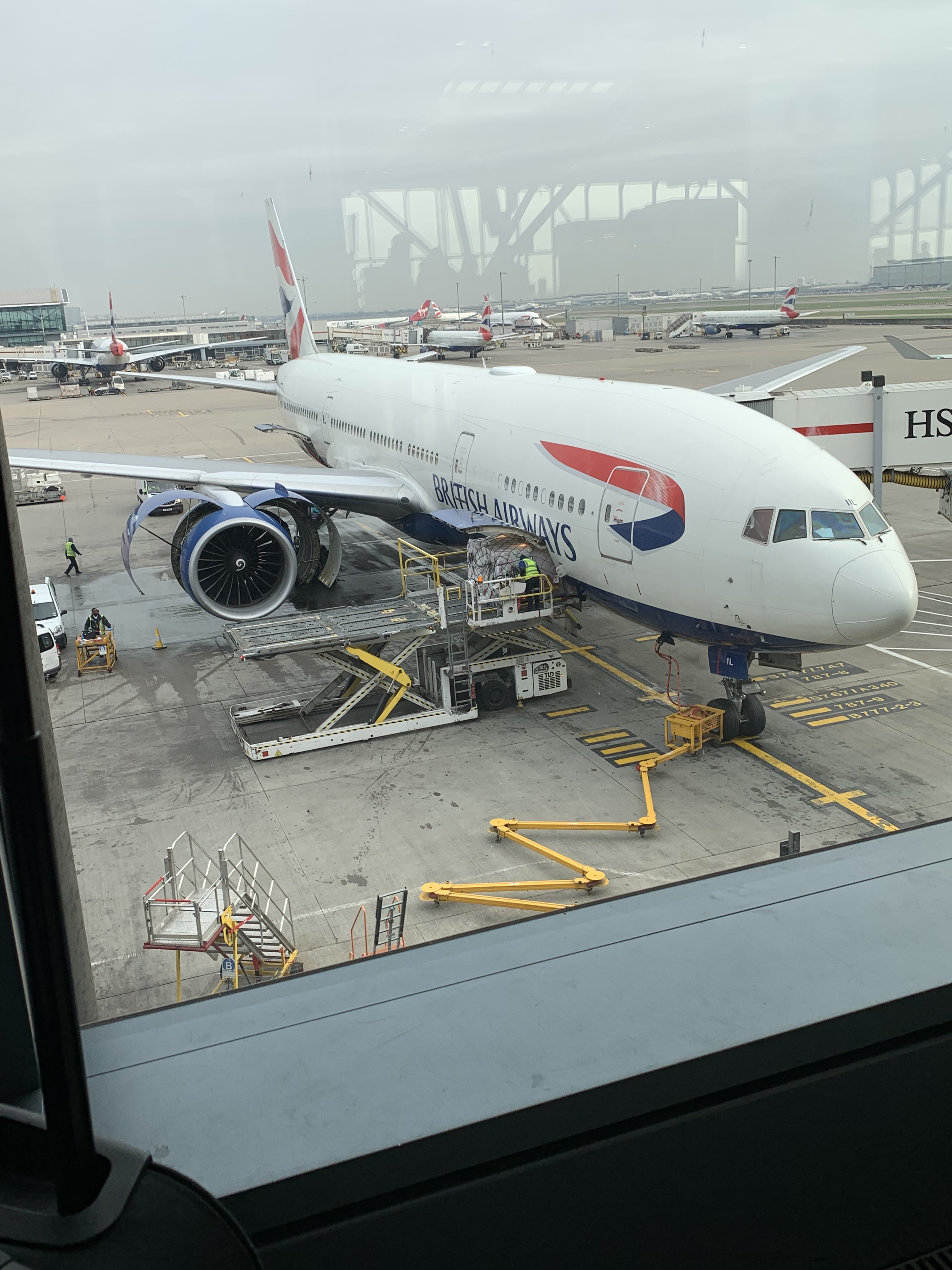
So on January 10th 2019 I found myself nervously gripping Dominic’s hand as I stared out of the departure lounge window at London Heathrow Airport, straight into the mechanical wonder of the British Airways 777 before me as I waited to board a flight to JFK, New York.
British Airways 777 – London Heathrow to JFK (Photo by Ann Massey)
Me. ME! I had already survived the short flight from Dublin to Heathrow somehow, excitement edging out my fear, but this gigantic bird before me was a different challenge altogether.
New York – The Journey
Dominic is not a small man so Premium Economy was a necessity for him, but psychologically it played a huge part for me in my experience of a transatlantic flight on a cold January day. I kept myself distracted with movies, music and a glass or two of wine. I even managed to enjoy my meal! Everyone was so calm and every bump was gently explained by the pilot that I actually was able to sit back, look out at the clouds and set free the excitement of the young girl having a dream come true.
I hadn’t actually looked at the route the plane was following before we left and I was astounded (and relieved!) to discover we were mainly flying over land. One of my major fears and a recurring nightmare was crashing into the icy waters of the Atlantic.
As I sipped on my Chardonnay I watched the monitor as we skirted Canada, then down over Massachusetts, Maine, and Rhode Island. The captain advised there were crosswinds so we would experience some turbulence upon preparing to land so the nerves began to skyrocket.
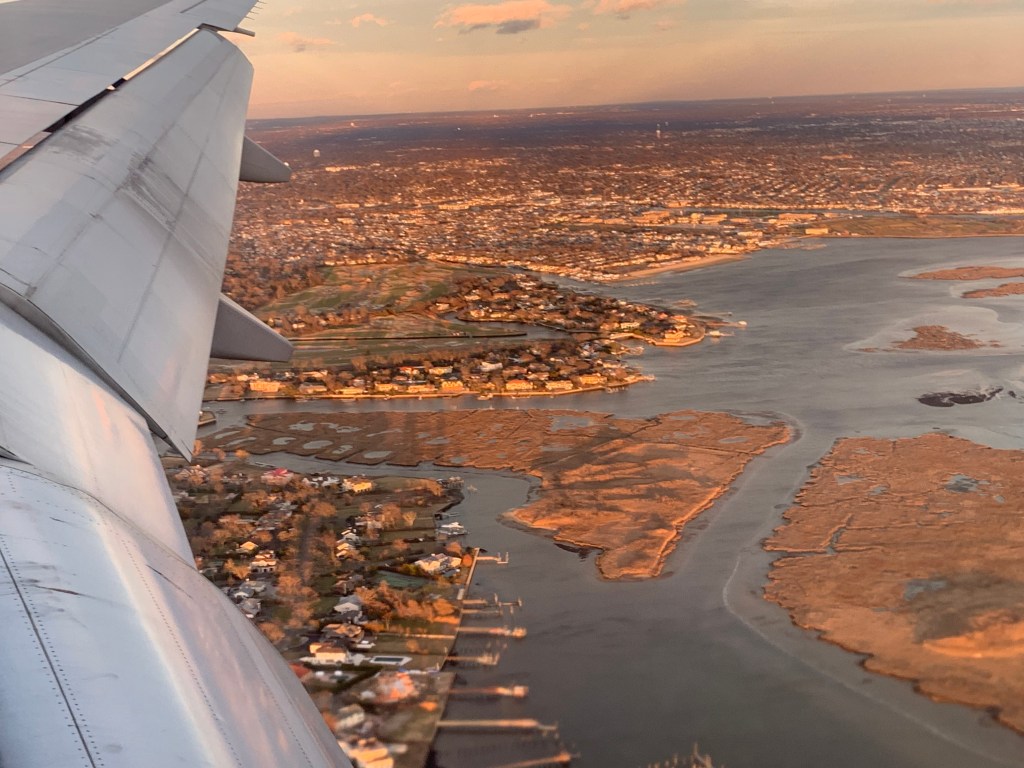
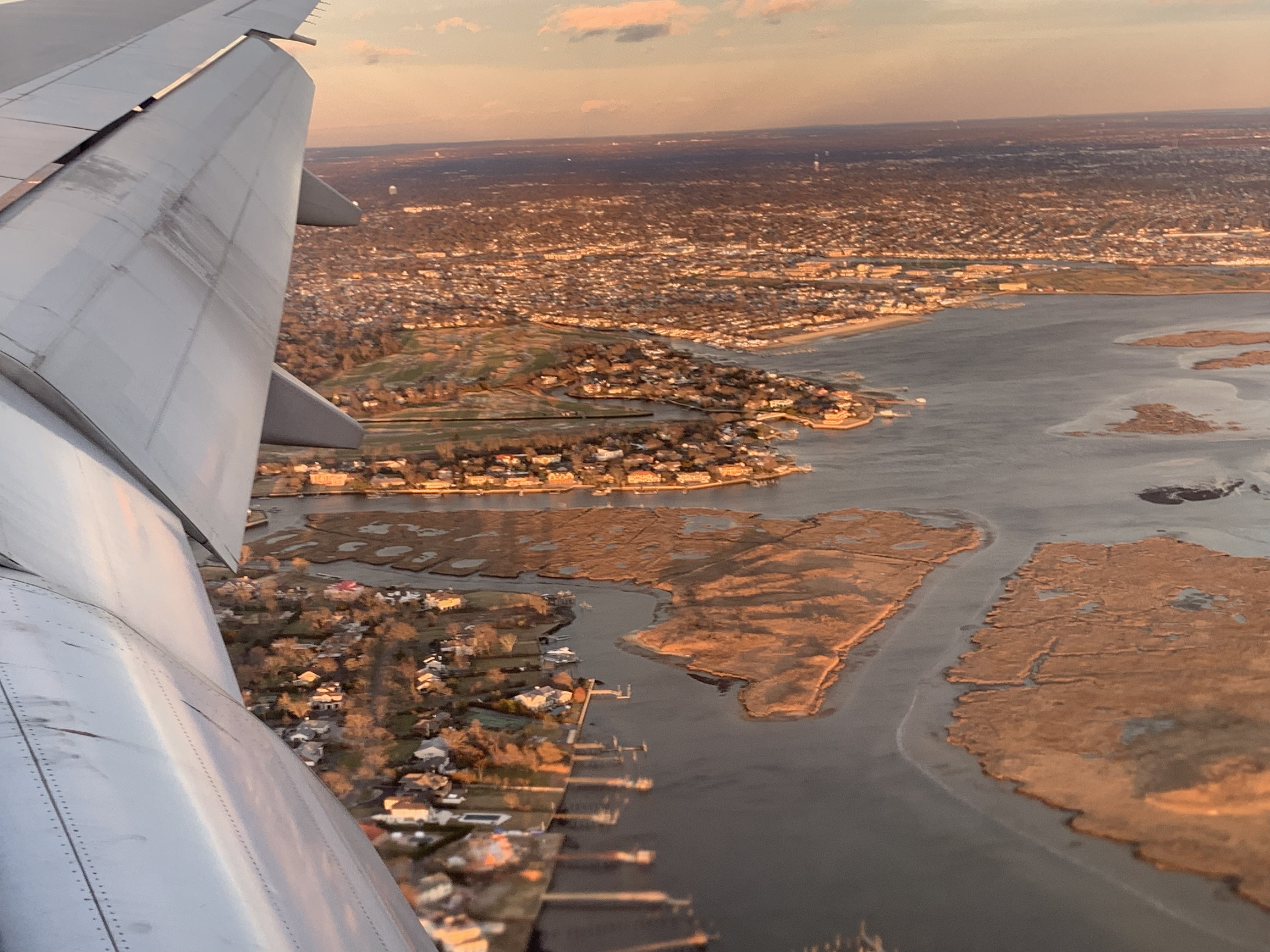
Suddenly I could see it, New York and New Jersey, opening up before me as we descended through the clouds. The turbulence seemed like gentle rocking to me as I was clapping my hands with glee as I am prone to doing!
New York – The Arrival
New York I’m Here! View from British Airways 777 into JFK (Photo by Ann Massey)
The smile breaking out across my face was as bright and sparkling as the evening sun beginning to set on the East Coast. As the toy cars and planes below us suddenly became very lifesize and real, I held my breath and Dominic’s hand as we touched down on the runway and began our taxi to our arrivals gate.
Unfortunately we were so early landing, we had to hold for some forty minutes and excitement turned to agitation and a bout of claustrophobia began to set in as the realization of the journey I had just made began to overwhelm me.
Thankfully I had a patient travel companion who calmed me down and we just had to get past my negative belief that somehow my luggage would be on the other side of the world.
I was already terrified at the prospect of New York Airport security as I have a naturally cheeky and guilty looking face, go red at the drop of a hat and blurt out things without thinking.
As I stood before the long-suffering employee of Immigration and Customs, he patiently explained for the third time I needed to remove the plastic cover from my passport. During this meeting we also discovered that under extreme pressure and anxiety I could not count to five, remember key facts such as where I was staying or tell my left hand from my right. “Your left thumb m’am, Your LEFT thumb m’am, LEFT…THUMB!”
Whether my garbled answers had satisfied this gentleman or his patience was giving way to despair I don’t know, but I was waved through and Dominic was able to stop pretending he didn’t know me as we went forward to collect our luggage. Thankfully a friend had lent me a suitcase the colour of a banana so my lost luggage panic was soon abated.
New York – I’m Here!
It was dark when we arrived at the taxi exit of JFK, and I was pleasantly surprised at how much smaller and more civil the experience had been against my expectations. A taxi the colour of my suitcase pulled up and as we slammed the door shut and exited the airport onto the bright lights of the freeway, I embraced the fact that this was all really happening to me, my 30 year dream had come true and my New York adventure had begun!
Thank you for joining me on the start of my NYC journey and please stay with me as in the coming weeks and months I share the locations, attractions, history, people and experiences of the most wonderful place I have ever been!
I may want to wake up in a city that never sleeps, but to do that I need to have somewhere to sleep first!
Yellow Taxi As Advertised
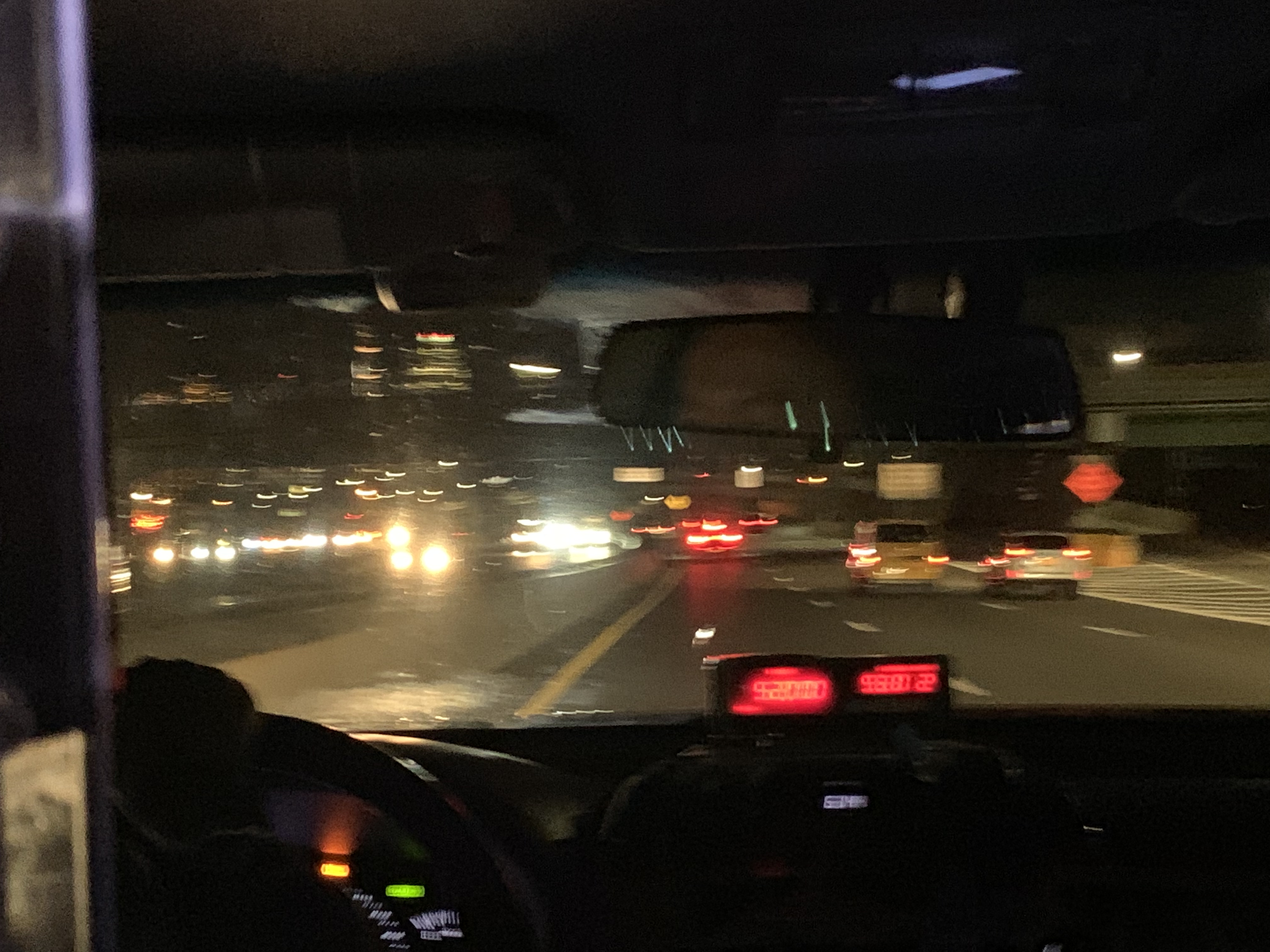
So where were we? We had climbed into a yellow taxi outside JFK airport and it took off like a rocket. Yes they are driven in EXACTLY the same way the television portrays. Comfort is not top priority in this vehicle, I am only 5’ 3” and my kneecaps felt like they would implode with the pressure from the division board in front of me. My poor 6’ plus partner Dominic? Well you can imagine…
View from a fast and uncomfortable taxi! (Photo Ann Massey)
My plane terror was long forgotten as we flew round bends and across lanes with the fearlessness of Senna and the precision of Schumacher – for all of 10 minutes, then bumper to bumper traffic.
It may have been early January but the window had to be opened before I suffocated in the compact, cheap air freshener infused space we were trapped in. Advertising is just everywhere, even in my vehicle, from the big sign on top of the taxi to the tiny screen inside showing an entertainment show interview with Rami Malek on repeat, interspersed with advertisments and a reminder you can pay for your taxi by credit card.
I imagine the traffic congestion is a constant headache for those living in New York, but for a newcomer like me it was an opportunity to see real NY life unfold, people watch, look at the buildings and other road users. I was astounded how close houses were to the main roads into the city centre and how in the suburbs outside of Manhattan, life unfolds very much the same as for you and I. Dinner in front of the TV (closing the drapes something to put on the ‘to do’ list) Christmas decorations still to come down and kids being taken in the family car to soccer practice. None of it very Manhattan-esque!
We came into the city through the Holland Tunnel and I just couldn’t contain my excitement as the Manhattan night skyline unfolded before my eyes. Dominic is well used to me so he wasn’t a bit fazed when I screamed and started clapping my hands. The taxi driver was equally unperturbed.
Street to avenue, street to avenue, I was bewildered, my Uncle Richard’s advice on the grid layout of Manhattan long evaporated. FYI, streets run east to west and avenues run south to north, with Fifth Avenue at the centre, but none of that was in my head as I struggled to take in the landmarks, looming high rise buildings and the bustling traffic, as pedestrians darted out in front of our cab – a brave maneuver as our driver had no intention of stopping.
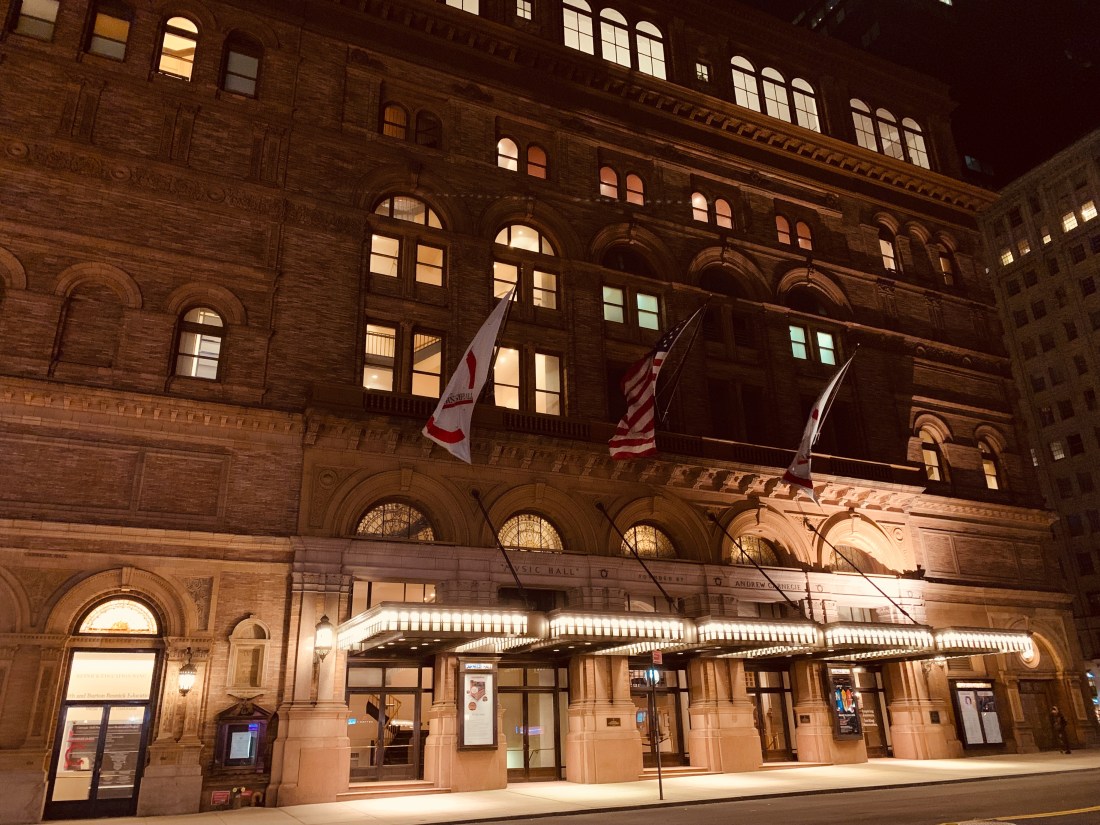
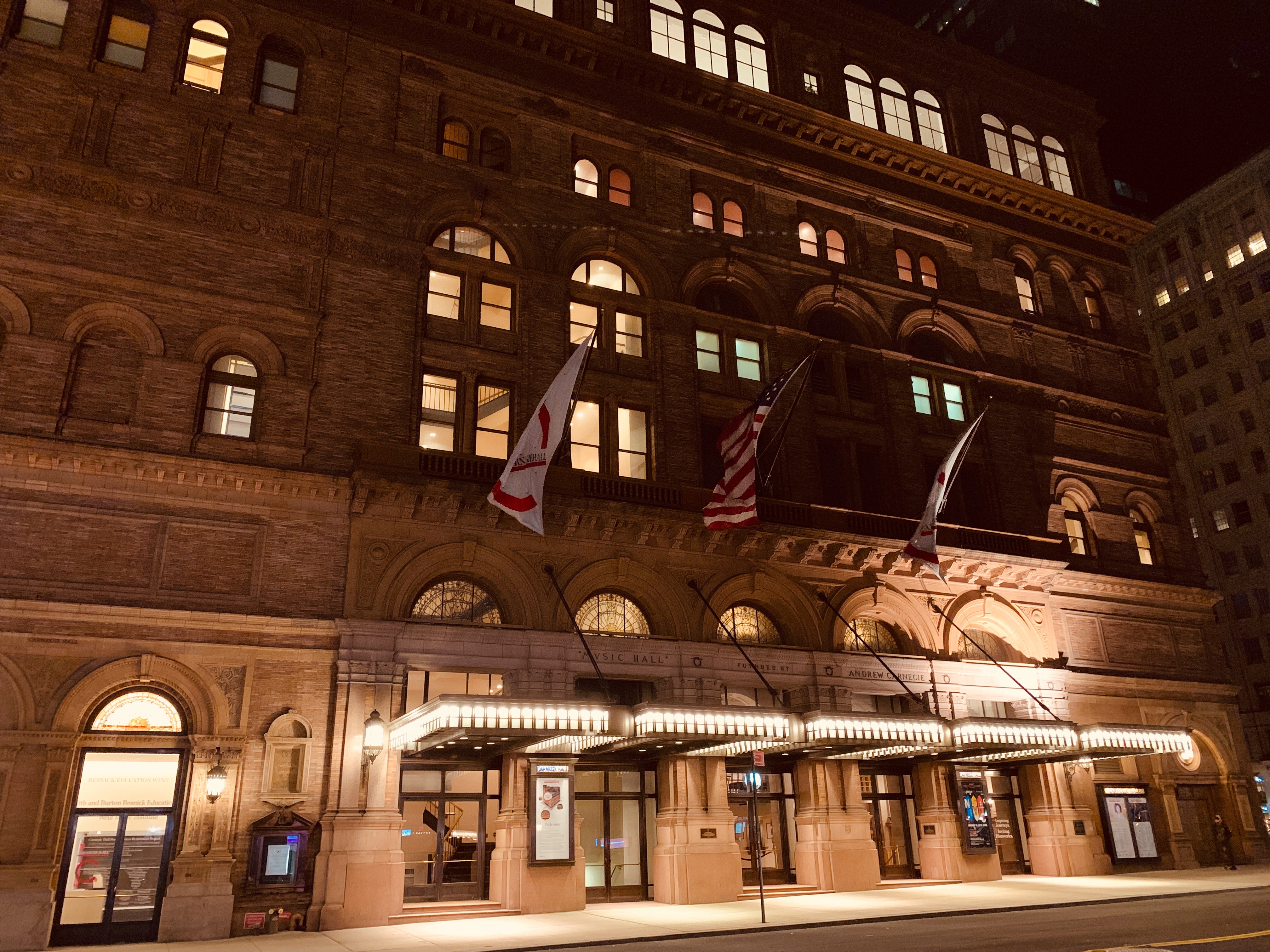
The bright lights of Carnegie Hall (Photo by Ann Massey)
How Do You Get To Carnegie Hall?
We knew our hotel was right by Carnegie Hall, well it had to be – it was the Carnegie Hotel. It did get to a point where we switched on Google Maps as even our driver was unsure of the destination but that also was unclear. Unfazed we got out at the side of Carnegie Hall on West 56th Street.
We took our luggage, paid the taxi driver around 80 dollars including tip (decided on in panic as we suddenly realized we were in a tip driven destination and had little cash.) The fare itself was around 60 dollars including tolls and taxes.
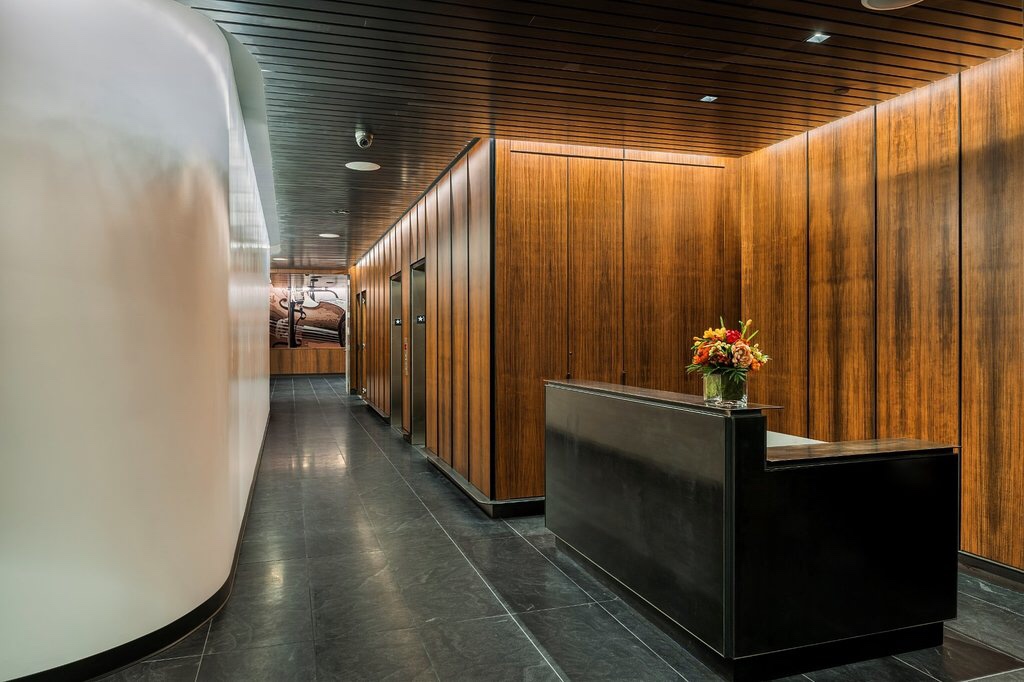
We turned around and there it was, the Carnegie Hotel! The entrance is unassuming but elegant and welcoming, and exuded a warmth much needed in the cold winter night. The reception desk is right inside the door, so you are greeted straight away and don’t have to endure that awkward “I have no idea where anything is, where do I check in, everyone is looking at me” phase of larger hotel check ins.
Lobby and Reception (Photo courtesy of the Carnegie Hotel)
There was no “I can’t find you, do you have the booking reference,” they knew who we were. That’s the wonderful thing about a boutique hotel, they have a limited number of rooms and you don’t become lost.
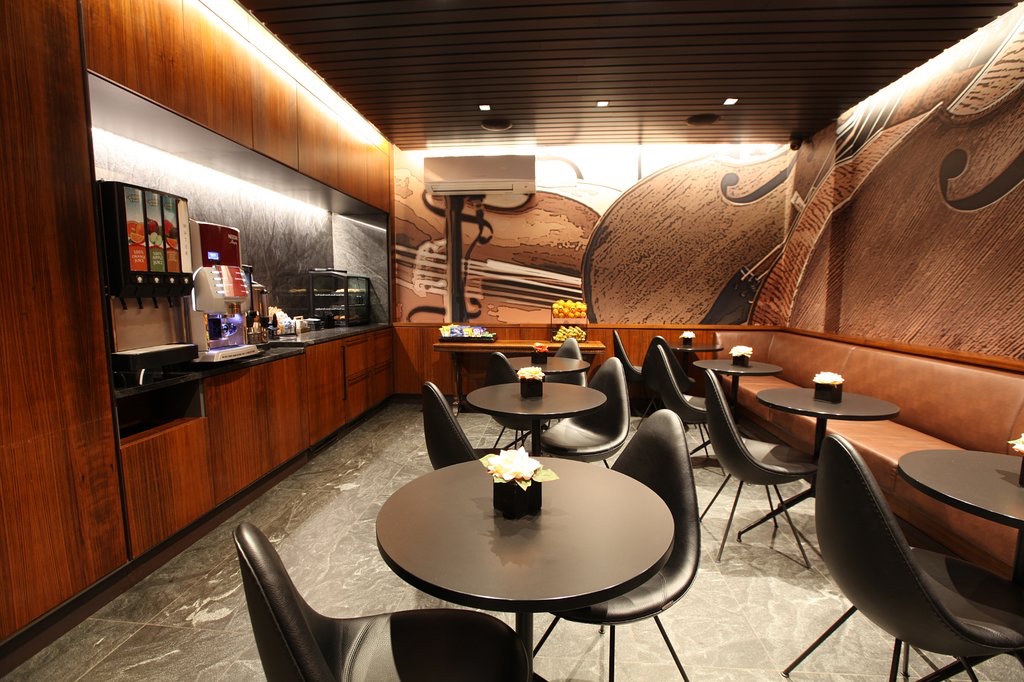
I went for a little snoop beyond reception and found two elevators and then a delightful seating area with tables where complimentary snacks and soft drinks and hot beverages are readily available. It is also where a continental breakfast is served each morning.
Dining Area (Photo Courtesy of the Carnegie Hotel)
The breakfast experience was so delightfully casual. You could either seat yourself in situ or help yourself and return to your room as many of us patrons opted to do. A selection of cereals, fruit, fresh pastries, coffees, teas and juices are all available.
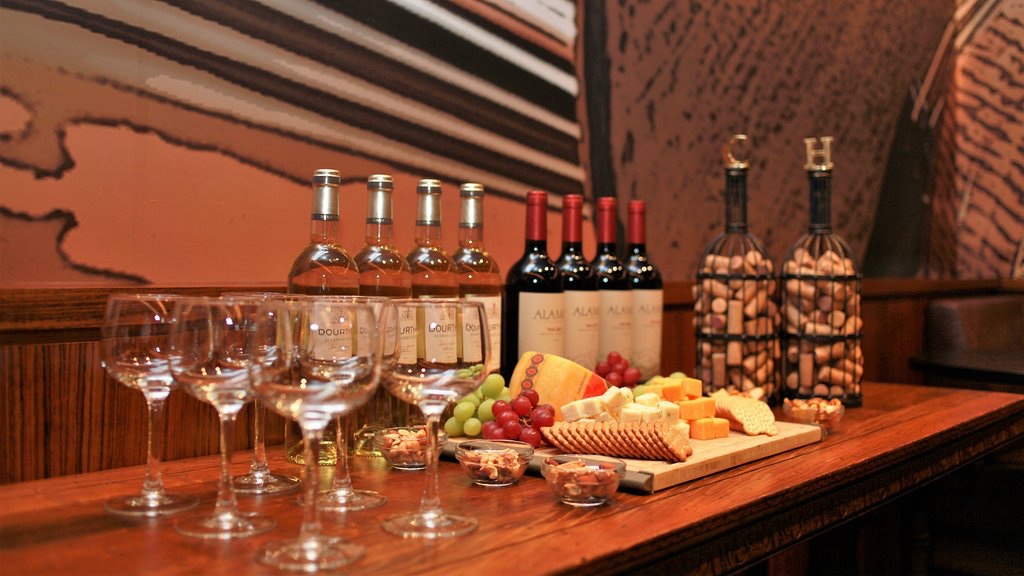
A most charming complimentary cheese and wine hour happens each evening in the same location. Cheeses, biscuits and grapes are laid out and a lovely team member pours wine from the bottle for you into glasses, no self service here! Everyone attending is relaxed and in good spirits, this is what this oasis in the heart of the theatre district gives you. A splendid additional touch which sets this hotel apart from the rest.
Cheese and Wine Hour (Photo courtesy of the Carnegie Hotel)
Check in complete, we went to the elevators and up to our room on the 11th floor. There are only four rooms on each floor so no struggling down endless corridors a la The Shining to find your abode.
Room With A View
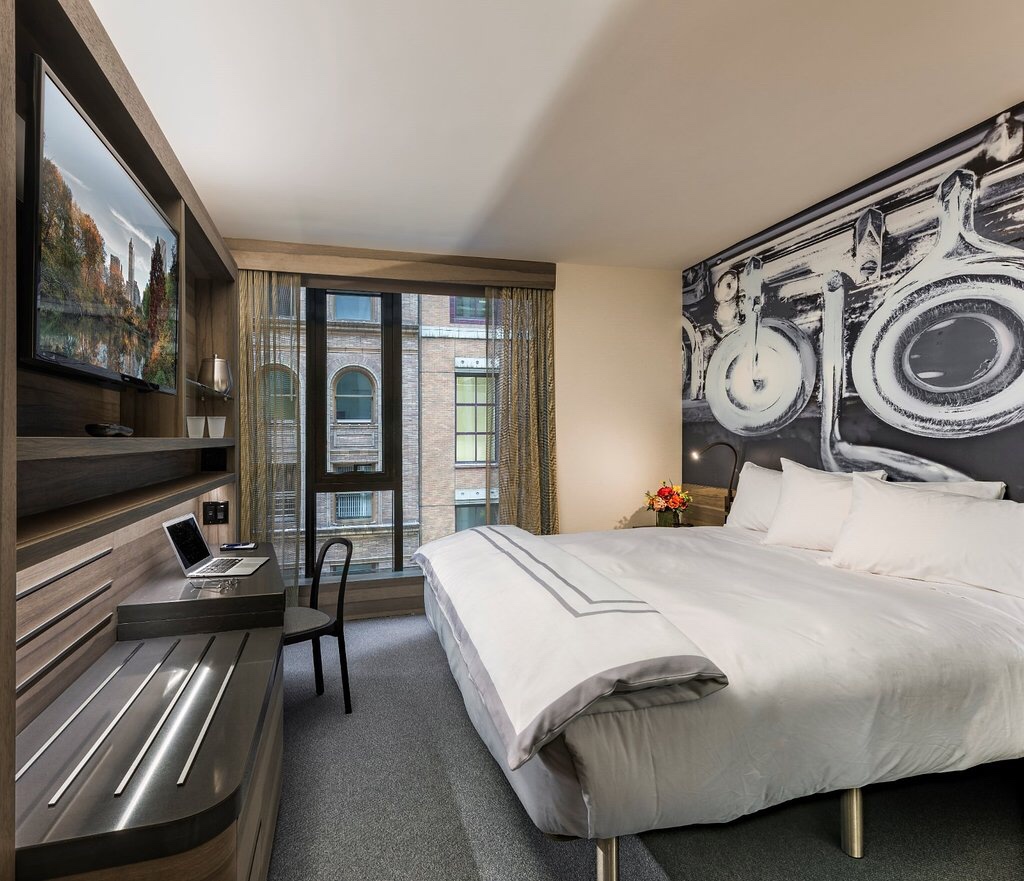
On entering the first job is to congratulate the designer. We had opted for the Superior King and they really knew what they were doing with the space and stylish decor. Our room had a feature wall of a trumpet which was a beautiful coincidence as my Dad was a trumpet player in an Irish Showband.
Superior King Room (Photo courtesy of the Carnegie Hotel)
The bed was HUGE! You know what I mean, the kind of bed where you actually don’t know if there is anyone else in it with you. The room was the perfect temperature and had adequate storage, good lighting and a flat screen tv positioned at an optimum level for viewing-something many hotels could learn from!
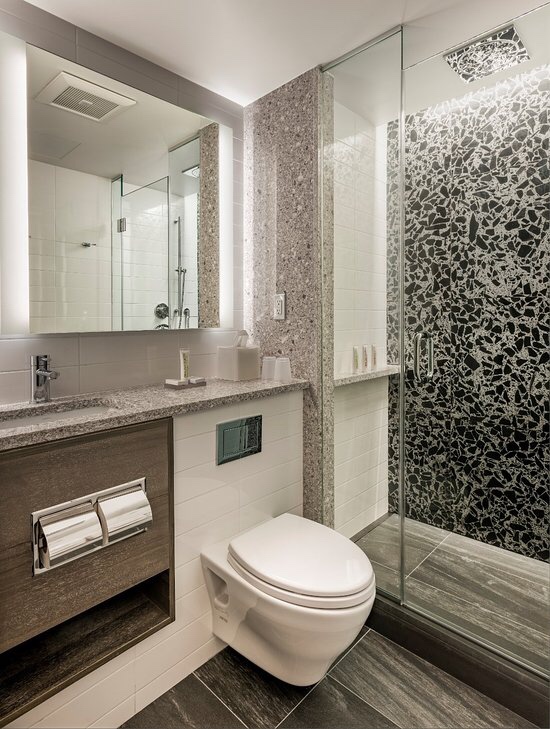
The bathroom, while compact had brilliant lighting, stylish fittings and decor, which I would describe as contemporary Italian. The shower was magnificent with a rainforest head and tremendous power. And I LOVE the Malin + Goetz toiletries! Rum body wash, peppermint shampoo and Cilantro conditioner. Perfect for reviving the weary tourist.
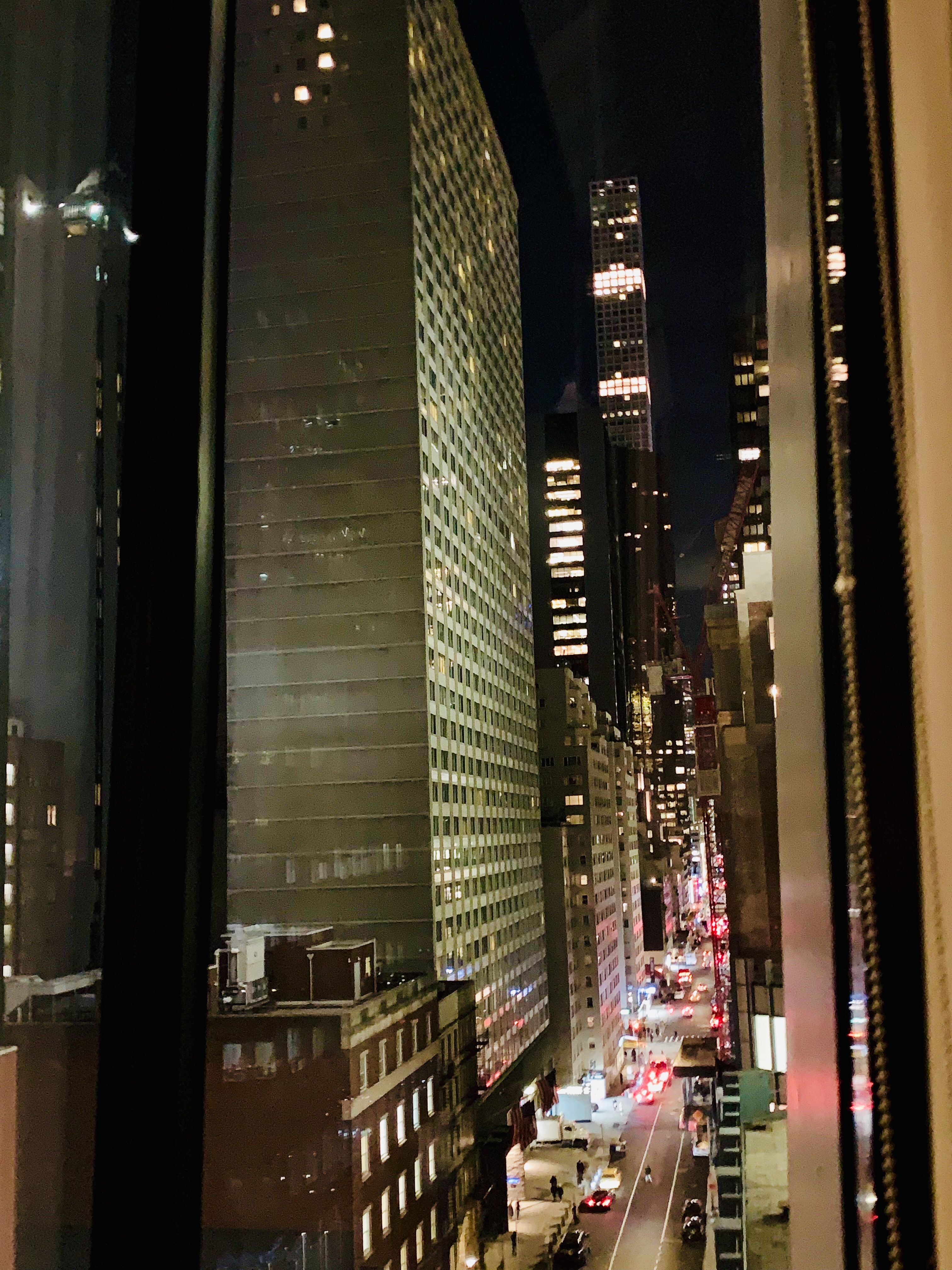
My biggest surprise was the window. It extended out so you had an all round view. Amazingly even with the window open, the noise was subtle and distant. I should also say there is no interior noise from the hotel or other guests which is an incredible thing. I was so excited to look out at the stage entrance to Carnegie Hall, down the street at the traffic and up at the surrounding skyscrapers, all glowing in the Manhattan night.
Contemporary Bathroom (Photo courtesy of the Carnegie Hotel)
Suitably refreshed and in our finery, we left our home in Manhattan, (and yes home is the right word, that is how you feel here) wrapped up against the winter chill and began our first walk in New York to the Rainbow Rooms for dinner and cocktails. I will tell you more about that in my next post!
Room with a view (Photo by Ann Massey)
In the meantime, for me there is no place I would rather stay and we are booking the Carnegie Hotel for our next visit in early 2020. And the bed? Well despite the jet lag and being in a city that never sleeps, I can assure you I most definitely did!
So we stepped out of the warmth and seclusion of our hotel into the crisp, January, New York night. Not knowing exactly where we were going, we jumped into a yellow and black stalwart of NYC culture to take us to our first proper interaction with New York City at night.
Pedestrians were few and far between, no doubt seeking shelter in one of the many cosy bars and restaurants we passed en route to 30 Rockefeller Plaza.
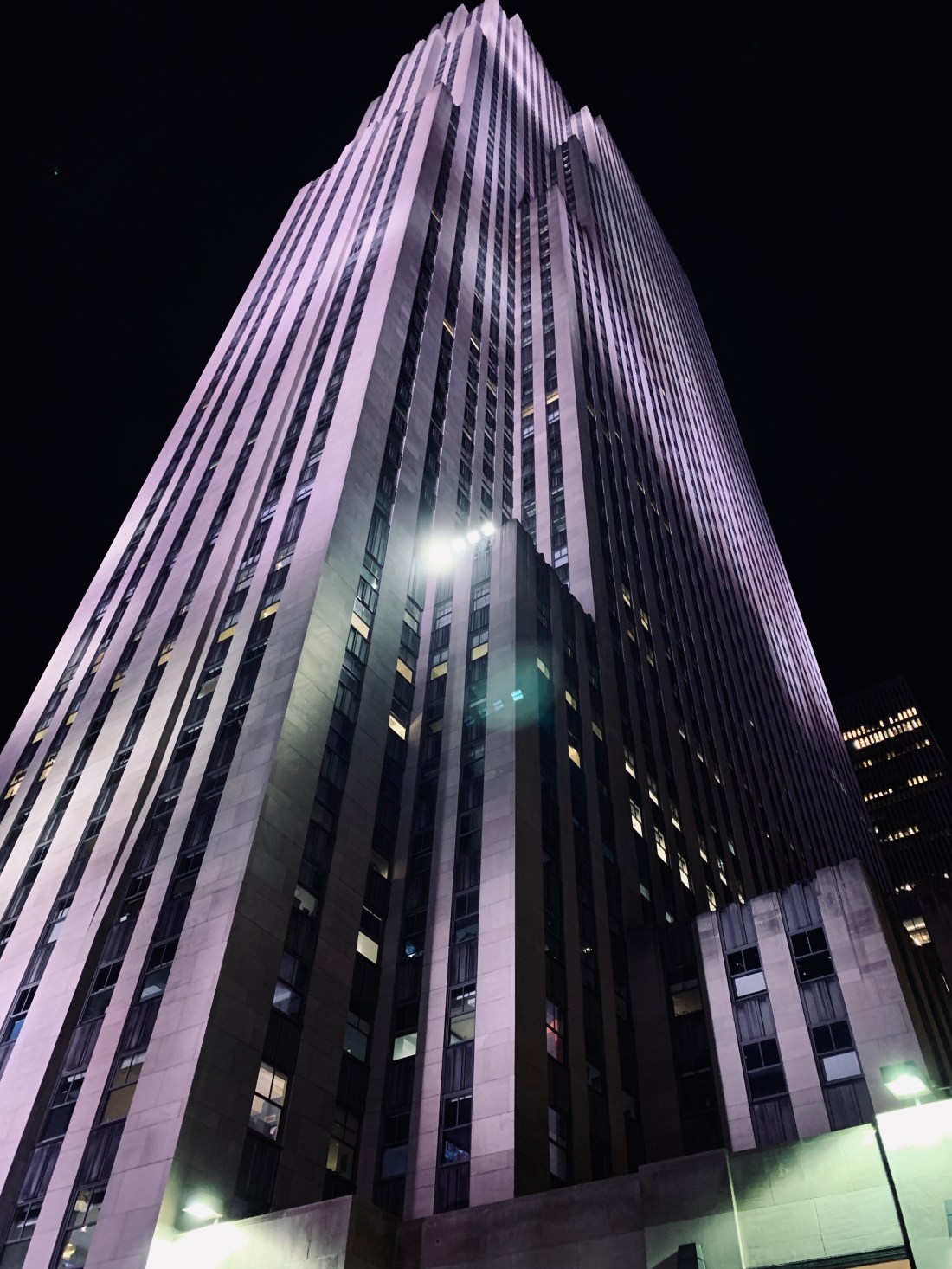
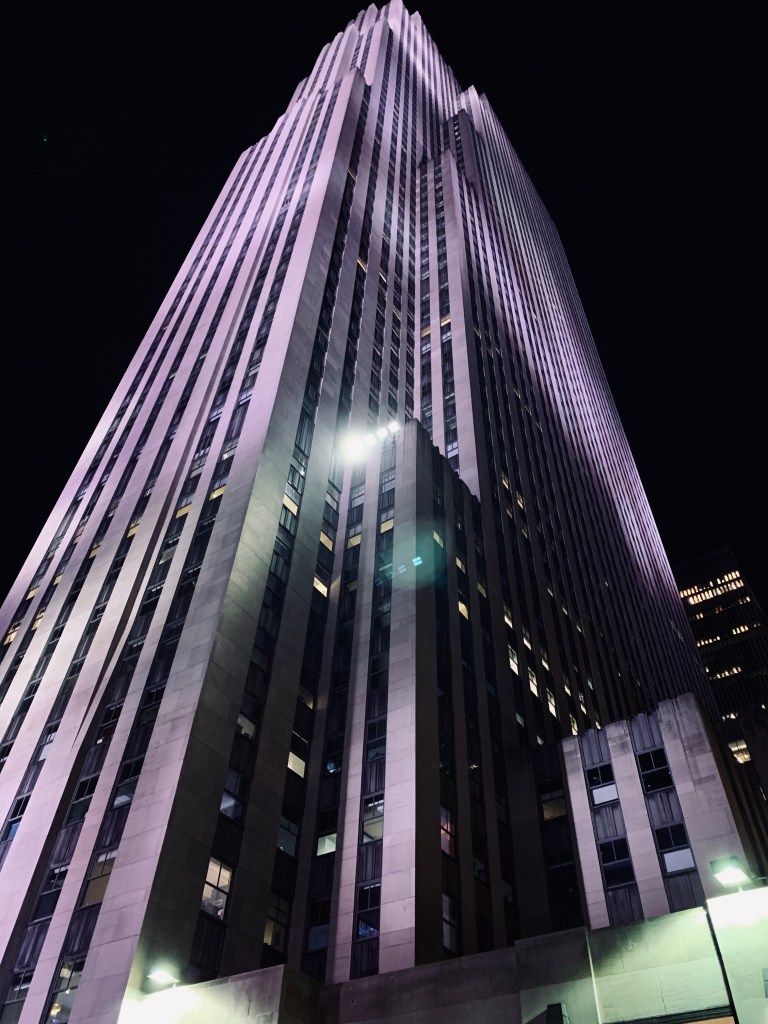
I gave a sharp intake of breath and it wasn’t against an icy cold winter’s night. My senses were overwhelmed taking in the 66 floor icon of New York culture and home to NBC studios and the Rainbow Room.
30 Rock as it is affectionately known, is the jewel in the Rockefeller crown and NBC have a whopping 35 studios in the lower part of the building, made possible by the lack of windows over 16 floors. Two floors at the top were set by for a dining area which became The Rainbow Room.
The Rainbow Room opened its doors in 1934 and after a slow start became the hit of NY nightlife for the social elite. The most prestigious families of the era would hold charity events and stars of stage and screen were regulars at the black tie Grill and supper club. It has however, had a rocky (pun intended) path to the place we were dining tonight. Falling out of fashion, lease costs rising and economic downturn have seen it close, be reinvented and reopen on more than one occasion.
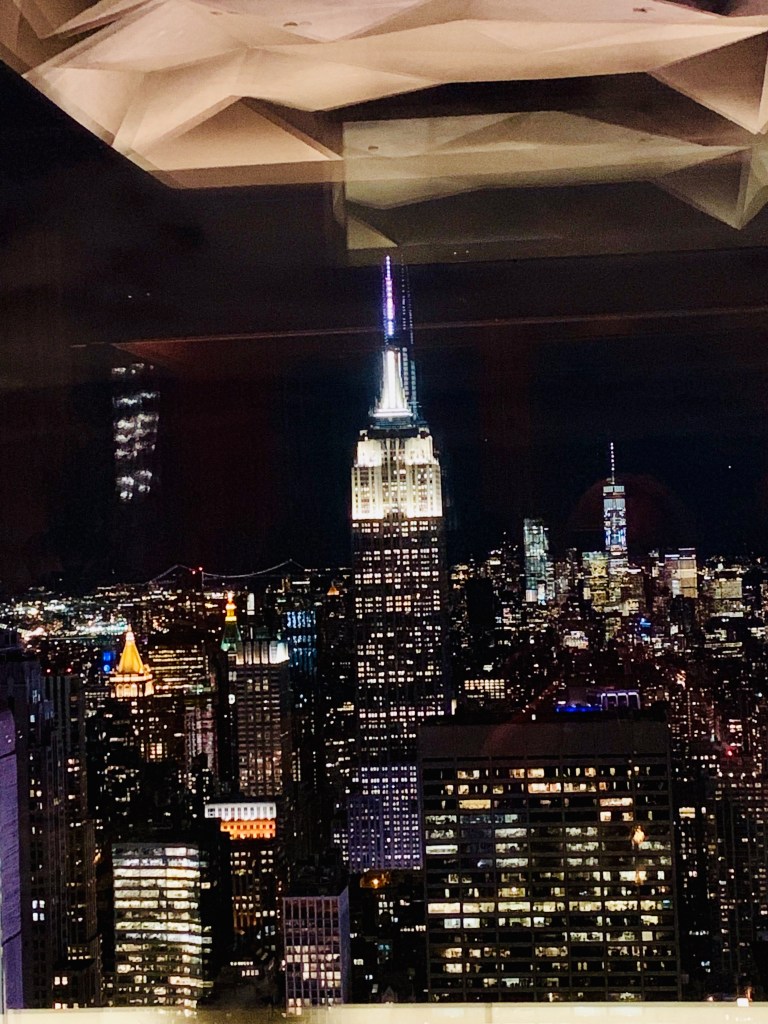
Bar SixtyFive at The Rainbow Room is New York’s highest terrace bar, bistro style dining and an apparent cocktail utopia. Stylishly designed and keeping true to its classic origins, the location has a triple aspect vista across Manhattan including a first class view of the Empire State Building.
View of the Empire State Building from the Rainbow Room, Photo by Ann Massey
We had actually called ahead to bring forward our reservation to 9pm and I was surprised at the pleasant and warm manner in which we were accommodated for such an establishment.
Black elegance was clearly the uniform of the employees and the Thursday evening bar counter was filled with city slickers sipping on cocktails and trying to outdo one another in the attention stakes.
A wonderful place to people watch, I continued to judge books by covers as I saw what was clearly a table of importance and wealth with our waitress practically joining them, so much was the attention she was giving.
When in Rome, so I ordered a Manhattan cocktail and Dominic ordered a Brooklyn Beer. He found it a tad hoppy and my own was mediocre. Our waitress took our order with a side order of you’re beneath my tip grade and both opted for the signature SixtyFive Bar burger with triple cooked fries. The burger was pleasant enough, but make it fancy as you like, it’s still a burger. The fries were a bit sallow and triple cooked does not mean crispy it would seem.
Dominic unimpressed by the clientele of the Rainbow Room, Photo by Ann Massey
Feeling distinctly out of place, we decided to wrap things up and finally got the attention of our waitress. Looking down her perfectly powdered nose she whisked away Dominic’s credit card and was gone for some time.
Having tracked her to the table of wealth, I politely informed her she was causing a security concern having our credit card away for so long and was preventing us leaving. After showing her true colours which were most definitely not elegant black, I left a tip – a handwritten one on the docket giving her sage advice on how to earn one.
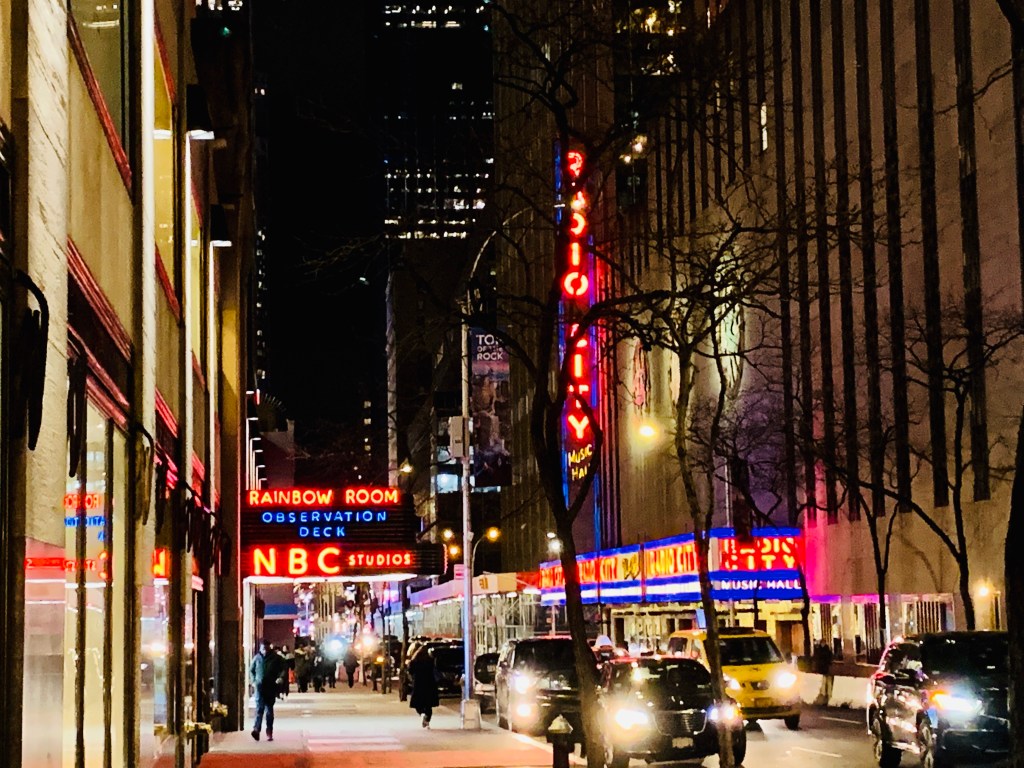
Stepping out of the elevator we walked out into the fresh air and had a good look at Radio City Music Hall, one of the first projects of the Rockefeller Center.
Photo by Ann Massey
The ‘Showplace for the Nation’ is HQ for the dance troop The Rockettes, who have been performing here since 1932 and were founded as rivals to the UK Tiller Girls. Known for their Christmas Spectacular and the Macy’s Thanksgiving Day Parade, they continue to wow New York audiences to this day.
It is not just the Rockettes who put on a show – artists of every persuasion including Massive Attack and King Crimson perform here. If you just want to see a piece of entertainment history, you can take a behind the scenes tour including a meet and greet with a Rockette!
Finally it was time to return to our hotel after a very busy first evening in New York City, after all tomorrow would be a day chocked full of new experiences in what was already becoming my favourite city in the world.
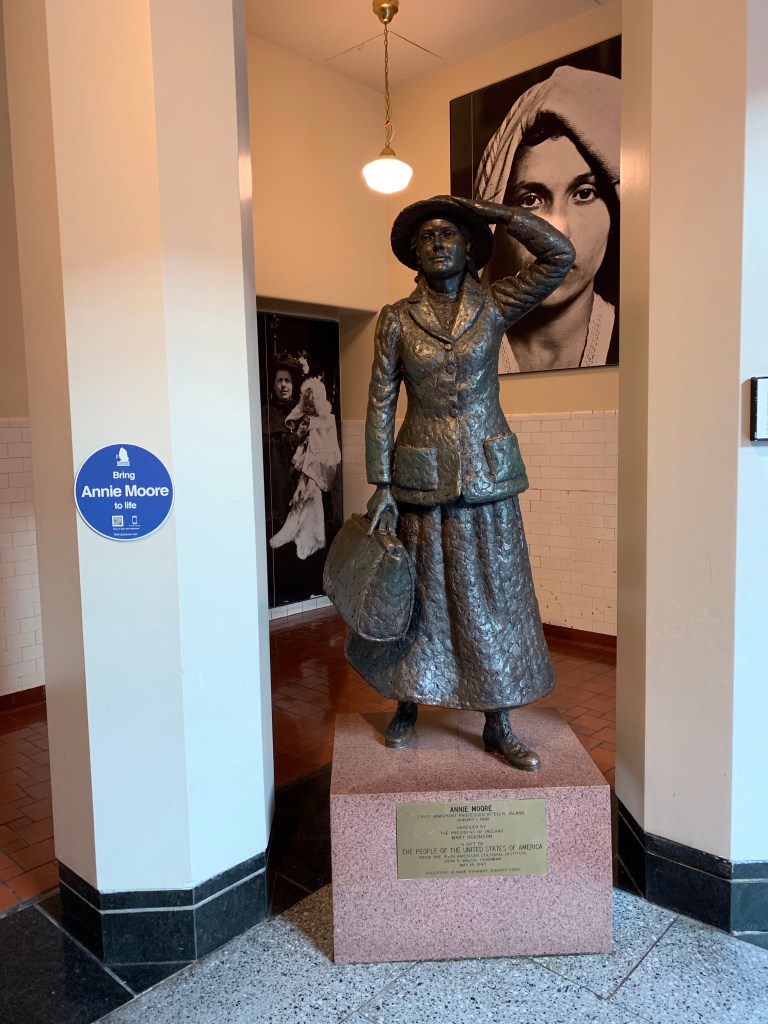
Every time I visited Cobh in County Cork, Ireland, I would go and stand by the statue of Annie Moore down by the quayside. You see, Annie Moore was an Irish teenager, who travelled to New York with her brothers across the Atlantic Ocean to join her parents in Manhattan. Annie was the first person to enter the United States via the new immigration centre on Ellis Island on 1st January 1892. New Year. New life.
So many of my own family made the same journey, many never to set foot on Irish soil again. In my town in the mid west of Ireland, we have a place called the Bridge of Tears, a place where those heading to Cork to make the voyage would say goodbye to loved ones for the last time.
I dreamed of seeing the sister statue of Annie on Ellis Island, so when I finally conquered my fear of flying across the Atlantic, it was top of my to do list. So what exactly is Ellis Island and why was it a symbol of hope for so many?
Read on to find out and discover why our visit to Ellis Island was the highlight of our trip to NYC.
Annie Moore statue
What Is Ellis Island?
This piece of land on the Hudson was the habitat of the Mohegan tribe who called their home ‘Kioshk’ meaning ‘Gull’ Island. It was then purchased by a Dutchman in 1630 who renamed it ‘Oyster’ island due to the abundance of shellfish.
It then took on a more sinister name, that of Gibbet Island. In the eighteenth century, captured pirates were hanged here as a warning to others. During the American Revolution the island was purchased by Samuel Ellis, a businessman who built a tavern here to quench the thirst of local fishermen.
I will look at the timeline for immigration in the U.S in the next section, however the now vacant tiny island was purchased by the Federal Government who had taken over immigration control. They more than doubled the area of Ellis by using landfill from among other things, rubble from the construction of the New York subway tunnels.
As the influx of immigrants increased over the decades, the island needed to grow with it. Two new islands were constructed in the early 20th century using landfill, – the first being used for the hospital administration buildings and contagious diseases, the second for the psychiatric ward and maternity wing.
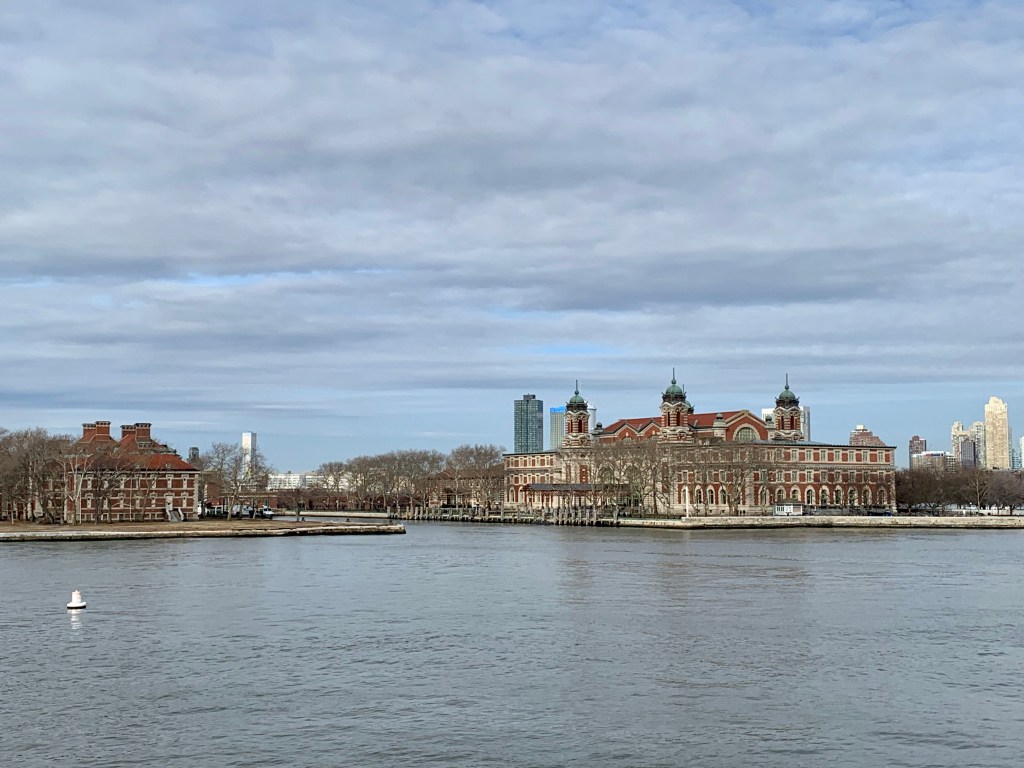
In 1897 the main immigration building burned down, all records with it. It reopened in December of the same year as the building you set foot in today.
Ellis Island from the Ferry
Ellis Island went on to have multiple uses including an internment camp for Germans awaiting deportation during the First World War, a Navy way station, munitions storage, military hospital and a coast guard station. It finally closed in November 1954 and in 1965 it was declared a National Monument.
Immigration Into the U.S.A.
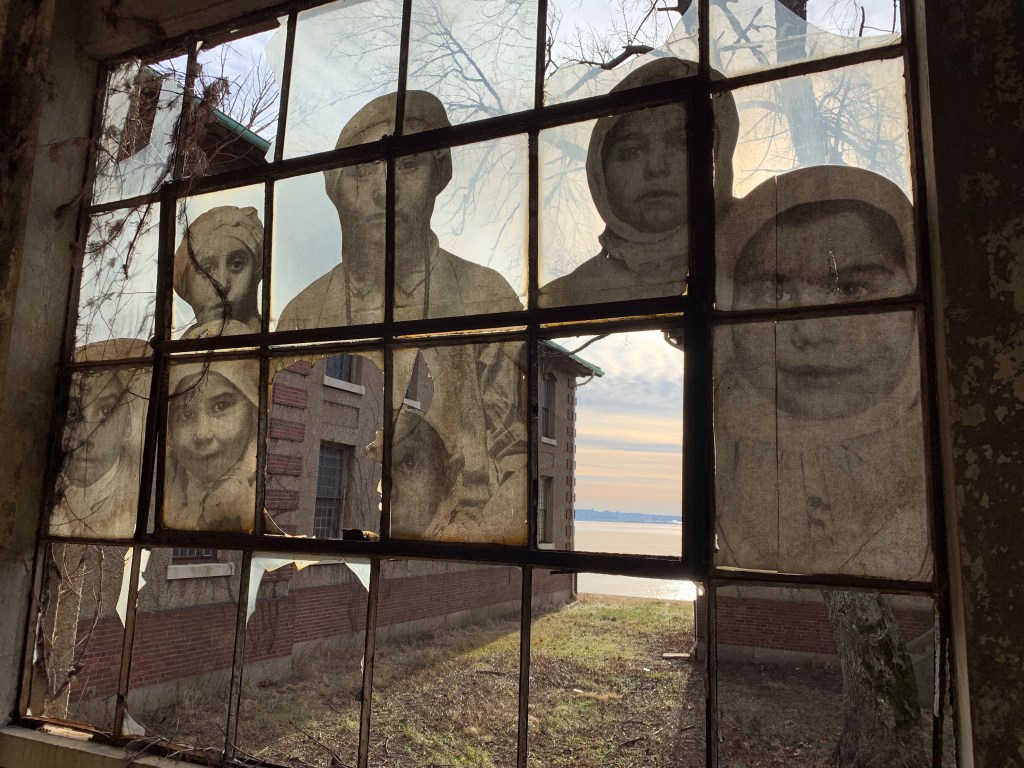
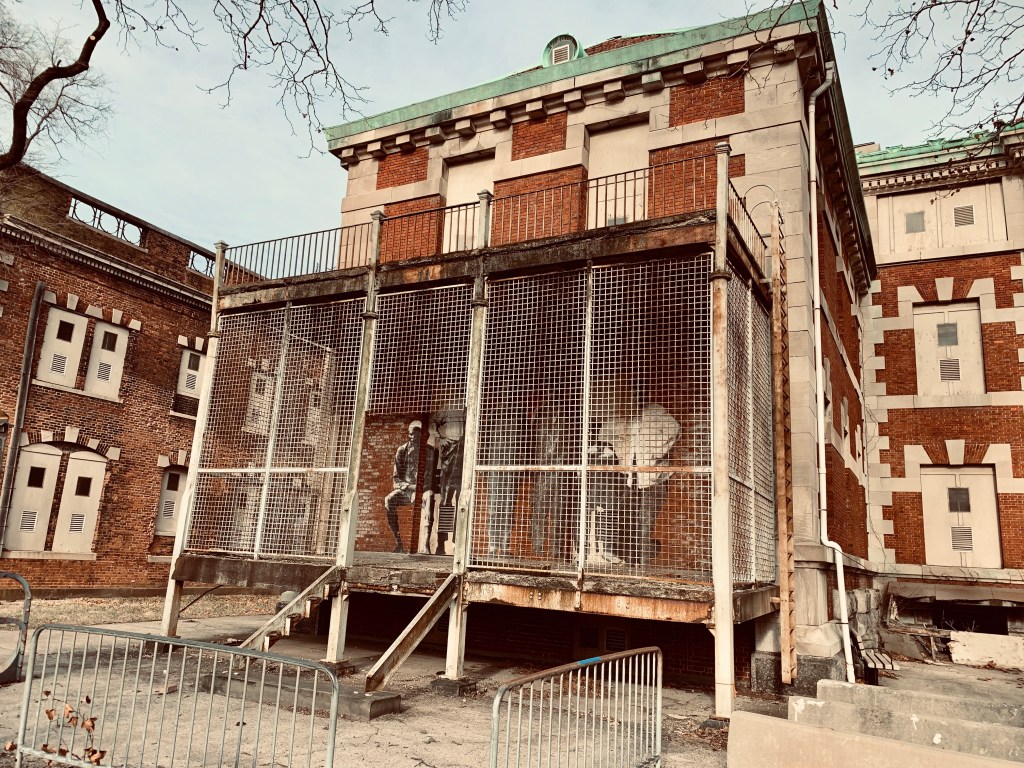
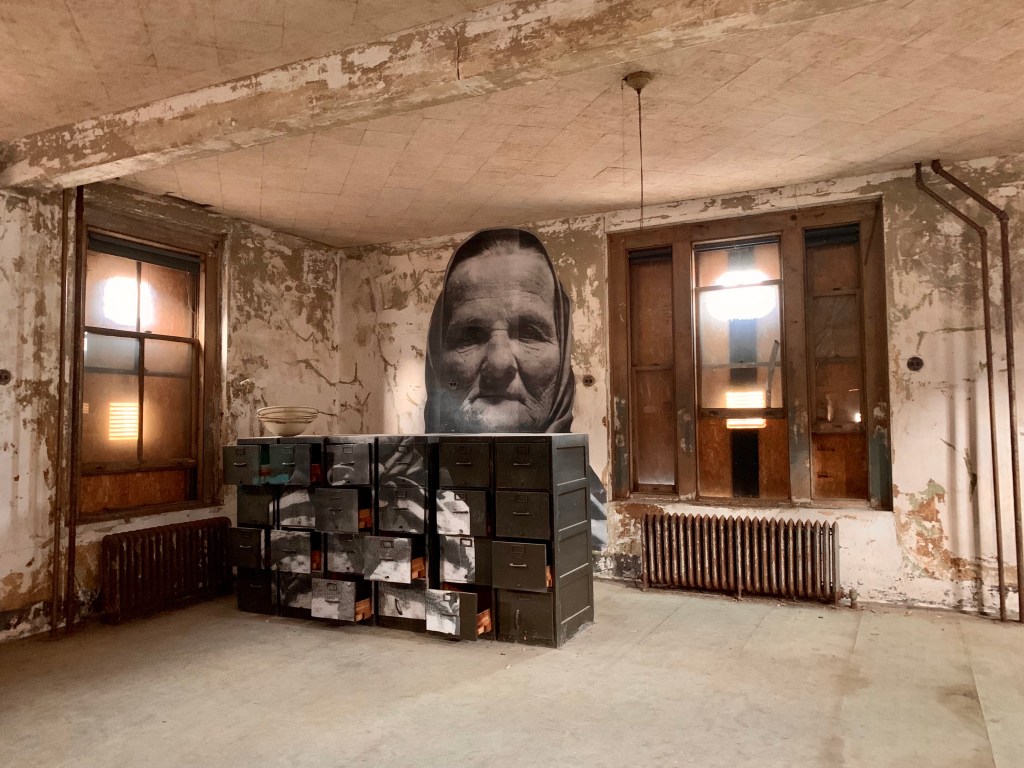
Artwork based on images of a Immigrants by French artist JR
There was little in the way of immigration control until the Naturalisation Act of 1790. This meant that any foreign national who was an adult white male and resident in the United States for at least two years was given legal residency status.
Immigration was still fairly lax until a major influx from Europe during the early nineteenth century. The first state run immigration depot was opened at Castle Gardens in The Battery, which looks out to Ellis Island and the Statue of Liberty.
In the decade following the Irish Famine, over one million Irish left to seek a new life, of course not all of them made it. The ships they were on were known as Coffin Ships, as they had poor hygiene standards and were overcrowded. Sadly some 30% of passengers on each ship would die.
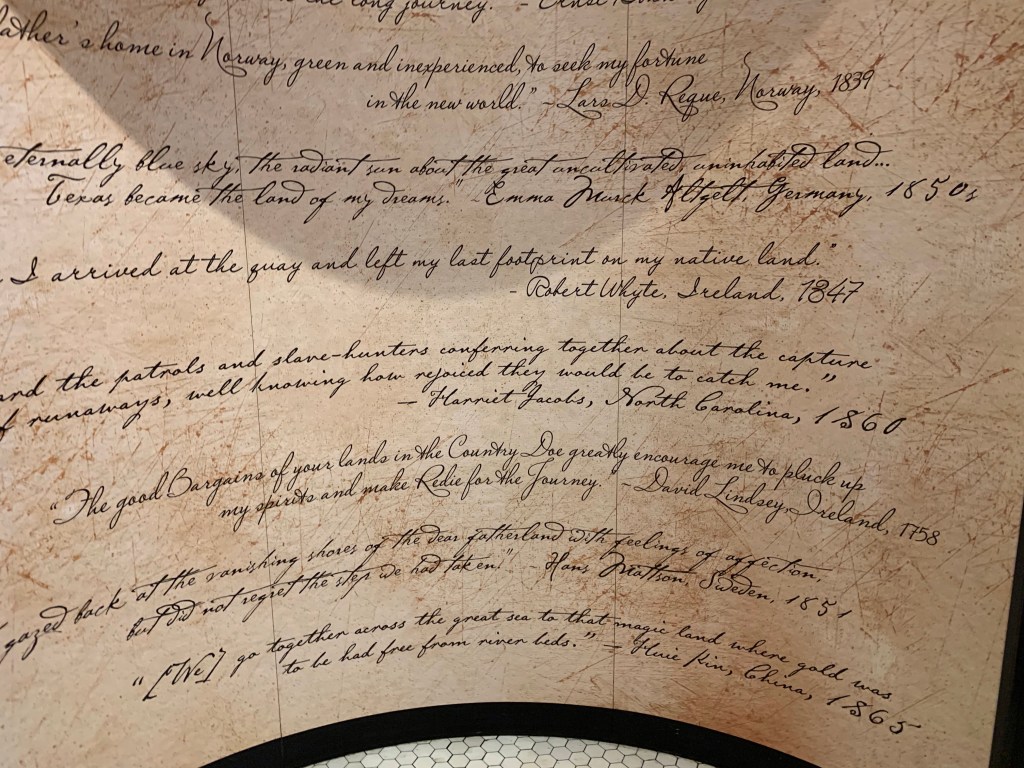
Words of Irish Hope
Prostitutes, criminals, those deemed lunatics and idiots were banned from entry during the nineteenth century and into the twentieth century, as well as those thought to be carrying disease, unaccompanied children and any nationality that had an apparently unstable, facist or communist government. The authorities were terrified of America being overrun with radicals and overwhelmed by disease and criminal activity. They were also worried about the burden of becoming responsible for children, the sick and those with a disposition that left them unable to gain lawful employment.
When Annie Moore set foot on Ellis Island, she was one of 700 that day and over the following half century, 12 million more would seek entry into the land of the free.
As new laws came into place and more restrictions were enforced at the start of the twentieth century, immigration numbers declined. During the Great Depression, for the first time ever, there were more folks emigrating than entering the U.S.
Who Are You?
So what happened when you arrived into American waters and saw Ellis Island for the first time?
After weeks at sea, hungry, exhausted, you were still subjected to hours of gruelling inspection and questioning.
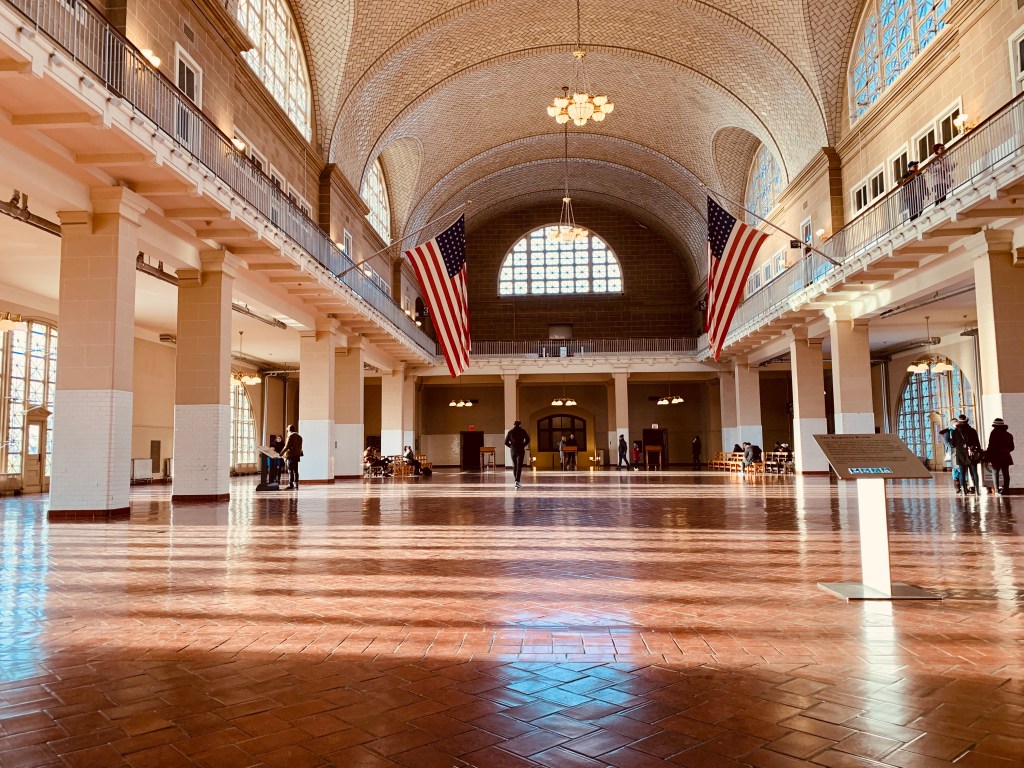
Main Hall, Immigration Centre
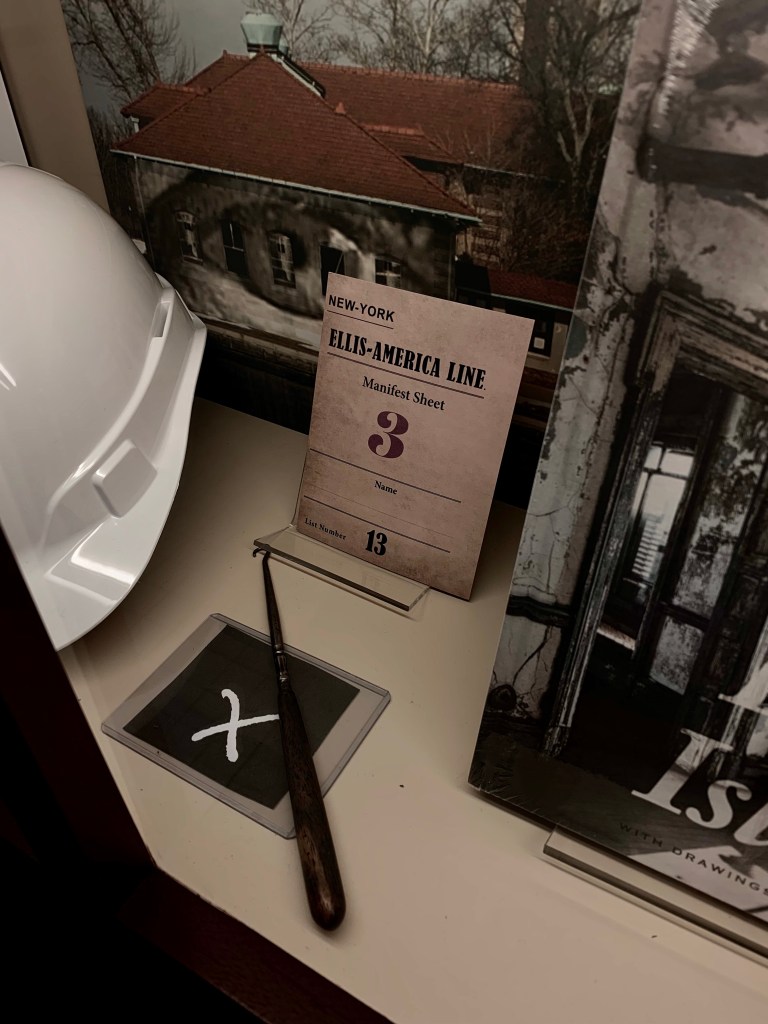
The first task was to check for outward signs of illness or disability. Doctors would walk the lengthy process queues and anyone thought to require further assessment would be marked with chalk.
If you made it past the medical inspection stage, you would be questioned to see if you were deemed financially self sufficient, had an understanding of the American way, did not harbour fascist or rebellious tendencies and were not with mental defect. These questions were often complicated, especially when you were exhausted and spoke little English.
One of the main illnesses that was checked for was an eye condition called Trachoma which could cause loss of sight and fatality. The examination involved the use of a button hook to turn the eylid inside out for closer inspection.
If you had crossed the Atlantic Ocean into New York in First Class, you were deemed to have financial stability and a clean bill of physical and mental health. Money talks.
The fortunate were given leave to enter the United States of America, the rest? Some were deported of course, but others spent much time on Ellis Island, a no man’s land with Lady Liberty teasing at a freedom and new life yet to be decided. The hospital was home to many and believe it or not was way ahead of its time. I will tell you more as we go building by building through our visit.
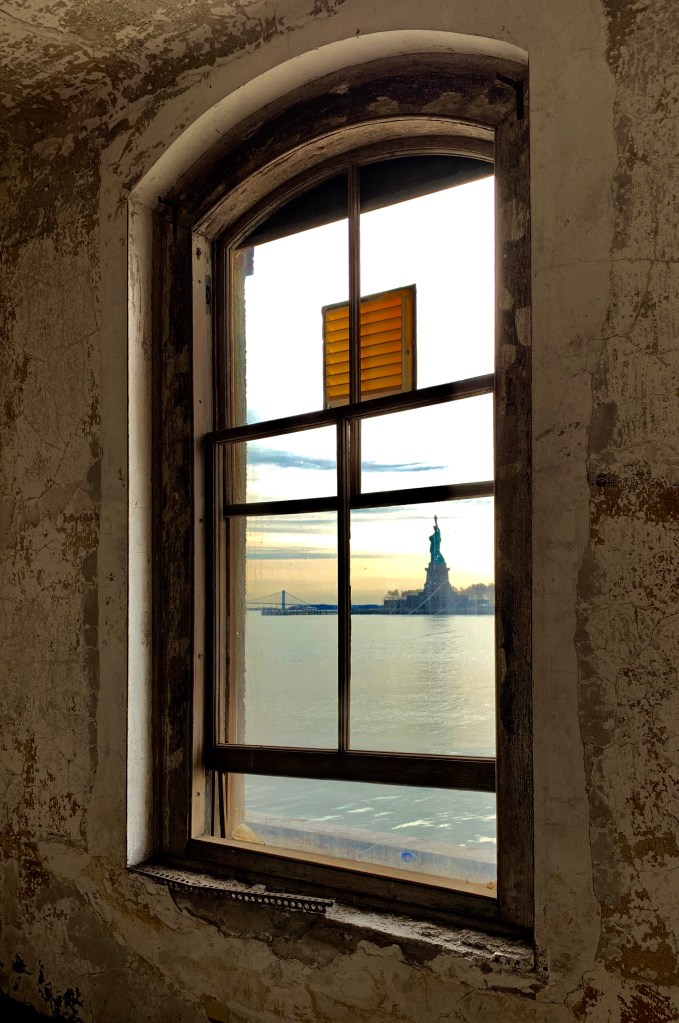
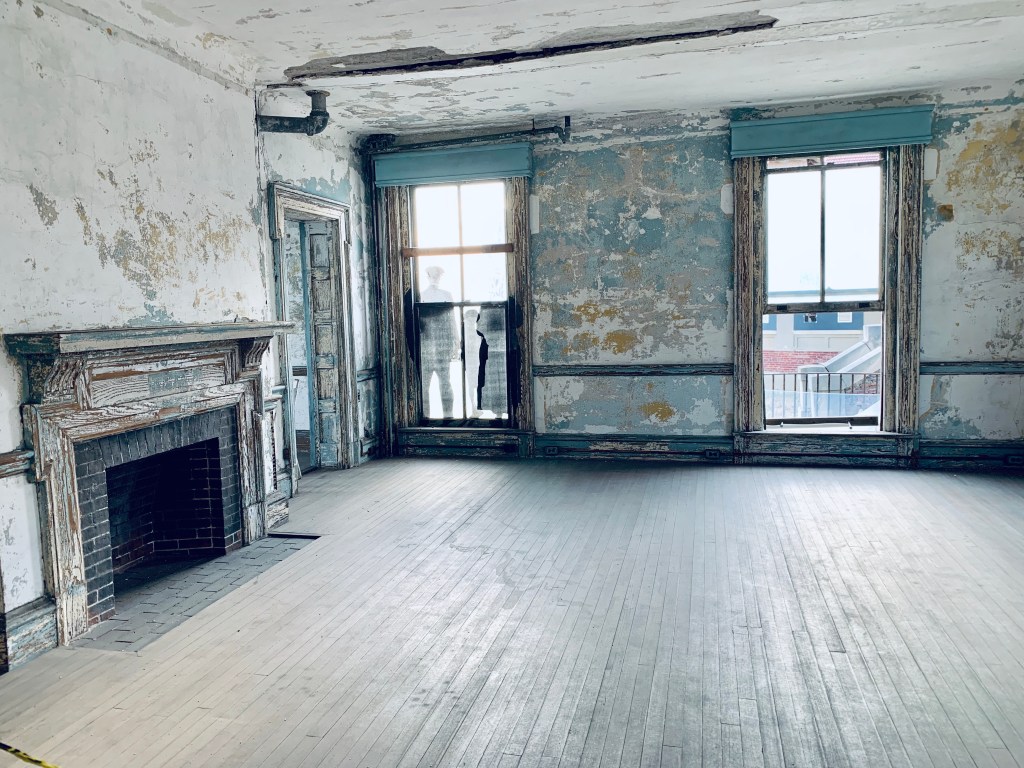
View of the Statue of Liberty from a Room on Ellis Island
Health, Hospital and Hope
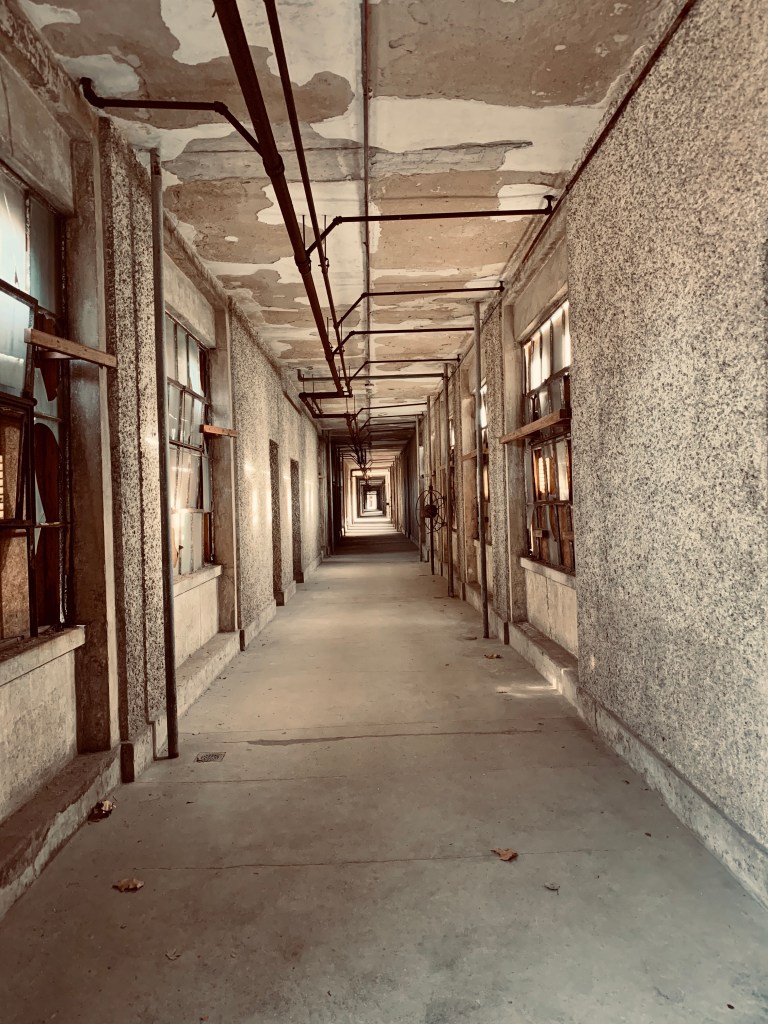
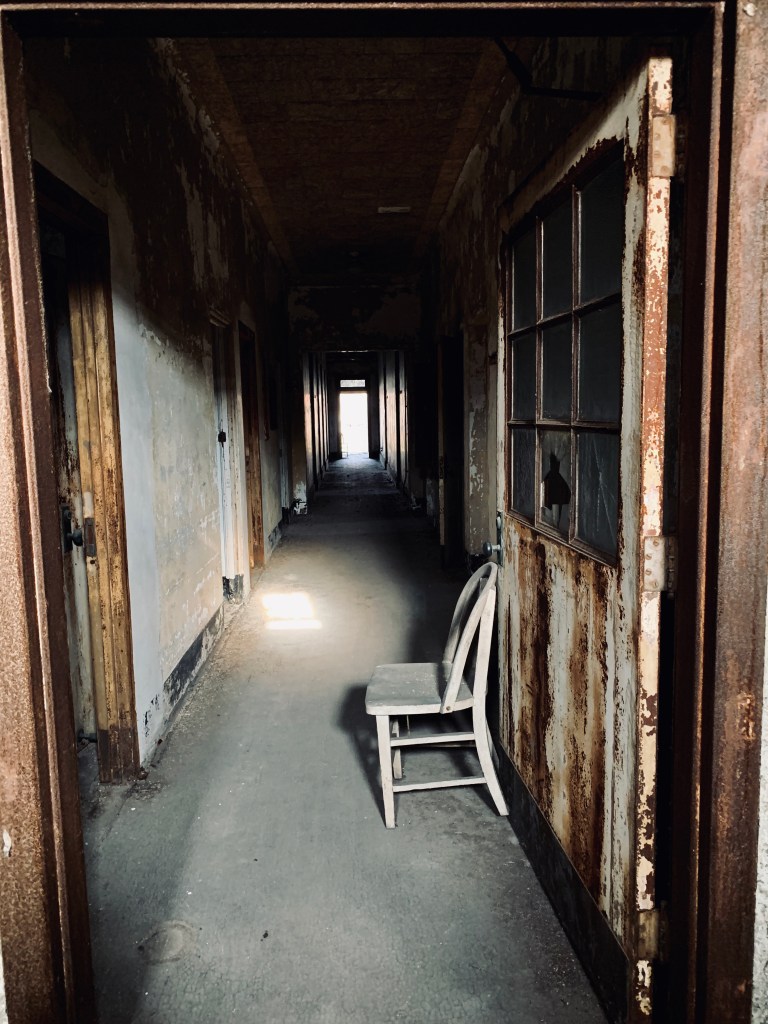
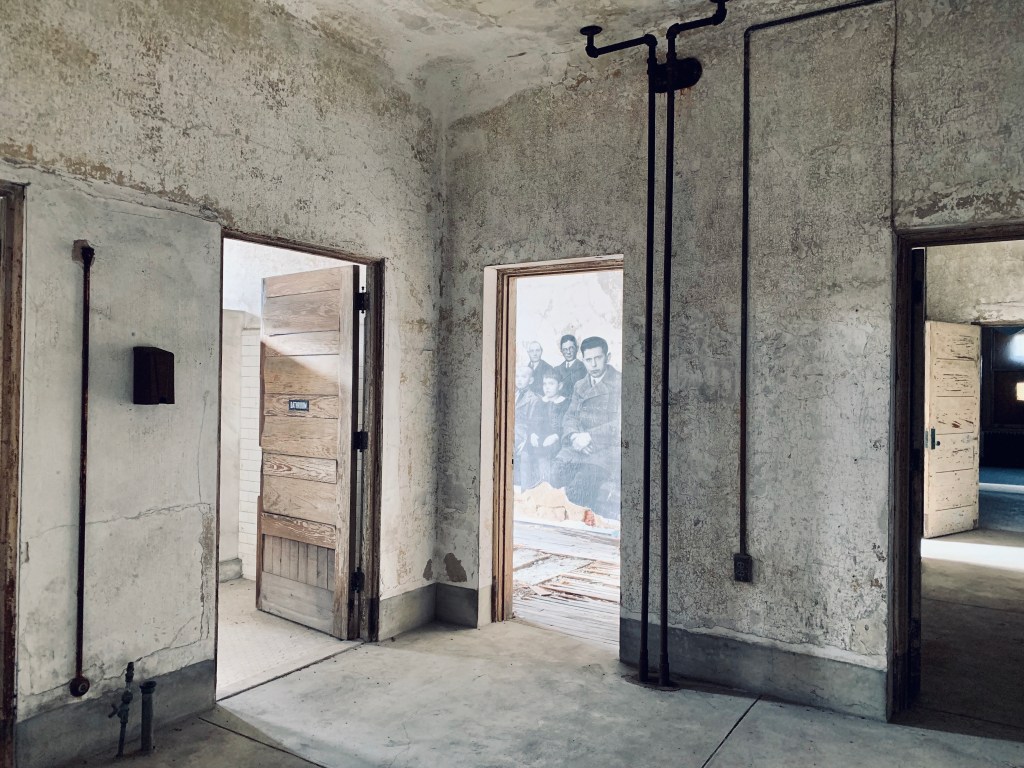
Corridor at Ellis Island Hospital
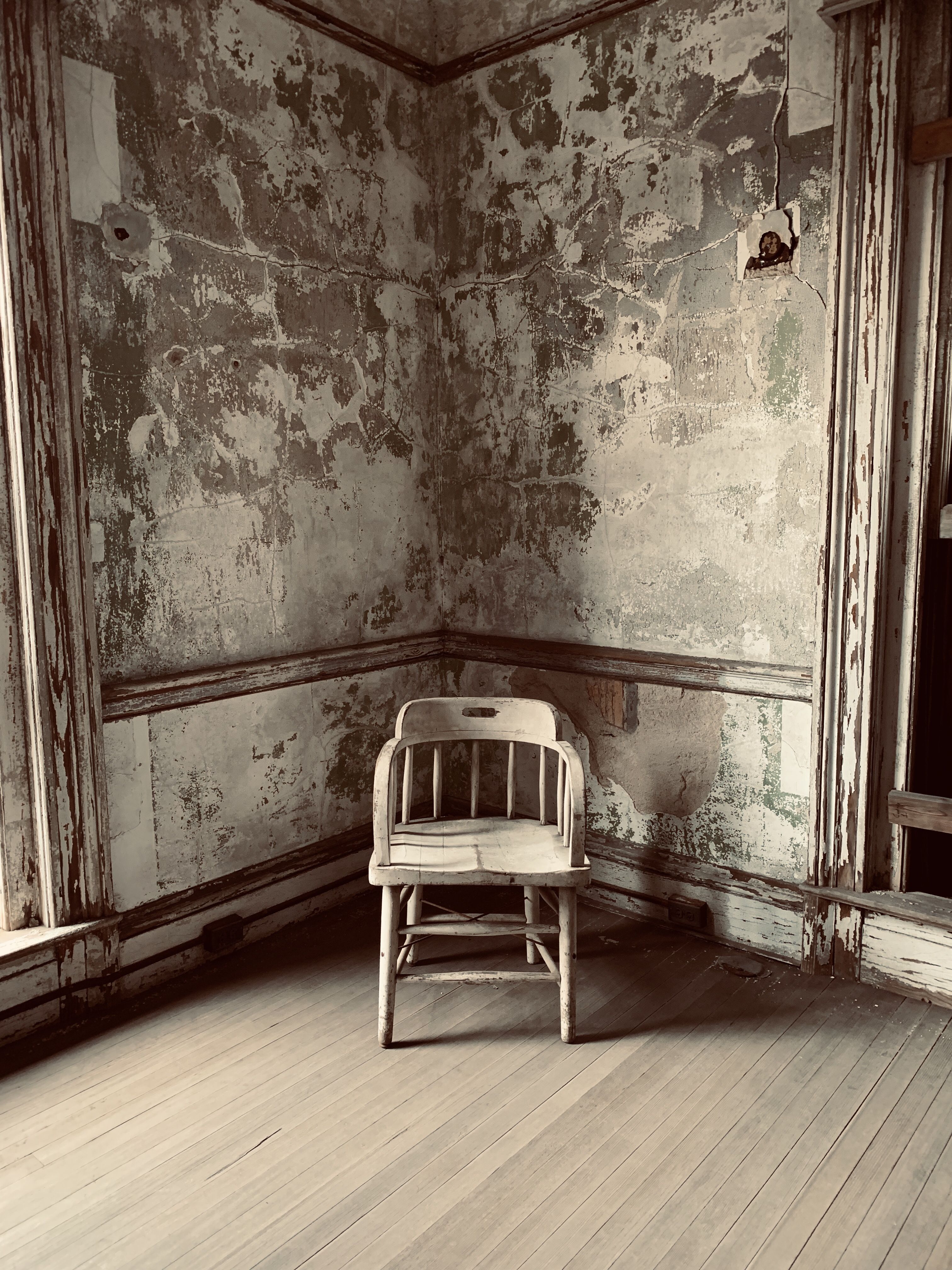
On our visit we not only visited the immigration centre, but took the ‘Hard Hat Tour’ which takes you through the abandoned hospital buildings and to parts of the island you would never normally see.
Our guides for the Hard Hat Tour were Pam and Tori. In a strange twist of fate, one was from NYC and one from New Jersey. There was an ongoing battle between the two states regarding ownership of Ellis Island. In 1995 it was decreed that the landfill element including the hospital buildings belonged to New Jersey and the Immigration building belonged to New York. It was strange to stand in one place and be in two different States!
Our tour began by walking from the immigration centre to the abandoned hospital buildings.
Pam and Tori explained that the tours were run by Save Ellis Island, a group dedicated to the restoration and maintenance of the historic buildings that hold a huge relevance in the history of the United States.
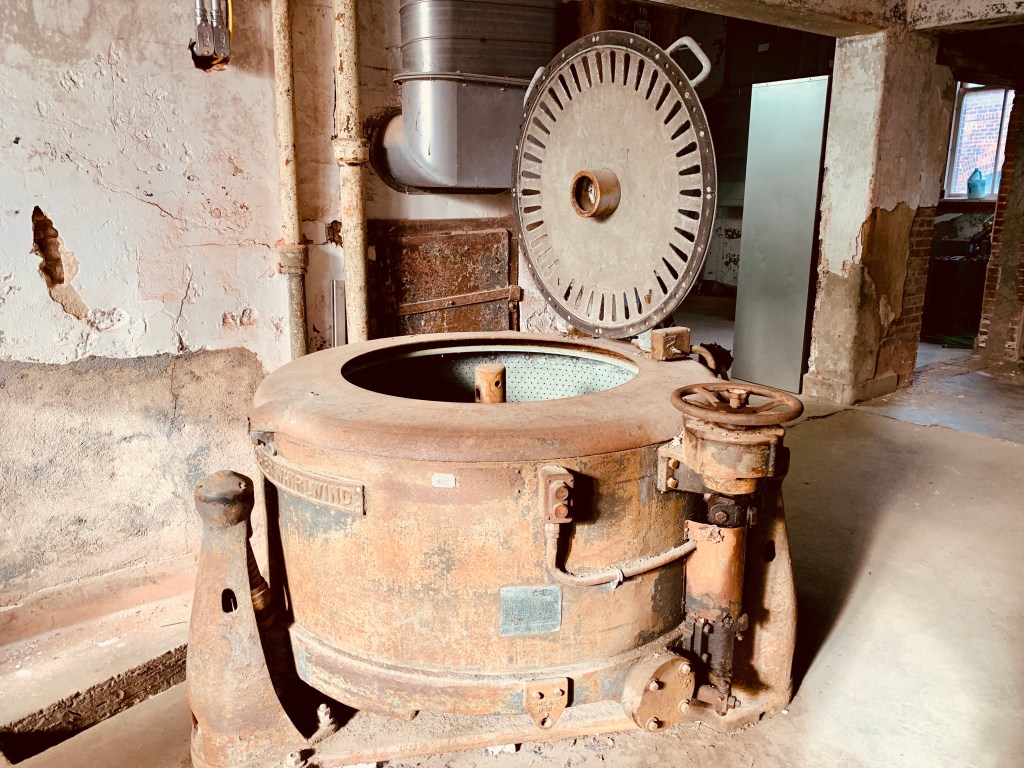
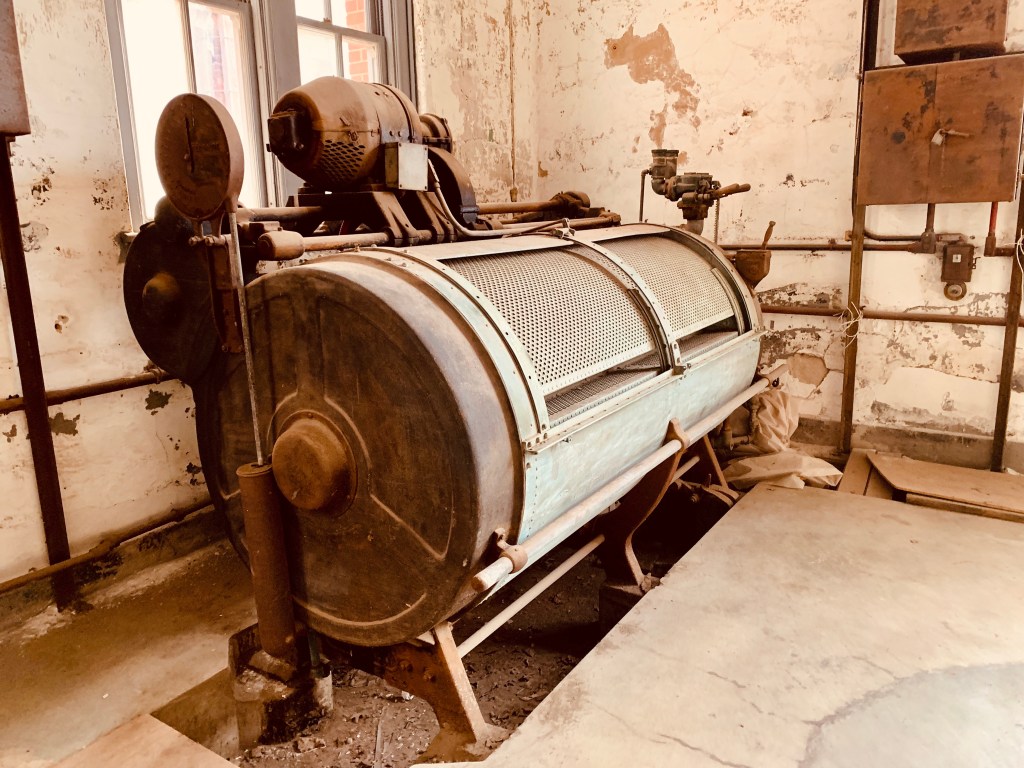
We visited the huge laundry room where workers would use the heavy machinery to make a wage.
We then continued to the first of the outbuildings, which was the psychiatric unit. In a concerning twist, we were informed that the maternity unit was situated on a floor above the psychiatric ward!
Psychiatric ward and Maternity unit
Due to an unprecedented level of care, despite the potential, there was zero infant mortality on Ellis Island. Even pregnant women who faced deportation were given first class care. It was ensured that mother and child were in top health before departure. Unfortunately single mothers were not allowed entry into the U.S as they were considered a burden on the country.
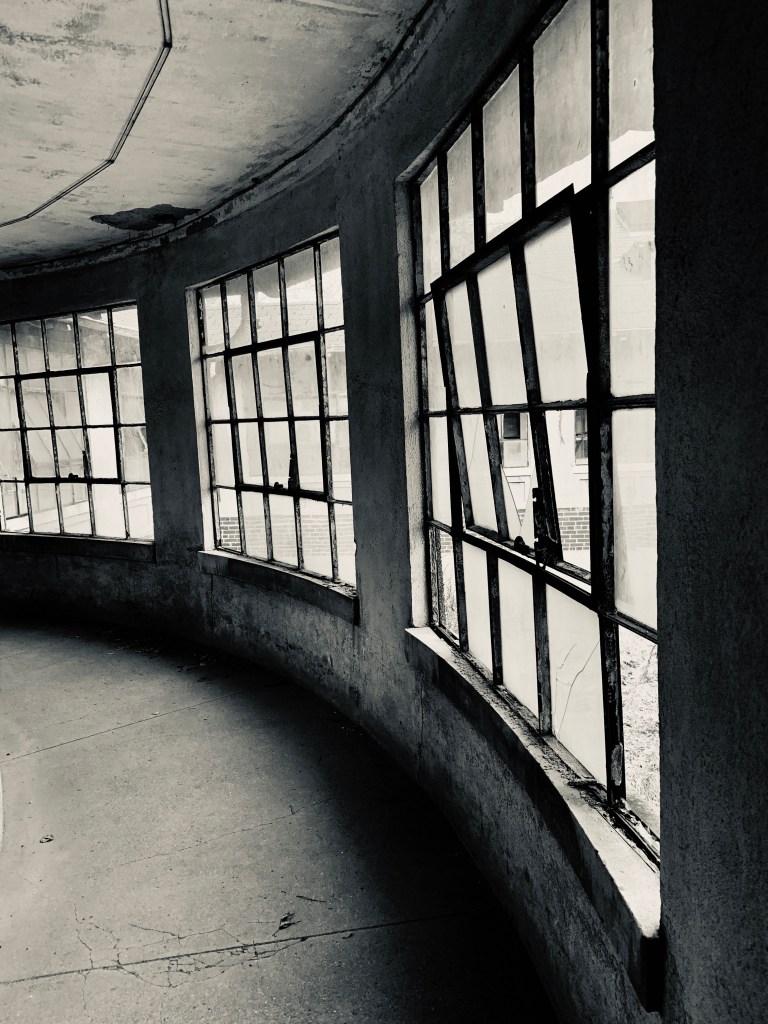
The medical facilities on Ellis Island were well ahead of the times. They followed the Florence Nightingale methodology, with doors and segregated corridors to stop the spread of disease. Big windows were also introduced to increase light and positive frames of mind as well as an increase in Vitamin D to speed recovery.
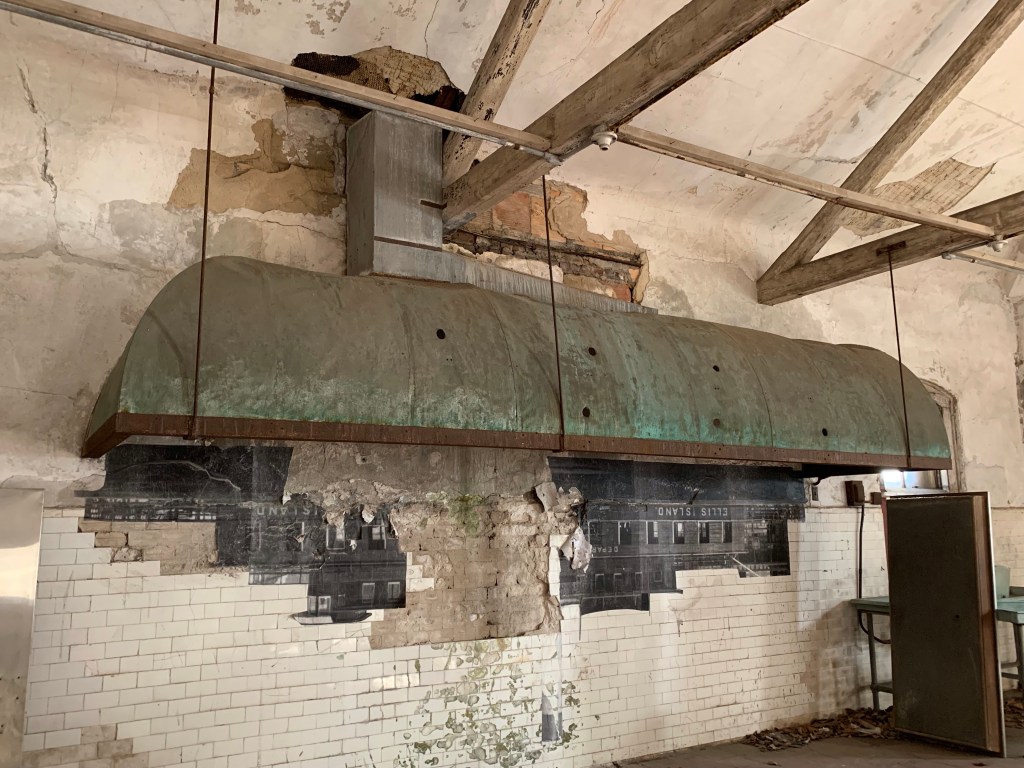
The kitchen on Ellis Island was well stocked and maintained. Inhabitants were well fed, all with a view to aid improving health so they could be processed for either deportation or for the lucky- a new life in America.
Kitchen of Ellis Island hospital
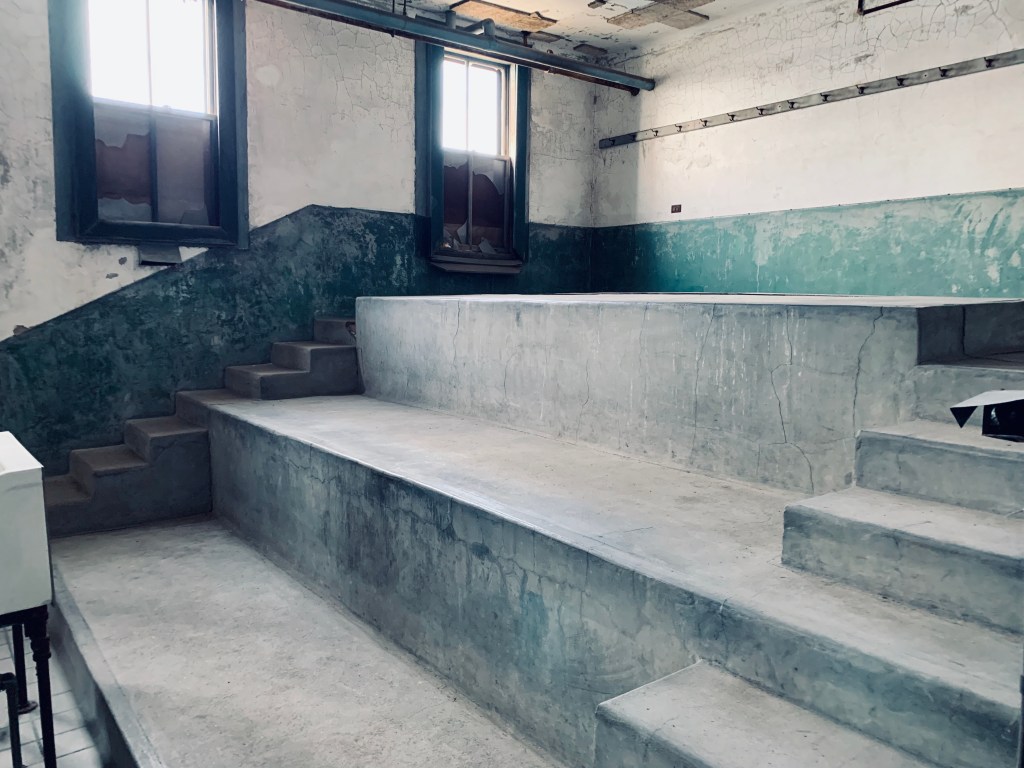
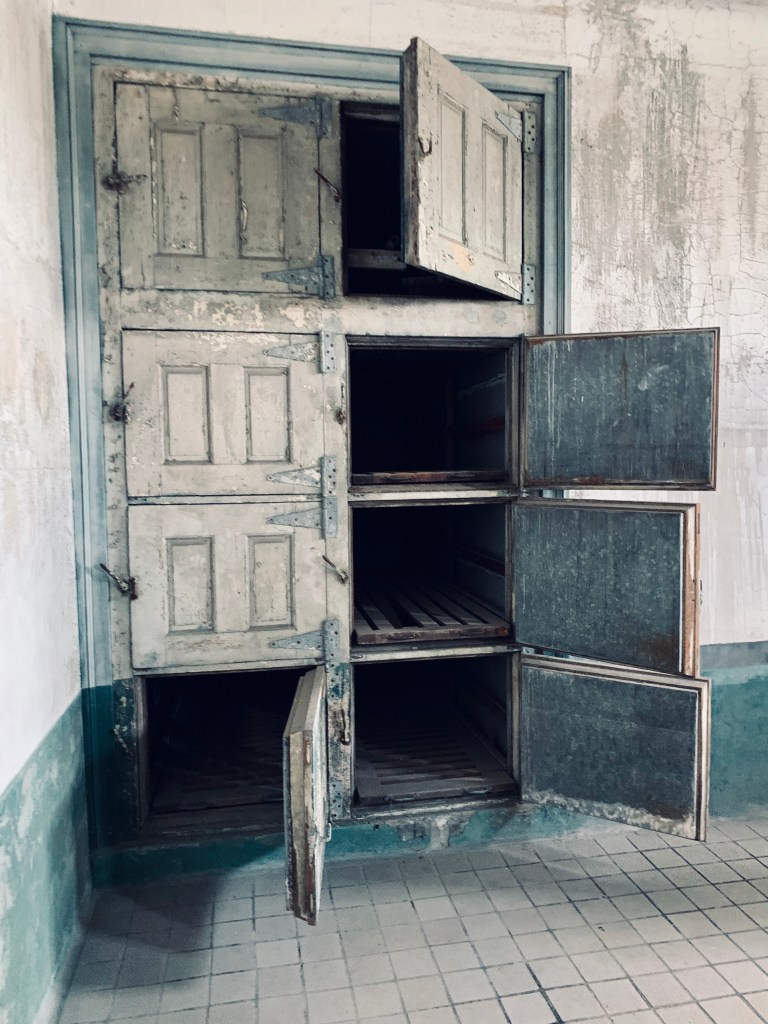
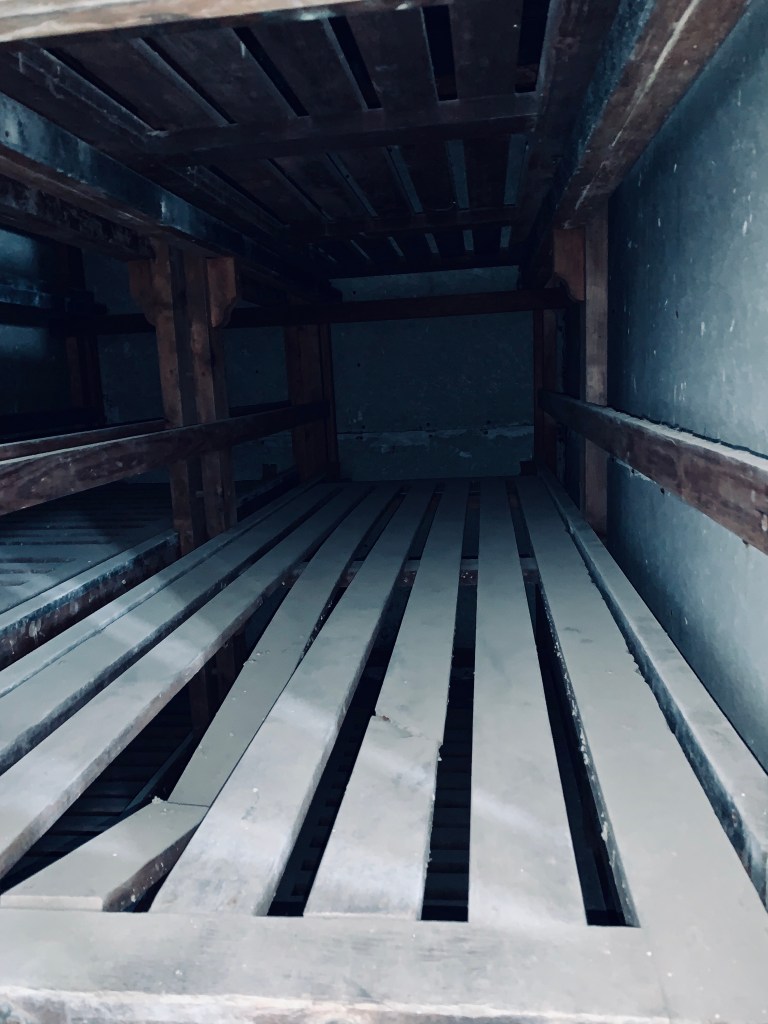
It was also a teaching hospital, so there was a classroom setting in the mortuary. Investigations into causes of death and new methods of treatment were constantly being tested, evaluated and introduced. Mattresses were hygienically cleansed and there were separate facilities for various diseases.
Teaching mortuaryBody storage unitsInside body storage unit
Despite this, there were still over three and a half thousand deaths on Ellis Island.
As a paranormal investigator, it is not a stretch to imagine the ghosts of some of these traumatised individuals remain. So many were not so much seeking a new life, as escaping an old one. They were so close, yet disease, madness or malnutrition were their ultimate demise, the image of the Statue of Liberty the last thing they would see.
How The Other Half Lived
We were taken to the grand house that the Chief medics resided in, so typical of the well to do houses of Manhattan of the time, views over a rising skyline of progress, yet so close to life and death and desperation. There is a letter in the house from a woman who grew up their, living as any other child, quite unaware of the battle for health and freedom intertwined with turmoil and heartache just feet away.
Journey To The New World
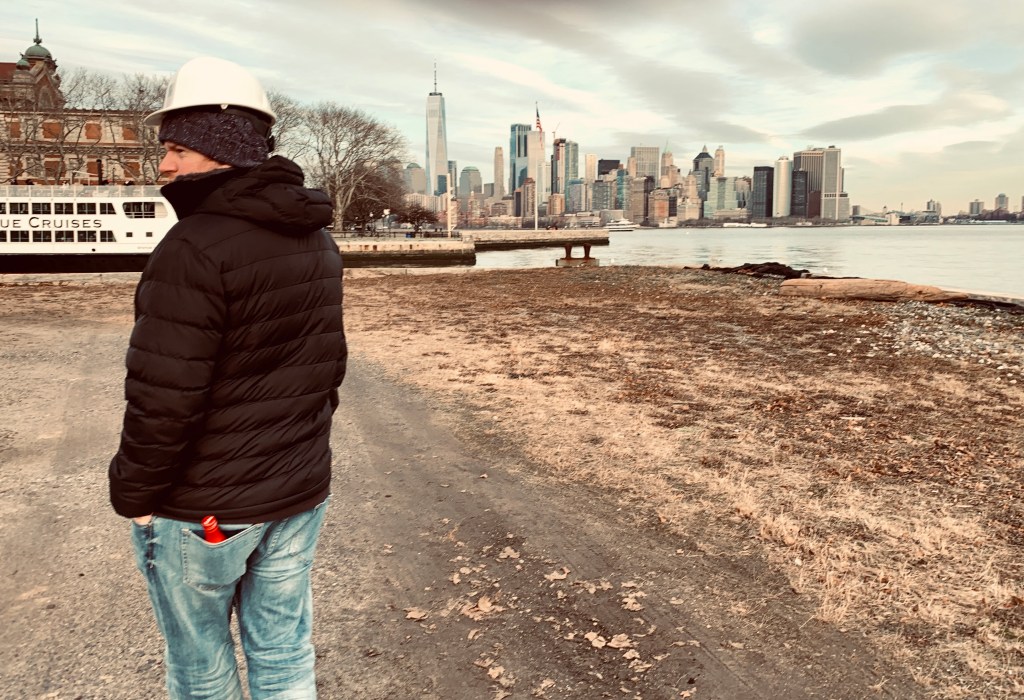
As we stood on the shoreline looking out to Manhattan, our tour was at an end. It was moving, insightful, educational and so incredible. If you visit Ellis Island, please do not miss this tour.
Dominic on the shore of Ellis Island
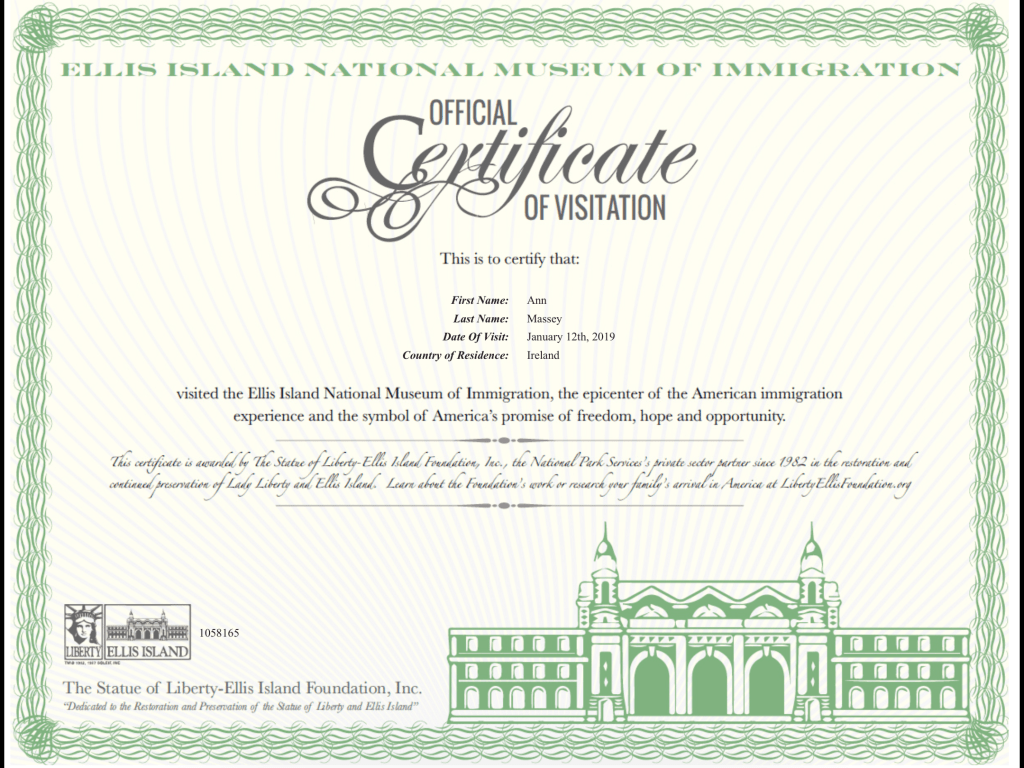
Returning to the Immigration centre, it was almost an anticlimax. We walked through the interactive experience in the centre, but sadly the look up for family records was unavailable at the time but thankfully available online. It was still wonderful to stand where my relatives had stood to gain entry and explore the various areas of the centre. You also get to create your own certificate as a keepsake which is emailed to you – a nice touch.
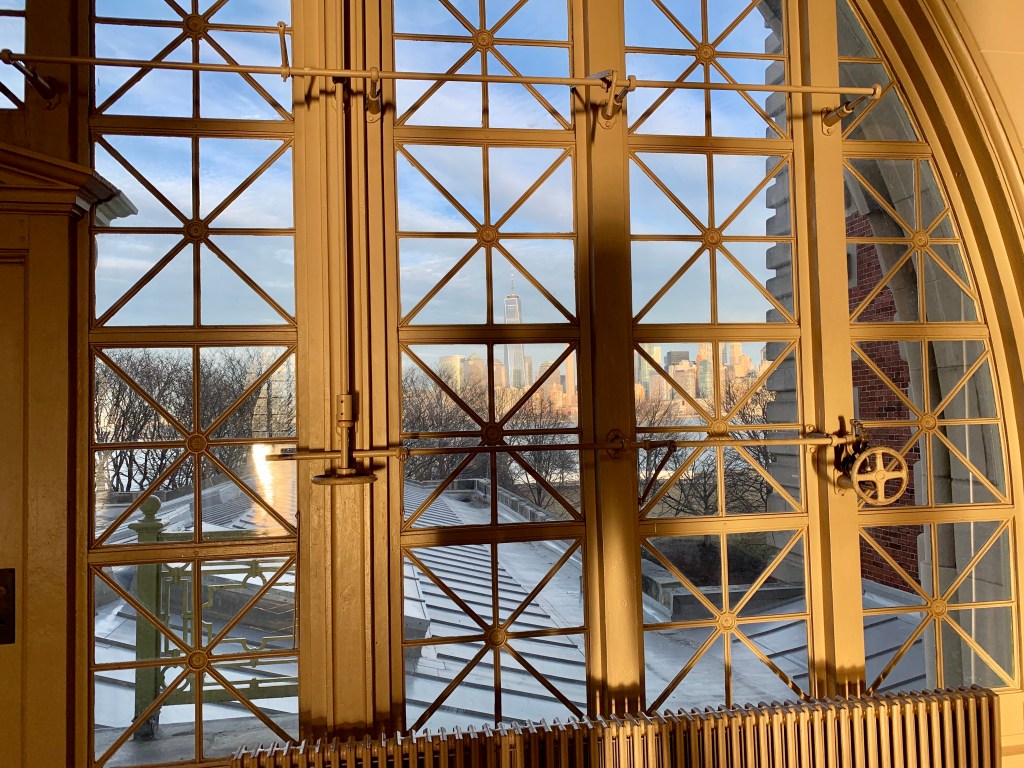
My own certificate Freedom View -Window over Manhattan from the Immigration Centre
There is a fine cafeteria and a few gift shops with fun and interesting memorabilia as well as informative books.
As we boarded our ferry to return and took in our view of an ever enlarging Manhattan skyline, I looked back and realised the few hours spent may not have been enough. I could do the Hard Hat Tour over and over again. And how much would I love to do a paranormal investigation here?!
A New Life in New York
Ellis Island and particularly the Hard Hat Tour is quite possibly top of the to do list in NYC. Don’t miss it.
My thanks to Save Ellis Island, our guides and information from the Ellis Island page and History Channel. All photographs property of Ann Massey.

 DARK EMERALD TRAVELS